

- International Day of Persons with Disabilities celebrated at Barura |
- Bangladesh achieves 97% typhoid vaccine coverage for children |
- Jeddah welcomes global stars to Red Sea Int’l Film Festival |
- Exports earn $3.9 billion in Nov, up 1.8% from Oct |
- Air ambulance delay delays Khaleda Zia’s departure for London |
Bangladesh Approves Tk 1,136cr Plan to Drill Three New Gas Wells
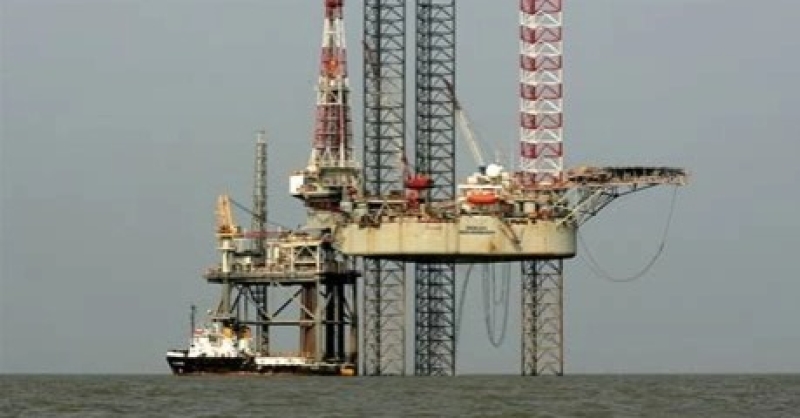
Photo: Collected
The government has approved a Tk 1,136 crore plan to drill three new gas wells to boost domestic energy production and reduce dependence on costly imports.
The project will be carried out by Bangladesh Petroleum Exploration and Production Company Limited (BAPEX), a Petrobangla subsidiary under the Energy and Mineral Resources Division. It aims to ease pressure on the nation’s shrinking gas reserves amid rising demand.
The three proposed wells—Srikail Deep-1, Mobarakpur Deep-1, and Fenchuganj South-1—will be located in Chattogram, Sylhet, and Rajshahi divisions. The total project cost includes Tk 909 crore from government loans and Tk 227.25 crore from BAPEX’s own funds. The drilling is scheduled from October 2025 to December 2027.
If commercially viable, the wells could yield an estimated 1,696.36 billion cubic feet (BCF) of gas, with around 1,018.14 BCF potentially recoverable, significantly strengthening the country’s gas reserves. Srikail Deep-1 and Mobarakpur Deep-1 will reach depths of 6,000 metres, while Fenchuganj South-1 will be drilled to 4,000 metres.
Planning Adviser Dr Wahiduddin Mahmud noted that while gas from the wells will not be immediately available, the initiative is vital to prevent future shortages. The government has also procured essential drilling equipment and machinery to support BAPEX’s long-term plan to drill 20 new wells, based on extensive 3D seismic surveys and geological studies.
Meanwhile, Bangladesh continues to import liquefied natural gas (LNG) to manage immediate demand. Since August 2024, 15 LNG cargoes worth approximately Tk 7,500 crore have been approved under an open-tender policy to allow global suppliers to compete. Energy officials stressed that while LNG imports meet urgent demand, reliance on international markets exposes the country to price volatility.
Households and industries are already feeling the impact of dwindling gas supply. In Dhaka and other major cities, residents have reported low or nearly zero gas pressure during peak hours, forcing many to switch to alternative fuels such as LPG cylinders and electric stoves. Industrial zones in Gazipur, Narayanganj, Chattogram, and Narsingdi have reported production losses.
Officials estimate a daily shortfall of 400–500 million cubic feet, which could rise further during the winter months. Energy experts warned that unless domestic exploration and storage capacity are accelerated, Bangladesh’s dependence on imported LNG and exposure to global price fluctuations will continue to leave the country vulnerable to energy crises.