

- Garment Workers’ Protest Shuts Five Metro Rail Stations |
- Govt Forms Six-Member Wage Board for Garment Workers |
- Dhaka ranks 4th among world's most polluted cities this morning |
- Dhaka Launches Company-Operated Buses on Six Routes Today |
- FBI Blames North Korea for Record $6.3bn Binance Hack |
Govt to generate 4,000 MW of solar power in 3 months: Faridul
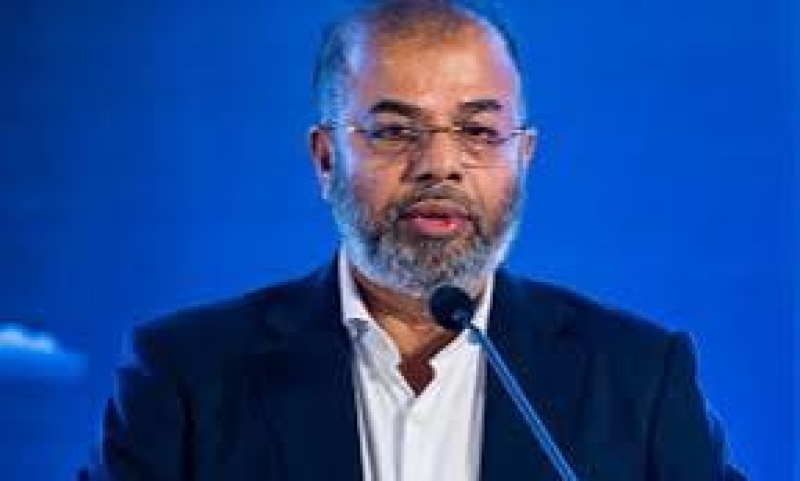
State Minister for Environment, Forest and Climate Change Shaikh Faridul Islam today said the government will generate 4,000 megawatts (MW) of solar power within the next three months.
“Of those, 296 MW will be generated from Dhaka city alone,” he said while speaking at a seminar here as the chief guest.
Dhaka University (DU) and Stockholm University jointly arranaged the seminar titled ‘Science Policy Dialogue on Black Carbon and Other Short-Lived Climate Pollutants’.
Faridul said the initial target is to generate 10,000 MW of solar power, while solar power capacity will be increased in phases to reduce dependence on fossil fuels and ensure a transition toward clean energy.
He said the incumbent government inherited a significant amount of ‘dirty energy’ infrastructure —such as coal-fired power plants — from the previous government.
These plants consume about 12,000 metric tonnes of coal daily, which gives an indication of the massive volume of black carbon being emitted, he said.
Highlighting government action against brick kilns, the state minister explained that these kilns are responsible for about 13 percent of the total air pollution as many of those use high-sulfur coal.
So, he said, the government is going to shut down 200 conventional brick kilns nationwide, replacing those with concrete block production facilities to curb pollution.
These facilities produce no smoke — only minimal noise — and will help significantly in decontaminating the air, Faridul said.
Acknowledging that the task is exceptionally challenging due to the presence of a long-entrenched, powerful syndicate, he said the government is addressing the issue with a professional approach, emphasising that improving air quality is impossible without shutting down these brick kilns.
Regarding transboundary pollution, the state minister said about 30 percent of the air pollution in the country originates from across the border.
“This is because many of India’s heavy industrial facilities are located near the border — a highly sensitive diplomatic issue. Consequently, it is practically very difficult for us to curb this 30 percent of air pollution arriving from a neighboring country,” he said.
Highlighting the government's focus on nature-based solutions, Faridul said initiatives such as large-scale tree plantation, the excavation and re-excavation of canals, and the introduction of electric buses and vehicles are nature-based solutions.
About river pollution, he said over 424 points have been identified along the Buriganga, Shitalakshya, Turag, Balu, and Dhaleshwari rivers where toxic waste and polluted water are discharged directly into the rivers without any prior treatment.
“This includes industrial waste, municipal waste, and discharges from Dhaka WASA and other utility agencies. We are working tirelessly to restore these invaluable rivers and water bodies surrounding Dhaka,” he said.
Mahadi Amin, Adviser to the Prime Minister; Dr ASM Abdul Awal, Chief Coordinator for SDG Affairs at the Prime Minister’s Office; and Nicolas Weeks, Swedish Ambassador to Bangladesh; were present.
The event was co-chaired by Professor Abdus Salam, DU Pro-Vice-Chancellor (Academic), and Professor Örjan Gustafsson from the Department of Environmental Science at Stockholm University, reports BSS.