

- VAT Returns to Be Filed Every Tax Period Again |
- No journalist to be victimised under Cyber Security law: Salahuddin |
- Court Denies Bail to 27 Detained From Jasad Office |
- Bangladesh Plans Major River, Canal Restoration Drive |
- Solar irrigation brings savings, extra income to Jhenaidah farmers |
Qatar Extends LNG Supply Halt, Pressuring Key Buyers
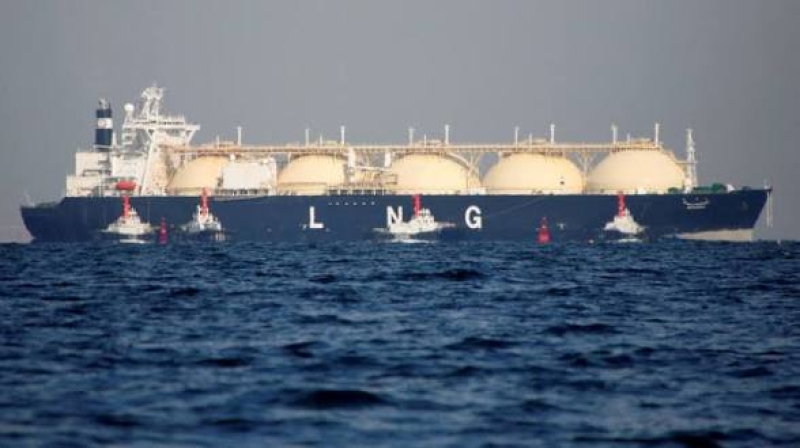
Qatar has extended the force-majeure suspension of liquefied natural gas (LNG) deliveries to buyers in Asia and Europe as disruptions to shipping through the Strait of Hormuz continue.
The extension means scheduled LNG cargoes for buyers in Bangladesh and Pakistan could remain cancelled through November. At least one Indian buyer has also been informed that the suspension will continue, while Italian energy company Edison said its Qatari LNG supplies would remain suspended until early December.
QatarEnergy, the state-owned energy company, notified buyers of the continued cancellations as the disruption to shipping through the Strait of Hormuz persists. Edison separately confirmed that additional Qatari LNG cargoes would remain affected under the force-majeure arrangement.
QatarEnergy did not immediately comment on the latest extension.
Force majeure extended amid prolonged disruption
QatarEnergy has been updating LNG customers on supply disruptions since the US-Iran conflict began. Force-majeure notices have been extended periodically as the security situation around the Strait of Hormuz has continued to restrict LNG shipments.
A force-majeure provision generally allows a party to temporarily suspend or limit certain contractual obligations when extraordinary circumstances beyond its control—such as war, natural disasters or other major disruptions—prevent it from fulfilling a contract.
The latest extension prolongs uncertainty for LNG buyers in both Asia and Europe, particularly those that rely heavily on Qatari supplies.
LNG flows through Hormuz remain severely restricted
The Strait of Hormuz is a critical route for global energy trade. In 2025, almost 20% of global LNG trade transited the waterway, with Qatar and the United Arab Emirates accounting for the vast majority of those flows. The International Energy Agency says about 93% of Qatar's LNG exports pass through the strait.
The disruption is particularly significant for Asian importers. Bangladesh, India and Pakistan obtained a substantial share of their LNG supplies through the Strait of Hormuz in 2025, leaving them especially exposed to prolonged interruptions.
Although some energy shipments have resumed through the strait, LNG flows remain far below normal levels. With few alternative routes available for Qatari LNG, prolonged restrictions could tighten supplies in international markets.
Winter demand adds to market concerns
The approaching northern-hemisphere winter could further intensify pressure on LNG markets. Demand for natural gas typically rises during the colder months as countries increase supplies for heating and power generation.
If Qatari exports remain constrained, buyers in Asia and Europe may have to compete more aggressively for alternative LNG cargoes. That could increase spot-market prices and raise energy costs, particularly for countries heavily dependent on imported gas.
Bangladesh, Pakistan and India are among the Asian markets particularly exposed to disruptions in Qatari and other Gulf LNG supplies. The continued cancellation of cargoes could therefore create additional challenges for their energy management.
Ras Laffan damage adds to Qatar's supply constraints
The Hormuz disruption is not Qatar's only LNG challenge. Damage to the country's Ras Laffan gas-export complex has also reduced production capacity.
Qatar's energy minister said attacks on Ras Laffan damaged two LNG trains and a gas-to-liquids plant. Repairs to the affected LNG trains are expected to take considerably longer, although Qatar has said it can resume normal operations within weeks once the Strait of Hormuz reopens.
This means that even if shipping through the strait returns to normal, Qatar's LNG exports may not immediately return to pre-conflict levels.
The combined impact of restricted shipping and reduced production capacity is therefore likely to keep pressure on global LNG markets, particularly as winter demand approaches.