

- Global Press Freedom Hits Lowest Level in 25 Years |
- Two Tough Years Ahead As Govt Pushes Economic Fix |
- OPEC faces mounting pressure as officials meet in Vienna |
- Locked in poverty and riverbank erosion: The reality of Kurigram |
- DC conference 2026: 498 proposals set for policy review |
Hormuz crisis deepens global energy supply shock
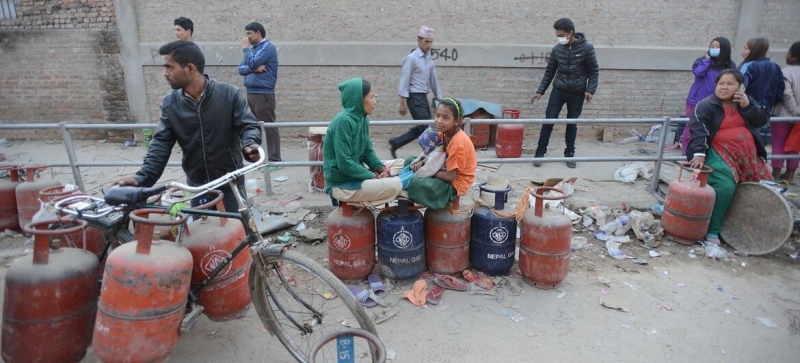
People wait in line with empty cooking gas cylinders in Kathmandu, Nepal.
With no end in sight to the shipping standoff in the Strait of Hormuz and Brent crude oil prices hovering around $118 on Thursday, concerns over fuel and gas shortages have pushed governments to urgently search for solutions.
Southeast Asia and South Asia were among the first to be hit by what officials describe as the most severe energy crisis in a generation, said Dario Liguti of the UN Economic Commission for Europe (UNECE). He warned that it is “an unfolding energy crisis,” with motorists in Europe already feeling the impact every time they refuel.
Given how dependent global economies remain on fossil fuels and geopolitical stability, UNECE has been bringing countries together in Geneva and elsewhere to explore ways to reduce reliance on fossil energy and improve efficiency.
One major area of concern is natural gas, or methane, which is often burned off as waste during oil extraction and refining. Instead of being flared, experts say it could be captured, stored, and reused, reducing dependence on primary energy sources.
UNECE has also been leading efforts to cut methane emissions, which are more than 80 times more potent than carbon dioxide over a 20-year period and a major contributor to global warming.
The agency has stressed the need for a faster clean energy transition in line with global sustainability goals agreed in 2015. Liguti said the current crisis highlights the urgency of accelerating electrification in transport and heating.
He also called for faster expansion of renewable energy, describing it as both environmentally cleaner and more secure due to its decentralised nature.
Meanwhile, in Lebanon, ongoing clashes between Hezbollah fighters and Israel continue to worsen economic hardship. Rising prices, supply disruptions, and instability have pushed food insecurity to critical levels.
According to UN-backed food security assessments, nearly a quarter of the population is now facing acute hunger. A recent Integrated Food Security Phase Classification (IPC) alert warned that about 1.2 million people could experience severe food insecurity between now and August, up sharply from earlier estimates.
The World Food Programme (WFP) said families are struggling daily to meet basic needs as it continues to scale up assistance with partners.
Humanitarian conditions are further strained by displacement and overstretched public services. In northern Beirut, hundreds of displaced people are living in overcrowded school shelters, highlighting severe pressure on infrastructure.
Health services are also under stress, with the World Health Organization (WHO) supporting hospitals and blood banks to maintain emergency care.
Despite ongoing relief efforts, aid agencies warn that needs continue to outpace available resources. They say the Hormuz crisis is not only a regional disruption but a global shock that is deepening existing vulnerabilities and pushing fragile humanitarian systems closer to breaking point.