

- ADP Implementation Hits Five-Year Low at 1.85% |
- NYC BNP leaders, activists upbeat ahead of Tarique Rahman’s arrival |
- PM off to New York to attend UNGA |
- 8 Killed in Ashulia Garment Factory Fire |
- Apratim Murder Suspects Confessed, Says Home Minister |
Water diplomacy for integrated management of shared rivers
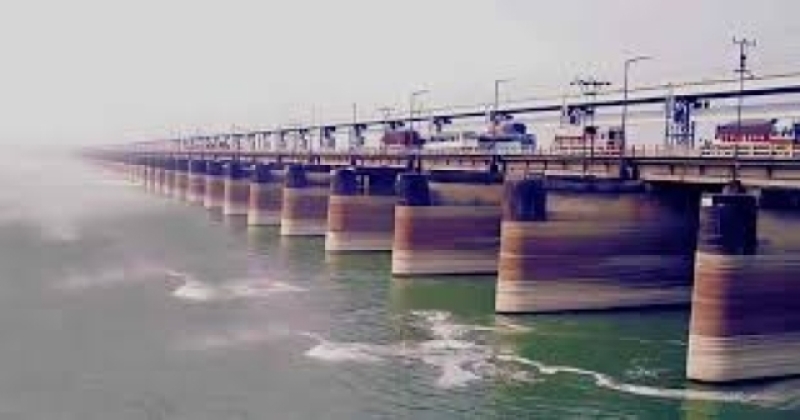
Farakka Barrage - Bangladesh side
With the Ganges Water Sharing Treaty scheduled to expire on 11 December next, and there being no treaty on any of the 53 other common rivers, Bangladesh needs to sharpen its water diplomacy. Water professionals and environmentalists across the world say in one voice all rivers must remain alive and flow from their origins to the sea.
The World Basin Summit held last month in Rio De Janeiro endorsed this and called for collaboration between upstream and downstream river communities to ensure integrated water resources management because rivers, natural flows as they are, cannot be divided at their banks or political borders of countries through which they pass before flowing into the sea. If the rivers are alive all river communities living beside them will benefit from their services and vice versa.
The state of the Ganges has been severely complicated by the construction of innumerable dams and barrages on it to the extent that according to water experts, the quantum of its flow has come down to about 10 percent of its historical flow at Farakka Barrage point in West Bengal, India. Would the upper riparian big neighbour realise the big mistake, and how many years it will take for this realisation to arise? Nobody knows, unless there is a radical change in thoughts on water management. But losers like Bangladesh at downstream can sit idle only at its own peril.
With no other option now left Bangladesh has planned to construct a barrage of her part of the Ganges to bring its distributaries flowing to the South West region to life for restoration of the coastal ecosystem severely damage under severe assault of being forced to be cut off from fresh water flows. But even if the barrage is built an agreement to revive the river or a comprehensive agreement for sustainable management of all 54 common rivers will be needed. Those entrusted with water diplomacy – the Foreign Office and the Joint Rovers Commission – should break their silence and secrecy over this and have national dialogues with environmentalists, ecologists, climate scientists, soil scientists, chemists, biologists, agriculture and fisheries experts plus the affected people to firm up a national strategy to protect rivers. This will empower them to deal with the other side on the basis of the new ideas that have emerged in the field.
For about 16 years the Bangladesh case was not pursued. The sooner this is taken up the better, because there is hardly any time left to waste.
Mostafa Kamal Majumder