

- WHO Warns Global Blood Shortages Put Lives at Risk Report |
- US Thrash Paraguay 4-1 in Dream World Cup Start |
- FY27 Budget Reflects Public Aspirations: Khosru |
- 3 Red Cards Mar Mexico vs South Africa World Cup Opener |
- Hwang In-beom inspires South Korea's 2-1 victory over Czech Republic |
Trump’s 10% Tariff Brings Relief, Uncertainty for Exports
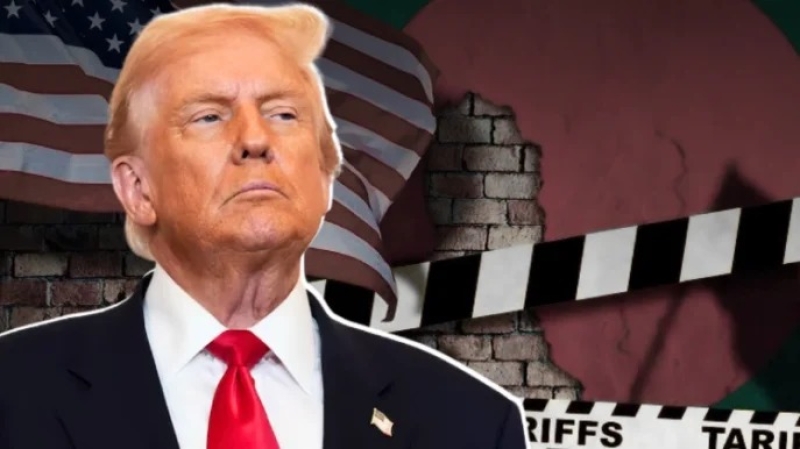
Bangladeshi exporters have reacted with cautious optimism after US President Donald Trump announced a new 10 percent tariff on imports, following a ruling by the United States Supreme Court that struck down previously imposed reciprocal tariffs of around 20 percent.
Despite the lower rate, business leaders warned that frequent shifts in US trade policy are creating uncertainty for exporters and importers alike.
Commerce Secretary Mahbubur Rahman said the court’s decision would also nullify the existing trade agreement between Bangladesh and the United States that had been tied to the earlier tariff framework.
After the ruling, the US administration announced a temporary 10 percent tariff on imports from all countries for 150 days.
Exporters noted that although the new duty still adds costs, it is significantly lower than the previous reciprocal tariff, easing pressure on US buyers. Lower import duties could allow American retailers to source ready-made garments more cheaply, potentially reducing retail prices and boosting consumer demand.
Mahmudul Hasan Babu, president of the Bangladesh Garment Manufacturers and Exporters Association, described the new measure as comparatively favourable.
“If the 20 percent reciprocal tariff is cancelled and a uniform 10 percent tariff is imposed on everyone, it is the lesser of two evils,” he said, adding that cheaper imports could stimulate demand and create opportunities for higher exports from Bangladesh.
However, he cautioned that unpredictable tariff changes discourage large purchase commitments. Importers may instead place smaller orders to reduce risk, which could ultimately dampen export volumes.
AK Azad, managing director of Ha-Meem Group, said the removal of counter-tariffs could strengthen the purchasing power of US buyers and support export growth.
“With the cancellation of counter-tariffs, the purchasing power of US buyers will increase. This creates the possibility of higher exports,” he said, noting that the new 10 percent duty is still lower than the previous rate applied to Bangladeshi goods.
He also warned that the tariff could face legal challenges within the United States, arguing that such measures may conflict with international trade rules.