

- New Disasters Hit Rohingya Refugees in Bangladesh |
- Presidential Election Set for August 20 |
- PM Urges Eco-Friendly Steps to Curb Riverbank Erosion |
- Moheshkhali LNG Terminal Resumes Partial Operations |
- Dhaka Condemns Hasina's Media Event in New Delhi |
Dhaka-Delhi Ties Show Signs of Fresh Reset
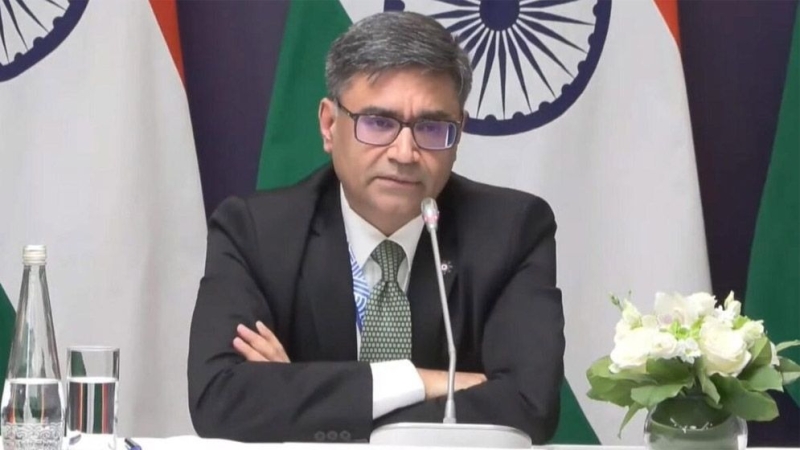
India has taken cautious but concrete steps to revive and restructure its relationship with Bangladesh, signalling the possibility of a fresh start in bilateral ties.
Indian Foreign Secretary Vikram Misri said New Delhi is working to reactivate more than 40 stalled bilateral mechanisms, with discussions already underway.
He made the remarks during an interaction with a visiting delegation of Bangladeshi journalists in New Delhi on Monday, indicating a gradual restoration of institutional engagement between the two countries.
Misri noted that communication slowed during Bangladesh’s interim government period, but both sides are now showing renewed interest in expanding trade, easing visa processes, and strengthening people-to-people connectivity.
He said contacts have already begun with the political leadership of Bangladesh’s new government, alongside efforts to resume meetings under various bilateral platforms.
Highlighting the long-standing cultural and historical ties between the two neighbours, he expressed optimism that relations would continue to deepen through mutual cooperation.
During the discussion, Bangladeshi journalists raised several key issues, including the renewal of the Ganges water-sharing agreement, the Teesta water dispute, the possible return of former prime minister Sheikh Hasina, border concerns, visa complications, and political developments in India.
On the Ganges treaty, which is set to expire in December, Misri said the agreement has functioned effectively for nearly three decades and will be renewed through established institutional channels.
He also noted that Bangladesh and India share 54 transboundary rivers, making water cooperation a priority area due to its direct impact on livelihoods. Discussions will continue through the Joint Rivers Commission and technical committees.
Regarding the long-pending Teesta agreement, Misri said the delay is linked to India’s internal political dynamics. He declined to comment on whether recent political changes in West Bengal could influence progress, but reiterated India’s commitment to continued dialogue.
Responding to questions about remarks made by Assam Chief Minister Himanta Biswa Sarma, Misri said such statements should be viewed in context and not be overstated in bilateral diplomacy.
On West Bengal’s elections, he emphasised that foreign policy decisions are determined by India’s central government and are not dependent on individual states.
Addressing concerns over India’s political preferences in Bangladesh, Misri said New Delhi has worked with successive governments in Dhaka as part of normal diplomatic practice and rejected allegations of interference in Bangladesh’s elections.
He also referred to ongoing diplomatic engagement, including his visit to Dhaka in 2024 and a meeting between Chief Adviser Muhammad Yunus and Prime Minister Narendra Modi in Bangkok in 2025.
Overall, his remarks suggest that India is focusing on a steady, structured approach to rebuilding ties, prioritising trust-building and resolution of pending issues to shape the future of Dhaka-Delhi relations.