

- Uncertainty continues over safety in the Strait of Hormuz |
- Modi Claims Big Win in West Bengal State Polls |
- Measles Outbreak Claims 17 Lives in Single Day |
- Trump says US holding ‘very positive discussions’ with Iran over war |
- Dhaka ranks 4th among the world’s most polluted cities Monday |
Swedish envoy, Zahid discuss welfare, gender cooperation
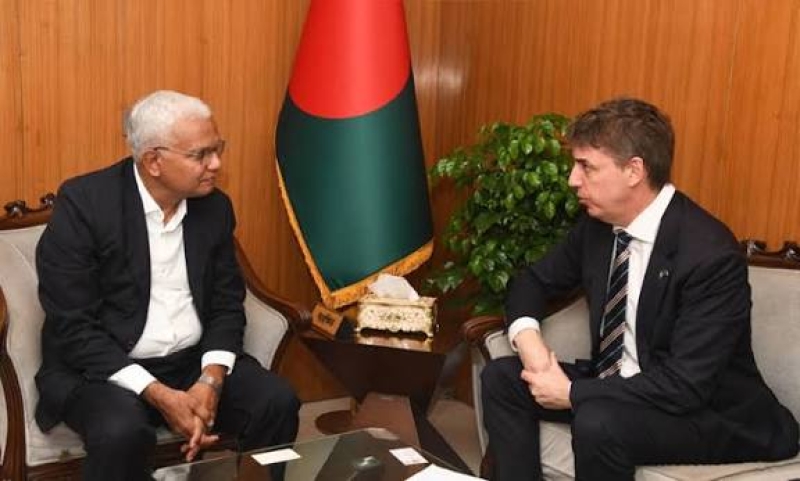
Social Welfare and Women and Children Affairs Minister Professor Dr AZM Zahid Hossain today said Sweden’s experience and technical expertise could play a vital role in advancing Bangladesh’s social development, particularly in addressing gender issues.
“The experience and technological support of a country like Sweden can significantly contribute to our journey toward inclusive social development,” he said, as Swedish Ambassador Nicolas Weeks met him at the Bangladesh Secretariat, according to an official statement.
During the meeting, the two sides discussed ways to strengthen bilateral cooperation in social welfare, women and child development, gender equality, social protection and humanitarian assistance.
Hossain expressed gratitude for Sweden’s continued support to Bangladesh’s development initiatives, noting that the government has placed special emphasis on empowering women and children, ensuring inclusion of persons with disabilities and improving the livelihoods of marginalized communities.
He highlighted the government’s Universal Family Card programme, introduced under Prime Minister Tarique Rahman, as a landmark initiative aimed at supporting ordinary citizens.
In the first phase, 37,814 family cards were distributed in Dhaka, followed by 911 in Bogura in the second phase, with a focus on women as heads of households.
Under the programme, beneficiary families receive a monthly allowance of Tk 2,500, disbursed directly through mobile financial services or bank accounts.
The minister also outlined other initiatives, including school nutrition programmes, expansion of daycare centres up to the upazila level, co-curricular activities through children’s academies, and training in foreign languages, caregiving and outsourcing to boost youth employment.
He reiterated the government’s zero-tolerance policy against violence targeting women and children.
The Swedish ambassador praised Bangladesh’s social welfare efforts and reaffirmed Sweden’s commitment to strengthening its longstanding partnership with the country.
Weeks identified potential areas of cooperation, including prevention of gender-based violence, child nutrition, education and humanitarian support for climate-vulnerable communities.
He also assured continued technical assistance, training and financial support to help Bangladesh achieve its social development goals.
The Rohingya refugee crisis, women’s entrepreneurship, child rights, inclusive programmes for persons with disabilities and sustainable social development also featured in the discussions.
Hossain sought Sweden’s support in implementing Bangladesh’s “Integrated Social Welfare Model” by leveraging Swedish expertise.
Senior officials from the ministry and representatives of the Swedish embassy were present at the meeting.