

- Board of Peace quietly met with UNRWA, ex-agency chief says |
- Man arrested with cocktail ingredients, 9,000 masks in Keraniganj |
- Anthrax detected in 3 of 11 people tested in Rangpur |
- Woman killed, 4 of her family missing in Meghna boat capsize |
- State can never be strong keeping citizens powerless: PM at UNGA |
Tk 1,492cr Project to Boost Dinajpur Rural Connectivity
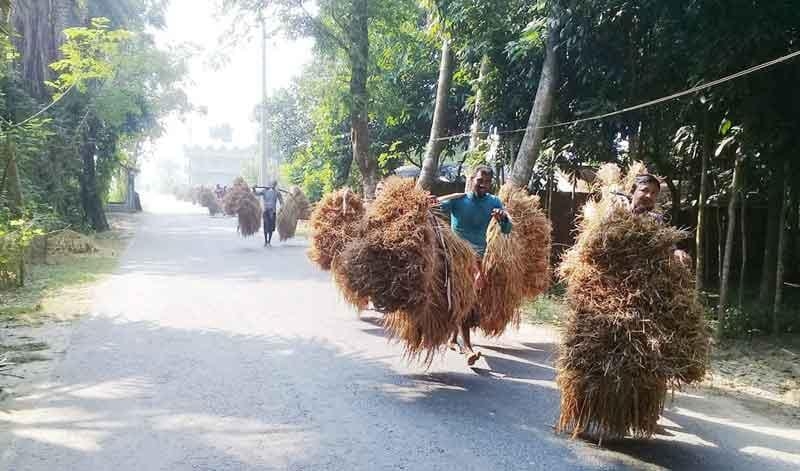
The government has approved a Tk 1,492.50 crore integrated development project to improve rural transport infrastructure across the greater Dinajpur region, aiming to strengthen connectivity, expand economic activities and create employment opportunities.
The project, titled “Integrated Development Project for Greater Dinajpur,” will be implemented by the Local Government Engineering Department (LGED) under the Local Government Division with full government funding.
The project is scheduled for completion by June 2030 and was recently approved by the Executive Committee of the National Economic Council (ECNEC).
Planning Commission Member Md Mahmudul Hossain Khan described the initiative as an “epoch-making” project, saying it would significantly improve links between rural communities and essential service centres such as markets, schools and healthcare facilities.
Under the project, 21.75 kilometres of upazila roads will be upgraded, 171.55 kilometres of union roads will be improved, and 842.52 kilometres of village roads will be developed into all-weather roads.
The project also includes the construction of 16 bridges with a combined length of 410 metres, along with extensive earthwork, installation of traffic signs and guide posts, and measures to improve road safety.
Officials said the improved road network would reduce travel time and transportation costs while making it easier to transport agricultural products, including Dinajpur’s litchi and aromatic rice, Thakurgaon’s mangoes and Panchagarh’s tea, to markets.
The project is also expected to support tourism development and improve access to essential public services in rural areas.
Although the project has no direct financial return due to its public service nature, authorities said it is economically viable with positive development indicators, including a favourable benefit-cost ratio.
Officials believe the initiative will help reduce rural poverty, generate employment and ensure last-mile connectivity in line with national development priorities and Sustainable Development Goals (SDGs).