

- Dhaka's air 5th worst in the world this morning |
- Around 7,500 Bangladeshis imprisoned in Saudi Arabia: Shama Obaed |
- Bangladesh Outperforms India in Global Hunger Index 2026 |
- Covered van hits Gazipur police patrol team, killing SI, BNP leader |
- Korean City scrambles to rescue dusky shark after it returns to canal |
How Security Fears, South Asian Politics Redefine T20 World Cup
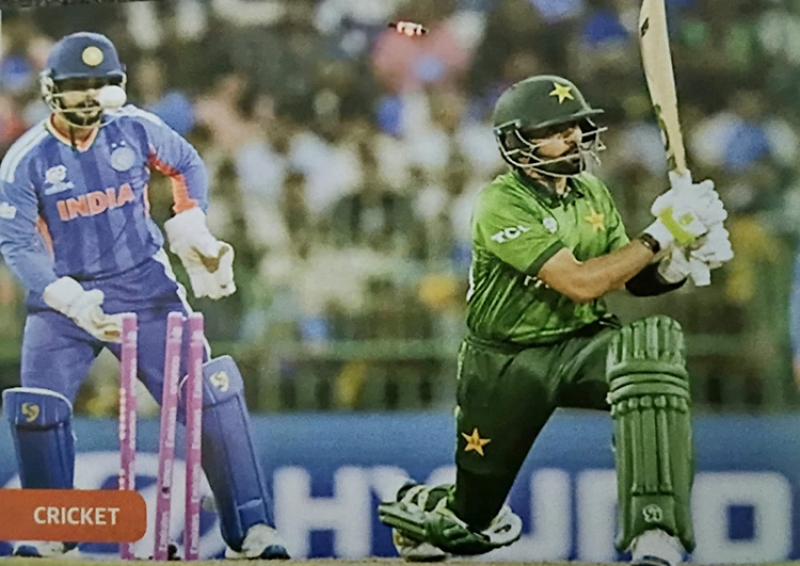
What was meant to be a festival of cricket has instead become a case study in how deeply politics, identity, and security anxieties now shape sport in South Asia. As the T20 World Cup already on its final way , the game finds itself trapped in a web of mistrust that no amount of last-minute scheduling or public relations spin can easily undo. Bangladesh’s refusal to travel to India over security concerns and the Pakistan Cricket Board’s formal endorsement of that stance has exposed fault lines that go far beyond cricket. This is no longer about fixtures and formats; it is about power, perception, and the limits of international sports diplomacy in a politically polarized region.
Bangladesh’s position has often been reduced to a binary choice: play or withdraw. That framing is convenient, but deeply dishonest. The Bangladesh Cricket Board (BCB) is operating in an environment where the safety of players cannot be separated from broader political signals. In recent years, India’s internal political climate has drawn sustained international scrutiny, particularly regarding communal rhetoric and the shrinking space for minorities. For a Muslim-majority country like Bangladesh, the concern is not abstract or ideological. Players, officials, and fans are acutely aware that sport does not exist in a vacuum. A hostile atmosphere real or perceived can be as damaging as a physical security lapse. When athletes feel unsafe, performance becomes secondary; dignity and well-being take precedence.
Critics of Bangladesh’s stance argue that international teams tour India regularly and that security arrangements are among the most sophisticated in world cricket. That may be true in a technical sense, but it misses the core issue: security is not just about armed escorts and fortified hotels. It is also about social climate, political messaging, and the signals a host nation sends to visiting teams. The rise of nationalist rhetoric and the mainstreaming of once-fringe demands such as calls to ban Bangladesh from international cricket create an environment where reassurances on paper struggle to carry weight. Even when such demands are legally dismissed, as they were by the Delhi High Court, their very articulation in the public sphere sends a chilling message beyond India’s borders.
Pakistan’s intervention fundamentally altered the dynamics of this crisis. By formally backing Bangladesh in a letter to the International Cricket Council (ICC), the Pakistan Cricket Board (PCB) transformed what might have been dismissed as a bilateral disagreement into a broader regional challenge. Pakistan’s support is not incidental; it is informed by painful institutional memory. For years, Pakistan endured international isolation after security concerns drove foreign teams away. That experience has left the PCB acutely aware of how perceptions fair or otherwise can reshape cricketing realities. When Pakistan argues that no team should be compelled to tour a country it deems unsafe, it is speaking less as a rival and more as a witness to how quickly legitimacy can erode.
At the same time, Pakistan’s involvement introduces inevitable geopolitical undertones. India-Pakistan relations have long cast a shadow over cricket, turning matches into symbolic extensions of diplomatic hostility. The ICC now faces an unenviable task: addressing legitimate security concerns without allowing the situation to devolve into a proxy political standoff. This is a test not just of administrative competence, but of moral authority. The ICC often claims neutrality, but neutrality without transparency is hollow. Power dynamics matter, and this episode has once again raised uncomfortable questions about whose concerns are treated as credible and whose are quietly managed out of sight.
The consequences of this impasse are no longer hypothetical. Bangladesh’s eventual withdrawal from the tournament and its replacement by an associate nation represents a watershed moment in international cricket. It is a rare instance where a full member has been excluded from a global event not because of sporting failure, but because of unresolved political and security disputes. For Bangladeshi players, the cost is deeply personal. Careers are short, World Cups are rare, and years of preparation have been erased by decisions taken far from the field. Senior figures within the Bangladesh camp have acknowledged the emotional toll, underscoring how exposed players are to forces they neither shape nor control.
Crucially, however, the ICC has decided not to punish Bangladesh for its withdrawal. There will be no suspension, no financial penalty, and no formal sanction against the BCB. On the surface, this decision reflects institutional restraint and an acknowledgment that security concerns once raised in good faith cannot be treated as misconduct. But it also reveals something more telling: the ICC implicitly recognizes that forcing participation under disputed conditions would have been indefensible. This sets a significant precedent. It signals that member boards cannot be coerced into compliance when player safety is in question, even if the commercial costs are high.
Yet this restraint does not erase the damage. Bangladesh’s absence still carries severe financial and developmental consequences. Loss of broadcast revenue, sponsorship exposure, and competitive momentum will be felt long after the tournament ends. Bangladesh has spent two decades shedding its underdog label and establishing itself as a credible force in world cricket. Being sidelined from a marquee event reinforces a troubling reality: even when a board is not formally punished, the structural costs of dissent are borne disproportionately by smaller or less influential nations.
India, as host, cannot avoid scrutiny. Hosting a World Cup is not merely a logistical exercise; it is an assertion of global leadership and soft power. India’s dominance within the ICC commercially and politically is an open secret. With that dominance comes responsibility. Repeated assurances of security are necessary but insufficient if they fail to address deeper anxieties about inclusivity and political tone. Trust is not built through statements alone; it is earned through sustained action, restraint in rhetoric, and an unequivocal rejection of communal hostility. When visiting teams feel compelled to question their safety, the reputational cost to the host nation is real, regardless of official narratives.
The ICC’s handling of this episode will reverberate well beyond this World Cup. By choosing not to punish Bangladesh, it has avoided an overt governance crisis but it has not resolved the underlying tension between commercial imperatives and ethical responsibility. If future tournaments see similar withdrawals, the precedent set here will be tested again and again. The governing body must decide whether this moment leads to stronger independent security assessments, clearer crisis protocols, and genuine consultation with players or whether it remains a one-off accommodation quietly absorbed into cricket’s long list of unresolved contradictions.
At a deeper level, this controversy reflects the fragile relationship between sport and politics in South Asia. Cricket is often romanticized as a bridge between hostile nations, a space where dialogue survives when diplomacy fails. That narrative is comforting but incomplete. Cricket has just as often mirrored political fractures, amplifying them rather than healing them. The current crisis is a reminder that when polarization intensifies, sport is rarely insulated. The danger lies in normalizing this entanglement to the point where withdrawals and exclusions become routine tools of political signaling.
For Bangladesh, Pakistan, and India alike, this moment demands maturity rather than muscle-flexing. Bangladesh’s concerns deserve to be treated as principled, not petulant. Pakistan’s support should translate into constructive engagement rather than symbolic escalation. India, wielding unmatched influence in global cricket, has an opportunity to demonstrate that leadership is measured not only by power, but by the ability to reassure even those who feel vulnerable.
The T20 World Cup was meant to celebrate cricket’s global reach and its unifying promise. Instead, it has become a cautionary tale about what happens when trust collapses and governance structures lag behind political reality. The fact that Bangladesh will not be punished may prevent an immediate institutional crisis, but it does not absolve the system of deeper failure. If this episode is remembered only for who played and who did not, it will represent a collective loss. If it sparks a genuine reckoning about safety, equity, and power in world cricket, it may yet force the game to confront truths it has long preferred to avoid.
In South Asia, cricket has never been just a game. The question now is whether its institutions are strong enough and brave enough to protect the people who play it when politics threatens to overwhelm the pitch.
(The writer is a Switzerland-based private banking financial crime specialist, columnist, and poet. He could be reached at: shahidul.alam@bluewin.ch)