

- China for ‘comprehensive ceasefire’ in Iran war during talks |
- Bangladesh Begins 18,000-Foot Gas Drilling in Brahmanbaria |
- Trump Pauses Hormuz Escort Mission Amid Deal Hopes |
- India's Interlinking of Rivers: An idea delinked from realities |
- Explosion at China fireworks factory kills 26 people |
Tehran hits back across region after US and Israel attack Iran
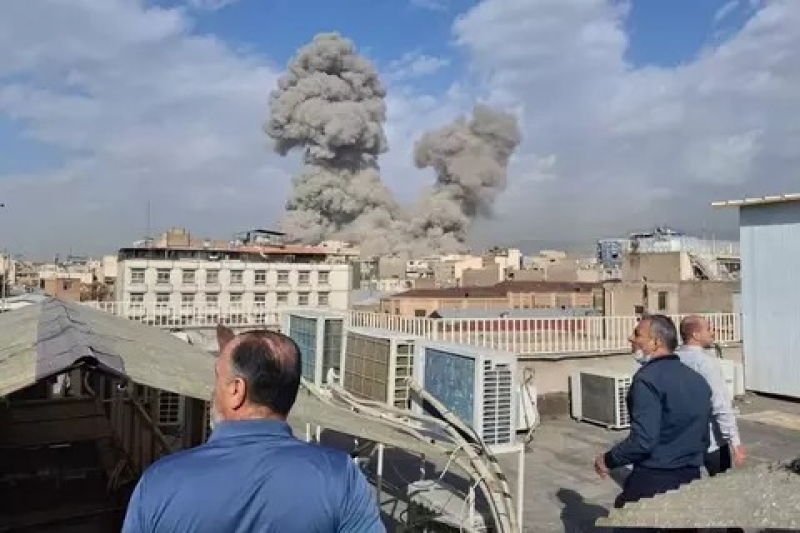
Iran strikes Gulf countries histing US military. Photo collected.
Dhaka, Feb 28 - The United States and Israel have launched co ordinated military strikes on the Islamic Republic of Iran in a dramatic escalation of Middle Eastern tensions, with President Donald Trump describing the action as a “massive and ongoing” campaign that could continue for several days.
Early on Saturday, explosions were reported in the Iranian capital, Tehran, and other cities as US and Israeli forces targeted a range of military and governmental sites across the country. Israel characterised its role as necessary to counter what it sees as an imminent threat from Tehran, while Washington said it was acting to degrade Iran’s nuclear and ballistic missile capabilities.
President Trump warned that American lives may be lost during the campaign and urged the Iranian people to “take over your government,” calling for a change of regime. He also accused Tehran of seeking to rebuild its nuclear programme despite earlier strikes on Iranian facilities that he previously claimed had destroyed them.
The strikes appear to have been months in the making. The Israeli military stated they followed “close and joint planning” with the US armed forces, aimed at dozens of military targets across Iran.
Iran’s Retaliation and Regional Impact
In response to the strikes, Iran launched what officials described as an unprecedented wave of retaliatory missiles and drones towards Israel and United States military installations across the Gulf region.
Sirens and reports of explosions were heard in the United Arab Emirates, Bahrain, Qatar, Kuwait and Saudi Arabia, with airspace closures and air defence systems scrambled as countries braced for further attacks. At least one person was reported killed in the UAE after missiles were intercepted.
Iran’s Revolutionary Guards have said they view all US and Israeli assets in the Middle East as “legitimate targets with no red lines,” signalling a further broadening of the conflict.
Wider Tensions and International Reaction
The conflict comes amid a backdrop of failed nuclear negotiations between Washington and Tehran, and follows earlier clashes in 2025 that saw missile exchanges between Iran and Israel.
International reaction has been mixed. While some US allies emphasise the need for regional security, others have expressed grave concern over the escalation and called for immediate de escalation to prevent a broader war.
At this stage, the situation remains highly volatile, with the potential for further military action across the Middle East as both sides prepare for an intensification of hostilities.
Source: Agencies via UNB