

- SSC and Equivalent Exams Begin Nationwide |
- US, Iran Signal War Readiness as Talks Hang in Balance |
- Bangladesh, EU Push for FTA, Investment Pact Talks |
- Over 1.14cr workers sent to Middle East in 22 years |
- BNP finalizes 36 nominations for women’s seats in Parliament |
Trump Gives Iran 48 Hours as Airman Hunt Continues
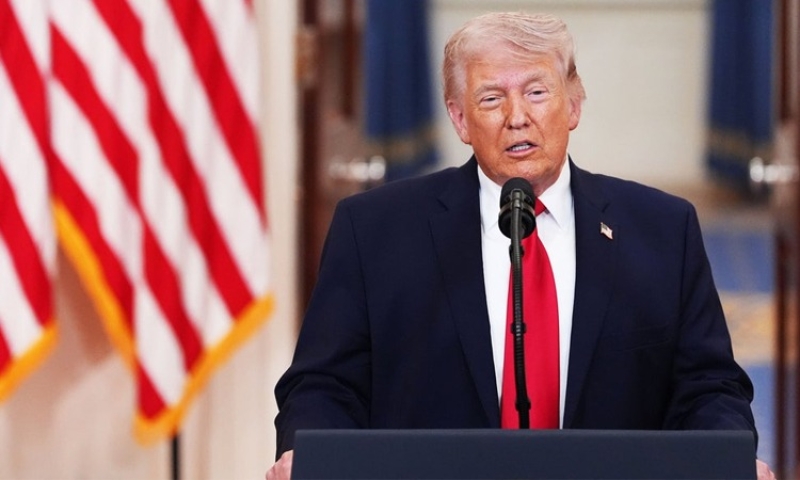
US President Donald Trump on Saturday gave Iran a 48-hour ultimatum to reach a deal or reopen the Strait of Hormuz, as American and Iranian forces continued searching for a missing US airman amid the widening regional conflict.
Trump issued the warning in a social media post, saying time was running out for Tehran. The threat came as tensions escalated across the region, including fresh missile and drone attacks, mounting pressure on Gulf shipping routes and continued military strikes on strategic sites.
Iranian military officials rejected the ultimatum, calling it provocative and warning of retaliation. The latest exchange of threats came as the war, now more than a month old, continued to spread beyond direct strikes between Iran and the US-Israeli alliance, disrupting regional security and global energy markets.
The search for the missing airman remained one of the most urgent developments on the ground. Iranian officials said a US F-15 had been shot down, while reports indicated one crew member had been rescued and the other was still missing. Iranian local authorities said military units, local volunteers and tribal groups were involved in the search effort in southwestern Iran.
Iran also claimed to have downed a US A-10 aircraft over the Gulf, though reports said the pilot in that incident was rescued. Images circulating online appeared to show Iranian security forces firing at a US helicopter during the search operation.
Meanwhile, a strike near the Bushehr Nuclear Power Plant raised fresh fears over nuclear safety. Iranian authorities said a guard was killed and part of the site was damaged by shockwaves and fragments. Russia, which helped build and operate the plant, said it had evacuated 198 workers following the incident.
Iranian Foreign Minister Abbas Araghchi warned that continued attacks on the facility could trigger radioactive fallout affecting Gulf countries. Bushehr lies closer to several Gulf capitals than to Tehran, adding to regional concern over the consequences of any further strikes.
IAEA chief Rafael Grossi said no increase in radiation levels had been reported, but described the latest incident as deeply concerning. He stressed that nuclear facilities and surrounding areas must never be targeted during conflict.
The conflict has increasingly expanded to economic and industrial targets, intensifying fears of broader disruption to oil and gas supplies. With the Strait of Hormuz remaining central to the standoff, the war continues to carry serious implications for the wider Middle East and the global economy.