

- Monira Sharmin’s MP candidacy cancelled, 49 other women valid |
- No scope for money launderers to return to bank boards: BB |
- Six closed jute mills to reopen under pvt management in 6 months |
- Uncertainty over possible US-Iran talks as Trump extends ceasefire |
- Bangladesh eyes broader bilateral engagements with African nations |
Iran Vows ‘Crushing’ Response as War Widens
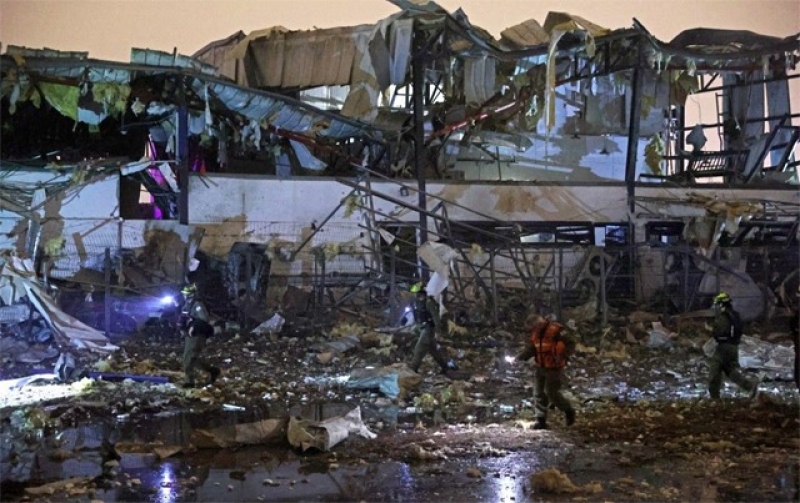
Iran and its regional allies exchanged fresh fire with Israel and the United States on Friday, as the month-long conflict showed no sign of easing and attacks increasingly struck economic and civilian infrastructure across the Middle East.
The escalation has deepened fears of wider disruption to global energy supplies, with strikes moving beyond military targets to hit industrial facilities, transport routes and key regional assets.
Iran said its latest wave of attacks targeted sites in the United Arab Emirates, Bahrain and Israel in retaliation for earlier US-Israeli strikes on its industrial infrastructure. Tehran claimed the strikes hit “American steel industries in Abu Dhabi, American aluminium industries in Bahrain, and the Rafael arms factories of the Zionist regime”.
Israel’s military said its air defence systems were intercepting missiles fired from Iran, although there were no immediate reports of casualties or major damage.
Earlier, explosions were reported near Tehran, while Iranian state television said a bridge in the northern town of Karaj was struck twice in US-Israeli attacks. The first strike reportedly caused civilian casualties, while the second hit as emergency teams were responding.
US President Donald Trump kept up his hardline rhetoric, claiming on social media that the bridge had been sent “tumbling down” and warning that “much more” could follow. The remarks came days after he threatened to bomb Iran “back to the Stone Ages”.
Iran’s two largest steel plants have also been forced offline after repeated strikes, according to company officials.
Meanwhile, Yemen’s Houthi rebels said they launched a fourth attack on Israel, firing what they described as a barrage of ballistic missiles at targets in the Tel Aviv area.
Despite the ongoing bombardment, some residents in Tehran gathered in Melat Park to mark the 13th day after Nowruz, the Persian New Year, when families traditionally picnic outdoors. A resident said Revolutionary Guard checkpoints had increased across the capital.
“They gather in the streets to show people they are still in power and nothing is going to change,” said a 30-year-old resident, who declined to be named.
In Israel, Passover celebrations continued under the shadow of war, with some families observing the holiday in underground shelters.
Strait of Hormuz Under Pressure
The conflict has also intensified pressure on global shipping, with Iran effectively shutting the Strait of Hormuz, a route that carries roughly one-fifth of the world’s oil supply.
British Foreign Secretary Yvette Cooper convened around 40 countries to demand the strait’s “immediate and unconditional” reopening, while Italy called for a humanitarian corridor to help avert a food crisis in Africa.
Tehran said it was preparing a post-war framework with Oman to oversee maritime traffic, although no formal talks have yet begun.
The head of the Gulf Cooperation Council, Jasem Mohamed AlBudaiwi, called for UN support to protect shipping in the strait, accusing Iran of blocking commercial vessels and imposing conditions on passage.
Bahrain has also proposed a draft UN Security Council resolution authorising force to guarantee free navigation, though the US-backed measure has reportedly divided member states ahead of a vote.
Against that backdrop, Trump warned that more strikes could target Iran’s energy infrastructure if no agreement is reached, saying Washington had “our eyes on key targets”, including power plants. He also suggested Iran’s new leadership might prove “more reasonable” in possible future talks.
Iran dismissed the US overtures as “maximalist and irrational”, saying messages had been passed through intermediaries but no direct negotiations were under way.
Iran’s health ministry said the Pasteur Institute, a century-old medical centre in Tehran, had also been heavily damaged in a strike.
Regional and Global Fallout
In Lebanon, Hezbollah said it launched drones and rockets at northern Israel, a day after an Israeli strike in Beirut reportedly killed a senior commander. Lebanese authorities said seven people were killed in the strike.
Eighteen European countries have urged both sides to halt fighting, amid fears that Israel could expand military operations into southern Lebanon.
The head of the International Organization for Migration, Amy Pope, warned of “very alarming” risks of prolonged displacement.
The economic impact of the conflict is now being felt far beyond the Middle East, with Gulf states once viewed as stable now facing direct threats. Air defences in the UAE intercepted missiles and drones, while global markets reacted nervously to the latest escalation.
Oil prices surged to around $110 a barrel on Thursday after Trump warned of further strikes, while the World Bank cautioned over rising risks to inflation, jobs and food security worldwide.
Several countries have already begun taking emergency measures. Airlines in China are raising fuel surcharges, Malaysia has asked civil servants to work from home, Iraq has reported a steep drop in oil revenues, and Pakistan has sharply increased fuel prices.
Even Bhutan has felt the impact, with fuel shortages leading to long queues in the capital, Thimphu.
“We are helpless,” one resident said.