

- Iran war: What’s happening on day 22 of US-Israel attacks? |
- Trump issues 48-hour Hormuz Strait ultimatum, threatens Iran power plants |
- 10 ways to save money as oil prices surge |
- Eid procession eases festive boredom in Dhaka: Asif Mahmud |
- Unease in Japan as Trump uses Pearl Harbor to defend Iran war |
War-Driven Energy Price Spikes Boost Renewables: UN
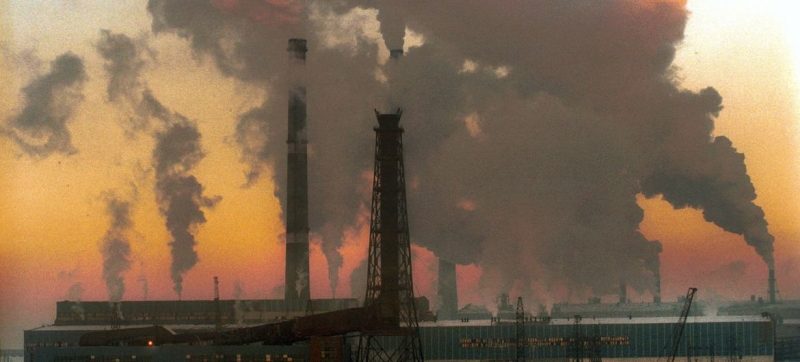
Fossil fuel-powered factories are a major contributor to climate change.
The disruption of global energy supplies is being felt worldwide, the UN’s top climate official warned on Monday, as conflict in the Middle East drives oil and gas prices sharply higher, echoing the market turmoil triggered by the war in Ukraine.
Speaking at the 2026 Green Growth Summit in Brussels, Simon Stiell, Executive Secretary of the UN Framework Convention on Climate Change (UNFCCC), said the volatility highlights the strategic value of renewable energy.
“Renewables turn the tables,” he said during a keynote address at the event, which brought together European climate and environment ministers along with businesses, investors and other key stakeholders.
“Sunlight does not depend on narrow and vulnerable shipping straits, wind blows without massive taxpayer-funded naval escorts, and renewable energy allows countries to insulate themselves from global turmoil and sidestep might-is-right politics,” he said.
Renewable energy also delivers on people’s top priorities across the continent, including security, well-paid jobs, better health and relief from rising living costs, he added.
Fossil fuel dependency
“Fossil fuel dependency is stripping away national security and sovereignty and replacing them with subservience and rising costs,” Stiell said. He added that the reality is clear: climate action delivers at scale and aligns with what voters increasingly demand.
“Renewables and resilience keep bills down and create far more jobs,” he said.
“Cutting fossil fuel pollution also cleans our air, improving health and quality of life.”
A cycle bound to repeat
Stiell criticised arguments that call for doubling down on fossil fuels in response to the current crisis.
“Some responses to the fossil fuel crisis, incredibly, argue for doubling down on the very cause of the problem and slowing the shift to renewable energy, even though it is clearly cheaper, safer and faster to deploy,” he said.
“This is completely delusional because history tells us this fossil fuel crisis will happen again and again,” he added, warning that dependence on fossil fuels leaves economies, household budgets and businesses “at the mercy of geopolitical shocks and price volatility in a chaotic world”.
His message to ministers meeting in Brussels was clear: continued reliance on fossil fuel imports will leave Europe lurching from one crisis to another, with households and industries ultimately paying the price.
The UNFCCC chief noted that the region relies heavily on imported fossil fuels, which cost the continent more than €420 billion in 2024 alone.
‘Immense’ opportunities
Stiell also pointed out that in 2025 renewable energy overtook coal as the world’s largest source of electricity, while more than $2 trillion was invested in clean energy, double the investment in fossil fuels.
“The opportunities are immense,” he said.
As a leader in climate ambition, Europe’s policies, including its emissions trading system, are driving investment and innovation. Companies such as SSAB, Maersk and Holcim are leading developments in green steel, shipping and cement, while firms like Siemens and Schneider Electric are pioneering advances in wind power, energy storage and electro-technology services.
Investment potential
“Europe can permanently seize the multi-trillion-euro goldmine of investment that is only just beginning by embracing green growth and building on its strengths,” Stiell said, pointing to the region’s strong education systems, institutions, regulation and innovation capacity.
Reflecting on history, he noted that when Europe began rebuilding after devastating wars in the last century, cooperation on energy was central to integration because secure and affordable supplies were seen as the foundation of peace and prosperity.
“Today, those truths are more important than ever,” he said.