

- Human Rights Record ‘Alarming’ Over 17 Months, Says HRSS |
- Tarique Warns of Deep Plot, Urges Vigilance Nationwide |
- Son of late ruler Gadhafi is killed in Libya |
- Special prayers, foods, charity mark Shab-e-Barat in Old Dhaka |
- Exiled Awami League Leaders Plan Political Comeback from India |
Agrihoods: Rethinking Cities for a Greener Future
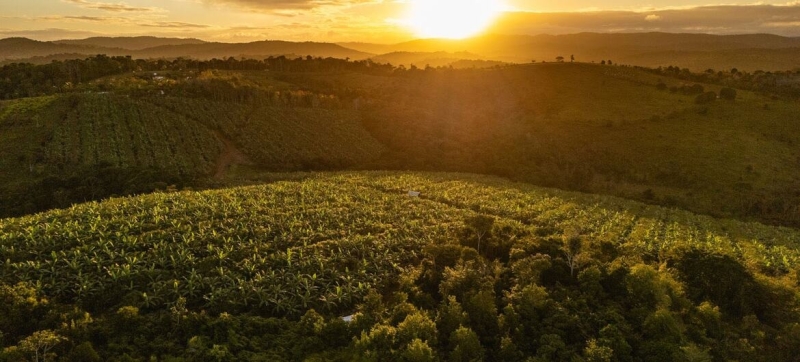
Aerial view of a cacao agroforestry farm in southern Bahia, Brazil.
Towns and cities are home to more than half of the world’s population and are responsible for around 70 per cent of the greenhouse gas emissions driving the climate crisis. This is why urban planners in Brazil are leading a design revolution that could point the way to building cities with a dramatically smaller carbon footprint.
It is hardly an exaggeration to say that the traditional model of urban growth has not been kind to the planet. Poor—or non-existent—planning has resulted in a host of problems, including flooding, heat islands, where built-up areas become much hotter than surrounding rural zones, and water scarcity.
At the same time, cities have become increasingly detached from food systems and nature. The growing distance between urban life and farmland fuels deforestation, increases emissions and erodes ecological awareness.
Marcia Mikai and her colleagues believe they have an answer to unsustainable urban sprawl. They call it the “agrihood”.
Her company, Pentagrama Projetos em Sustentabilidade e Regeneração, is reimagining how cities expand so that urban growth helps restore ecosystems, strengthen climate resilience and foster healthier communities.
Urban planners, designers and architects at Pentagrama are already putting these ideas into practice in several Brazilian cities, most notably São Paulo, where a metropolitan population of around 22 million continues to push into farmland and forests, blurring the boundaries between urban and rural areas.
Green and profitable
“I’ve been studying financial models for agroforestry systems for decades,” Ms Mikai said. “One thing my research has shown is that agrihoods can be very profitable.
“Many people are deeply concerned about food security. They want a place to live with high-quality shared spaces and a strong sense of community. When I show them images of what these neighbourhoods could look like, they are enchanted.”
Ms Mikai’s model aims to curb unregulated urban expansion by bringing degraded land—often abandoned after unsustainable practices such as intensive cattle grazing—back to life.
In this version of the agrihood, a term originally used to market residential developments in the United States, land is regenerated through a blend of sustainable forestry, mixed-use buildings and spaces dedicated to environmental education.
Working with nature
These redesigned zones work in harmony with nature, becoming almost an extension of the natural environment. Native and edible plants and trees are replanted, helping to cool cities and reduce flood risks by slowing surface runoff while also replenishing underground aquifers.
Endangered species pushed out by urban expansion find refuge, shared green spaces reconnect residents with food production and community life, and biodiverse landscapes actively absorb carbon from the atmosphere—turning urban development into climate action.
“Agrihoods have so many advantages,” Ms Mikai said. “They conserve water, protect biodiversity and allow people to eat locally produced food. We see them as places where young and old, wealthy and low-income residents can live together and integrate.
“Maybe I’m a romantic, but I believe this can become our reality.”
The bigger picture
Agrihood projects being piloted in Brasília and Curitiba are reinforcing a key message from the United Nations: investing in nature-positive solutions delivers both environmental and economic returns.
Earlier this month, the UN Environment Programme released its latest State of Finance for Nature report, which found that investment in activities harmful to the planet—such as fossil fuel energy, utilities and construction—is 30 times greater than funding for nature-positive solutions, including agrihoods.
Ivo Mulder, head of climate finance at UNEP, warned that unchecked exploitation of natural resources poses long-term economic risks. “The iceberg below the water is that while nature-negative finance is driving our economies today, it will eventually drive them into the ground,” he said.
Rethinking nature in cities
Mr Mulder also argued that public attitudes towards nature must evolve. Rather than viewing nature solely as pristine landscapes or fenced-off national parks, he said, cities should embed nature into everyday life.
Urban areas must be adapted to withstand extreme weather so that heavy rainfall does not flood streets and homes, he added. This shift in thinking should extend beyond policymakers and developers to the general public.
“In times of geopolitical uncertainty, people often feel pessimistic,” Mr Mulder said. “But they need to imagine positive alternatives. Think of what a city like New York could look like with more nature-based solutions—more green spaces, less need for air conditioning in summer, higher productivity and a more vibrant economy.”