

- WB ready to support Bangladesh amid external economic shocks: Khosru |
- PM, World Bank President Discuss Bangladesh’s Development |
- Bus Fares Rise by 17 Paisa Per Kilometre |
- PM arrives in New York to attend 81st UNGA session |
Study Finds 23% of Bangladeshi Children at Severe Online Risk
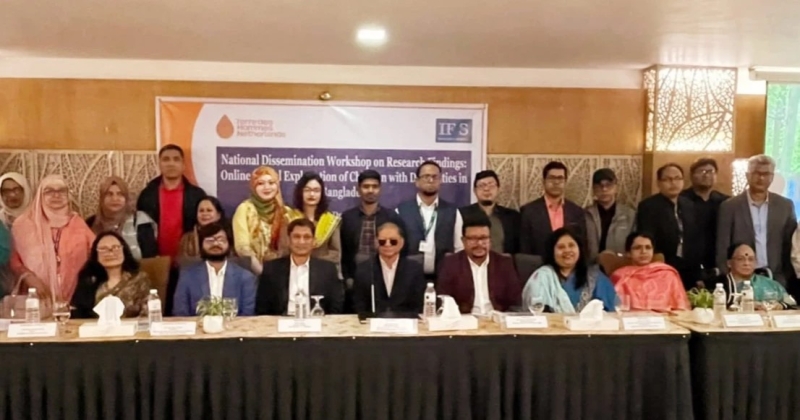
A new study has revealed that 23 percent of children in Bangladesh face severe risks on online platforms, with Facebook identified as the most dangerous digital space for young users.
The findings were presented on Monday at a national workshop in Dhaka focused on preventing online sexual exploitation of children, including those with disabilities.
The research, titled Prevention of Online Sexual Exploitation of Children and Children with Disabilities in Bangladesh, shows that 8 percent of children face partial risks, while 69 percent remain only partially safe online. Notably, 77 percent of children using Facebook encounter serious risks, followed by Instagram at 15 percent, with other social media platforms also found to be unsafe.
Professor Dr Md Ahsan Habib of Dhaka University presented the study at the event, chaired by Programme Coordinator Nurul Kabir.
Department of Social Services Director General Md Saidur Rahman Khan, DMP Deputy Commissioner (Women Support and Investigation) Farhana Yasmin, disability expert Shah Moazzem Hossain, Blind Education and Rehabilitation Development Organisation Executive Director Md Saidul Haque, and Access Bangladesh Foundation Chairperson Mohua Pal addressed the workshop.
Professor Habib warned that rapid digital expansion—from urban centres to remote rural areas—has created both opportunities and heightened risks, particularly online sexual harassment. Children remain the most vulnerable, he said, stressing the need for inclusive education, specialised teacher training, and accessible justice systems to ensure safer online environments.
He emphasised that no single intervention can address these challenges and called for stronger inclusion of children with disabilities in online safety policies and legislation.
He also urged coordinated efforts among disability programmes, digital literacy initiatives, and child protection workers, along with advocacy to challenge stigma and drive community and policy-level reform.
Department of Social Services DG Saidur Rahman Khan noted that children remain at risk of both physical and psychological abuse, including hidden online dangers. He highlighted the importance of community engagement and strengthened collaboration between government and non-government organisations.
He also stated that a National Platform for Child Protection has already been established to enhance coordination.
In his concluding remarks, Nurul Kabir pointed out that children with disabilities are among the most marginalised globally. While around 16 percent of the world’s population lives with disabilities, Bangladesh’s official figure is only 2.8 percent—reflecting chronic underreporting and deep-rooted social stigma. Cultural and religious attitudes continue to limit access to education, mobility and equal opportunities, making life even more challenging for these children.