

- US seeks to befriend Jamaat-e-Islami, reports Washington Post |
- Tarique urges people to help restart democracy, elected reps solve problems |
- $1 for Nature, $30 for Its Destruction: UN Warns |
- Madhyanagar Upazila in limbo four years after formation |
- BNP leader injured in gun shot in Keraniganj |
Young People Must Be Truly Involved in Education Reform
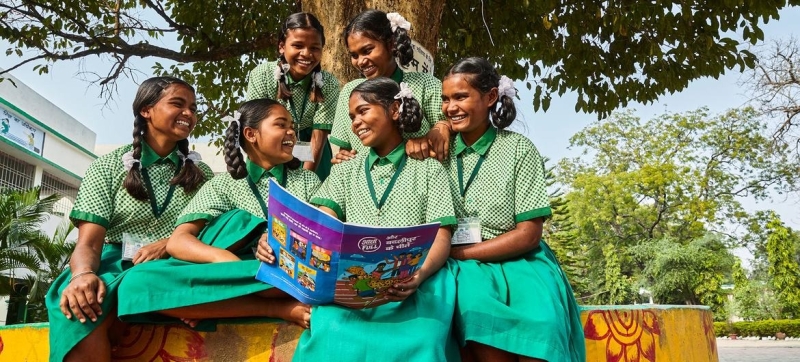
Young women discuss life skills at a school in Jharkhand, India.
With people under 30 making up more than half of the global population and over 272 million children and young people still out of school, youth participation in shaping education systems is becoming increasingly vital.
Yet stark inequalities persist. In the world’s poorest countries, 36 per cent of children and young people are out of school, compared to just 3 per cent in the richest nations, highlighting the urgent need for inclusive, youth-led approaches to education reform.
Ahead of the International Day of Education, themed this year “The power of youth in co-creating education,” experts and young leaders stressed the importance of genuinely involving young people in education policy and decision-making.
Marco Pasqualini of UNESCO said young people have a direct stake in education as its primary beneficiaries, noting that reforms and priorities have an immediate impact on their lives. Co-creating education, he said, means giving young people a voice to define priorities and recognising their willingness to drive meaningful change.
Jacques Kwibuka, a UN young leader from Rwanda, said education policies were often designed based on assumptions rather than real engagement. “In the past, policymakers thought they understood young people because they were once young themselves,” he said. “Co-creation means not just thinking about young people, but engaging them and giving them space and freedom to contribute meaningfully.”
Despite progress, Pasqualini said inequality in access to education remains severe, particularly for children with disabilities, ethnic and linguistic minorities, refugees and migrants, and LGBTQ youth.
Kwibuka identified two major challenges: institutional mindsets that undervalue youth voices, and self-doubt among young people themselves, particularly in rural areas. He said organisations should create more open and accessible platforms to enable meaningful youth participation.
Pasqualini said UNESCO addressed this gap by establishing the SDG4 Youth and Student Network, which now includes 110 members from 80 countries selected from over 5,000 applicants. The network enables young people to engage directly with global education leaders and contribute expertise to education policy discussions.
Kwibuka expressed optimism about the future, citing technology and youth-led initiatives, particularly in Rwanda. He said digital platforms are helping young people strengthen their collective voice and engage more effectively in shaping education and health systems.
Despite global uncertainty and pressure on multilateralism, Pasqualini said interest in education remains strong. He reaffirmed UNESCO’s commitment to leading global efforts to transform education through inclusive and participatory approaches.