

- Speaker Calls Sheikh Hasina ‘World’s Best Actress’ |
- 60,000 villagers stranded in Daulatpur as Padma rises 3cm in 24 hours |
- Assertive Diplomacy Urged as Mecca Pact Ignites Strategic Security Issues |
- World Experiences Hottest August on Record |
- PM opens dengue prevention, cleanliness campaign |
Exports exceed $14B in two decades in Karnaphuli EPZ
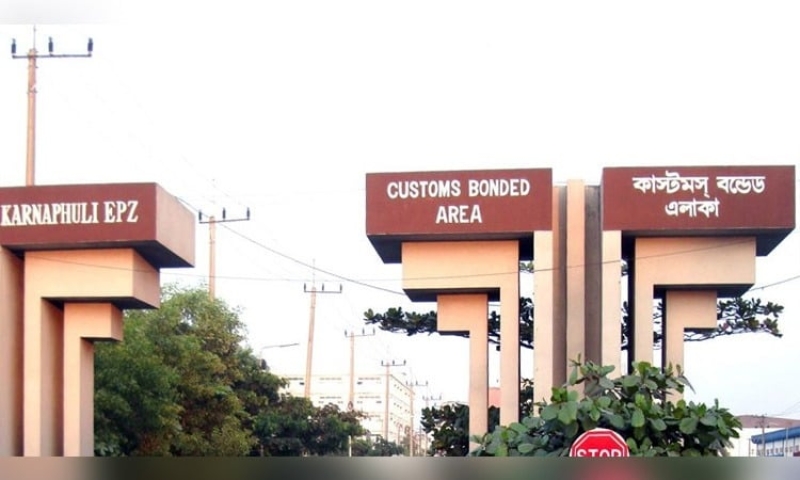
Karnaphuli Export Processing Zone (KEPZ) has successfully completed two decades of its existence and made a significant contribution to the advancement of export-oriented industrialization in Bangladesh.
Throughout these 20 years, it has facilitated the export of "Made in Bangladesh" products valued at over $14 billion. Following its official inauguration in 2006, the first export from Karnaphuli EPZ occurred in November 2007, executed by Paolo Footwear (BD) Ltd. The export journey commenced with a value of $9.86 million in the fiscal year 2007-08 and is projected to reach a total of $14,156.46 million by the end of August 2026.
In addition to apparel, the zone exports a variety of products including tents and camping equipment, bicycles, leather goods, furniture, bags, undergarments, as well as fashion and safety wear, thus enhancing the diversity of the country's export portfolio. These items are supplied to some of the most prestigious brands and buying houses globally.
This information was disclosed on Saturday morning (September 12) during a discussion with journalists regarding the "two-decade transformation and growth" of Karnaphuli EPZ. The session underscored the comprehensive journey of the zone, which was established on the premises of the now-defunct Chittagong Steel Mills (CSM).
Mahbub Ahmed Siddique, Executive Director of KEPZ; Md. Tanvir Hossain, Member (Investment Promotion) of BEPZA; Anwar Parvez, Executive Director (Public Relations) of BEPZA; and Lee Hengo, CEO of Campvalley Global Limited, among others, were present in the function.
Mahbub Ahmed Siddique, Executive Director of Karnaphuli EPZ, remarked that CSM Ltd. once thrived on the banks of the Karnaphuli River, located approximately 10 kilometers from Chattogram city.
Due to its position along the banks of the Karnaphuli River, the factory experienced significant damage during the catastrophic cyclone of 1991. Over the years, the mill gradually faced losses attributed to global market competition, outdated technology, increasing production costs, and various management challenges.
As a result, in 1998, the facility was placed under "lay-off," leading to an expenditure of around Tk 80 crore for workers' wages and allowances. Subsequently, on July 7, 1999, a notification was issued to permanently cease operations at Chittagong Steel Mills Limited (CSM).
This situation left numerous workers without jobs; a silence enveloped the area that had once thrived with the activity of thousands of employees. Thus, the era of Chittagong Steel Mills concluded. Nevertheless, every conclusion opens the door to a new beginning.
To address this deadlock, Amir Khasru Mahmud Chowdhury—who served as the Commerce Minister at that time and is currently the Finance Minister of the government—wrote to the then-Prime Minister, advocating for Chittagong Steel Mills Limited to be included in the Chittagong Export Processing Zone (EPZ).
In response, a decisive action was taken to create an EPZ on the land of the steel mill. An initiative aimed at renewed industrialization under BEPZA was launched, with the goal of revitalizing the Patenga area and generating employment and industrial development opportunities. The land of the steel mill was transferred to BEPZA in two phases in 2004: the first phase involved 74 acres on February 22, and the second phase involved 148.42 acres on December 20.
Thus, the entire property of the defunct Chittagong Steel Mills was officially handed over to BEPZA. The transformation process commenced; old structures were dismantled, and the land was developed. A modern, well-planned industrial zone—the Karnaphuli Export Processing Zone (Karnaphuli EPZ)—was established on that very site, featuring integrated modern infrastructure, factories, and utility facilities.
On September 12, 2006, the then-Prime Minister Begum Khaleda Zia officially inaugurated the Karnaphuli Export Processing Zone (EPZ). Executive Director Mahbub Ahmed Siddique indicated that investors from 14 different countries, including Bangladesh, have made investments in the Karnaphuli EPZ.
Among these countries, notable mentions include China, Taiwan, Hong Kong, South Korea, India, Sri Lanka, Japan, the United Kingdom, the United States, the Netherlands, and Malaysia.
The EPZ began operations in the fiscal year 2006-07 with an initial investment of US$ 1.91 million, and by August 2026, the total investment in Karnaphuli EPZ had escalated to US$ 787.33 million. All are 258 industrial plots, each covering an area of 2,000 square meters, along with five standard factory buildings that collectively offer a floor space of 49,798 square meters, have been allocated to investors.
Now, there are 40 enterprises functioning within the Karnaphuli EPZ; of these, 29 are entirely foreign-owned, three are joint ventures, and the remaining eight are domestically owned. Besides, five enterprises are in the process of being established. It was noted that the zone has created direct employment for approximately 80,000 workers and has indirectly provided jobs for around 100,000 additional individuals, reports BSS.