

- Dhaka Cattle Prices Drop Sharply Before Eid-ul-Azha |
- Fresh rain spell triggers waterlogging in Dhaka, hampers Eid prep |
- Over 1.5 million pilgrims perform Hajj amid regional tensions |
- After the blaze, Kalshi slum dwellers see what little remains |
- Dhaka, 5 other divisions to see heavy rainfall in 24 hours |
Felani killing: Judicial process drags on in India
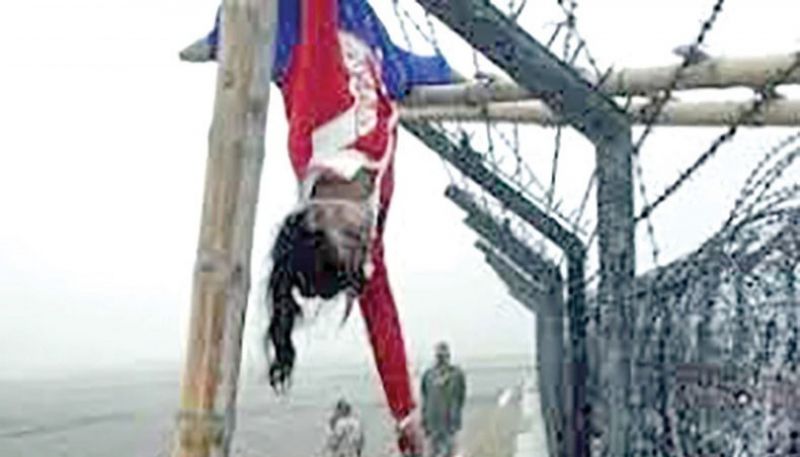
Felani killing at border
Kurigram, Jan 8: Yesterday marked the 12th death anniversary of Felani Khatun, whose killing stood out among the at least 1236 Bangladeshis who lost their lives at the hands of the Indian Border Security Force between 2000-2020 (Odhikar).
On January 7, 2011, fifteen-year-old Felani Khatun was gunned down by the BSF when she, along with her father, was returning home from India through Anantapur border along Phulbari upazila of Kurigram.
Felani and her father were not cattle smugglers, the usual victims of India’s trigger happy border guards (although opening fire unless they pose a threat is also illegal under Indian law). In fact, she used to work as a domestic help in New Delhi.
The little girl was obviously unarmed and represented no threat. The image that went viral of her body stuck on the barb-wire border fence, shot in the act of climbing past it, disturbed the conscience of people on both sides of the fence.
A case filed against the BSF in an Indian court with the cooperation of Indian human rights activists remains pending in the Indian High Court. Twelve years on, a sense of despondency has gripped the parents of Felani in their search for justice.
Though the judicial proceedings in the case have been delayed due to Covid-19, they still expressed their hope to stop the border killings through the establishment of justice.
Felani's death triggered a huge global outcry as the photo of her body hanging upside down went viral. The BSF men handed over the body a day after her killing.
Following the outcry on both sides of the border, BSF started an internal investigation into the incident and submitted a chargesheet against its constable Amiya Ghosh, who fired the fatal shot. It was the first such instance for a killing in the Bangladesh portion of India’s border.
However, a special court constituted by the BSF acquitted Amiya Ghosh of the charge in August 2013.
Later, in the wake of widespread criticism of the acquittal, BSF decided to revive the murder trial. Yet another judicial court upheld the previous verdict and acquitted Amiya Ghosh again in July 2015.
Following this, Felani's father Nurul Islam with the help of the Indian human rights organisation Manabadhikar Suraksha Mancha (Masum) filed a writ petition with the Supreme Court of India.
The Supreme Court bench, headed by the country’s chief justice, show-caused several Indian bodies including the Home Ministry, in this regard.
Felani’s father, Nurul Islam told UNB, “My daughter was killed by the BSF member in front of my eyes while crossing the border but I did not get justice in the last 12 years. The date of the trial proceedings was deferred several times. Now, I demand capital punishment for Amiya Ghosh and I hope the governments of the two countries reach an agreement to revive the judicial process and complete it."
Jahanara Begum, mother of Felani, said, "I was in India when my daughter was killed. My soul will not rest until justice is done for my daughter's murder."
SM Abraham Lincoln, public prosecutor of Kurigram district who has stood by the family through the entire period, said despite the showcause notices, no hearings have been held as yet on the writ petition by a bench of the Indian Supreme Court. - UNB