

- PM Tarique Makes Surprise Visit to SPARRSO |
- Argentina Beat Jordan 3-1 to Top Group J |
- 12 Chinese companies interested to invest over $9bn in Bangladesh |
- BNP govt solved Rohingya crisis twice before, will do so again: FM |
- Venezuela earthquakes kill 920, tens of thousands missing |
Invest in food systems to fight global hunger crisis
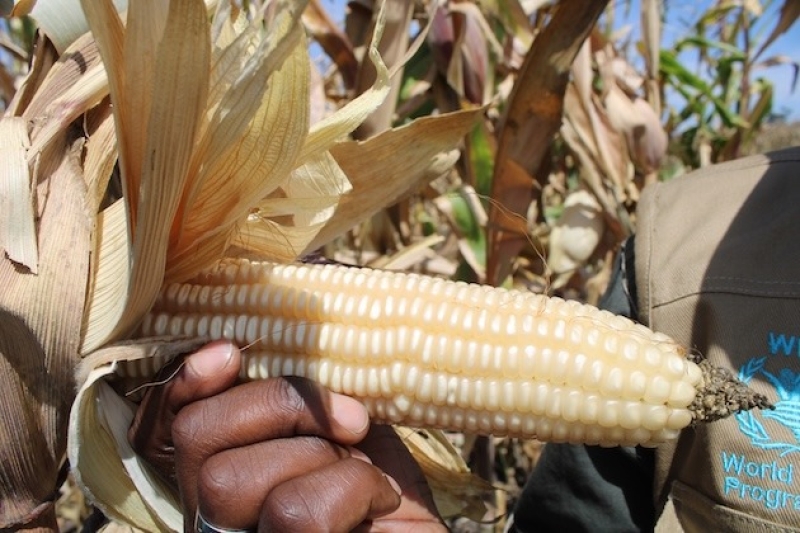
Global food production is threatened by the current disruptions of fuel and fertiliser supplies as a result of the Middle East war.
As the global target to eliminate hunger by 2030 increasingly slips out of reach, experts say investing in the way the world produces and distributes food is essential to preventing a worsening crisis.
Investing in agrifood systems, from production and processing to distribution and consumption, is key to building a more resilient global agriculture sector, said Mohamed Manssouri, Assistant Director-General and Director of the Food and Agriculture Organisation (FAO) Investment Centre.
“Agrifood systems are being tested today like never before by climate extremes, dwindling natural resources, economic shocks, supply disruptions, political turmoil and tighter public spending,” Manssouri told IPS in an interview.
“The COVID-19 pandemic, the war in Ukraine, and now the conflicts in the Middle East are stark reminders of how interconnected global supply chains are,” he added.
Manssouri leads a multidisciplinary global team of more than 200 experts and 500 consultants working across 120 countries. The team provides investment and finance solutions to FAO member states, international and national financial institutions, and both public and private investors.
The FAO Investment Centre designs investment strategies and policies to support public and private agrifood investment programmes. It also develops innovative financing mechanisms aimed at de-risking and attracting private investment.
He said the conflict in the Middle East has added pressure on already fragile global commodity supply chains, threatening the availability, accessibility and affordability of food, especially in net food-importing countries.
According to FAO analysis, disruptions in the Strait of Hormuz have reduced global urea trade by 30% to 35%. Urea, a key fertiliser that supplies nitrogen to crops, has seen prices rise by 14% to 60%. Natural gas prices, essential for nitrogen fertiliser production, have also increased by up to 90%.
Excerpts:
IPS: What are the biggest threats facing agrifood systems today?
Manssouri: Current disruptions in trade and distribution systems are being compounded by rising energy prices and volatile fertiliser markets. This is increasing production costs and affecting yields, posing risks to global food production, farm incomes and food security.
Other challenges include the need to produce more nutritious food for a growing population while reducing environmental impact. In developing countries, bridging the financing gap remains critical, with hundreds of billions of dollars still needed. In Sub-Saharan Africa, three in four agrifood micro-enterprises lack access to finance due to weak capacity, high transaction costs and perceived agricultural risks.
Additional challenges include an ageing farming workforce, youth unemployment, and rapid technological change, including AI, which requires new skills. FAO reports show that over 20% of young people globally were not in education, employment or training in 2023.
IPS: Why is investment in agrifood systems important?
Manssouri: Investment is essential because it is about sacrificing something today to achieve better outcomes in the future. Without investment, we cannot expect meaningful impact. It helps lift people out of poverty and hunger. We believe the right to food is a basic human right, and peace is both a prerequisite for food security and a result of it.
The 2025 State of Food Security and Nutrition in the World report shows global hunger declined slightly from 8.5% to 8.2% in 2024. However, progress remains uneven, with rising food insecurity in Africa and West Asia. About 673 million people faced hunger in 2024, while 2.33 billion were moderately or severely food insecure.
Agricultural systems must be transformed to become more sustainable, resilient and inclusive. Investment is central to this transformation. It also creates jobs, with nearly 1.3 billion people employed in agrifood systems in 2022.
We need policies that go beyond farming and include transport, storage, processing and markets. This helps small-scale farmers and rural entrepreneurs connect with finance, technology and markets.
IPS: How does the FAO Investment Centre support this?
Manssouri: FAO works across agriculture, livestock, forestry, fisheries and aquaculture. Investment work requires partnerships, which are central to our approach. For over 60 years, we have worked with countries and financial institutions.
Each year, we operate in 120 countries. In 2025, we helped design 43 major investment programmes across 44 countries worth $7.8 billion. Our overall supported portfolio is around $50 billion.
We are also introducing blended finance mechanisms to reduce investment risks and attract private capital, especially as public budgets tighten.
IPS: How is FAO mobilising financing?
Manssouri: Governments are reducing spending, so we must attract more public, private and blended finance. We use data, expertise and partnerships to reduce risks in agrifood investment.
We are working with partners such as the Gates Foundation, Asian Development Bank and European Investment Bank to expand digital agriculture, lending and innovation. Through blended finance programmes, we are helping unlock hundreds of millions of euros for smallholders and agri-SMEs.
We are also supporting initiatives such as Ghana’s AgriFI programme and FAO’s Hand-in-Hand Initiative, which identified $17 billion in agrifood investment opportunities to improve food security and climate resilience.
IPS: What are the key focus areas this year?
Manssouri: In Africa, we are focusing on agrifood jobs and inclusive growth, especially for a rapidly growing young population. We aim to create employment opportunities along value chains and strengthen training and education.
We are also supporting sustainable technologies, improving productivity, and expanding investment in key value chains such as cocoa, cashew, coffee, wheat, rice and dairy across Africa, Asia and other regions.
Finally, we are increasing the use of climate finance, insurance, guarantees and public-private partnerships to make agrifood systems more efficient and resilient.