

- India Reviewing Bangladesh’s Request to Extradite Hasina |
- Adani's 800MW Power Unit to Remain Shut for 25 Days |
- Dhaka Ranks 6th Among World's Most Polluted Cities on Wednesday |
- RMG Workers' Minimum Wage Raised 36% to Tk 17,000 |
- Decades of gains against AIDS could unravel as HIV funding dries up |
PM Orders Independent Price Checks on Costly Project Equipment
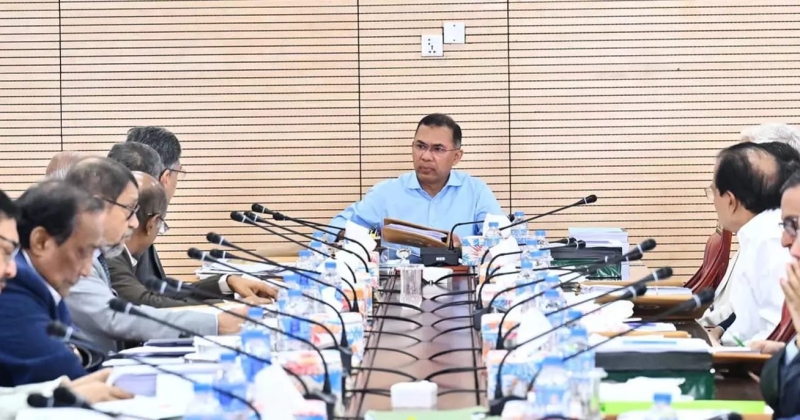
Prime Minister Tarique Rahman on Wednesday directed the authorities concerned to introduce independent third-party price assessments for expensive medical equipment and machinery during procurement to prevent inflated costs and ensure transparency in public spending.
The directive came as the Executive Committee of the National Economic Council (ECNEC) approved the second revision of a major project to establish comprehensive cancer, cardiac and kidney treatment centres in eight divisional cities.
State Minister for Planning Zonayed Abdur Rahim Saki disclosed the Prime Minister's instructions while briefing reporters after the ECNEC meeting.
The Prime Minister also directed the authorities to secure approval for the required manpower alongside development projects and complete their training before the projects are finished, ensuring that newly procured sophisticated medical equipment can be put to immediate use.
Saki said Tarique gave detailed instructions on major healthcare infrastructure projects involving the procurement of modern medical equipment.
"The required manpower must be approved at the same time as the project. Once approved, they must receive the necessary training before the project is completed," he quoted the Prime Minister as saying.
The Prime Minister also directed that procurement conditions should require equipment manufacturers and suppliers to provide specialised training to doctors, technicians and other relevant personnel on operating sophisticated medical equipment.
Saki said the government wanted to prevent expensive medical equipment from remaining unused because of a shortage of trained personnel, a problem observed in several public healthcare institutions.
He said the government would seek approval from the Ministry of Public Administration and the Finance Ministry for the required positions at the initial stage of project implementation rather than waiting until projects approached completion.
The state minister also said the Prime Minister had approved a proposal to engage independent domestic or international price assessment firms to examine the costs of particularly expensive equipment and machinery.
The government has already introduced measures to strengthen cost monitoring, including the use of approved rate schedules and expert assessments for specialised items not covered by regular procurement schedules, he added.
A software system is also being developed to use artificial intelligence (AI) to check whether project expenditure complies with approved rate schedules, Saki said.
For specialised equipment not covered by the schedules, relevant experts will be invited to pre-ECNEC Project Scrutiny Committee meetings to examine proposed prices.
Saki said the measures were intended to establish an institutional system of checks and balances and prevent excessive spending on development projects.
The revised cancer, cardiac and kidney treatment project will cost Tk 4,532 crore, up from the original Tk 2,388 crore. Its cost had earlier been revised to Tk 3,433 crore.
Saki said the project, initially undertaken in 2019, had expanded from a 100-bed cancer hospital initiative into a broader programme covering cancer, cardiac and kidney treatment facilities, with increased bed capacity and modern medical equipment.
He said Bangladesh records around 180,000 new cancer cases every year, while approximately 130,000 patients die from the disease annually.
The National Institute of Cancer Research and Hospital in Dhaka can currently provide services to around 40,000 patients a year, placing considerable pressure on its facilities.
The state minister said the government had also prioritised recruitment and training for another project involving the construction of 500-bed medical college hospitals in Jashore, Cox's Bazar, Pabna and Noakhali, alongside the vertical expansion of the National Institute of Gastroenterology and Hepatology Hospital.
The cost of that project has increased from Tk 2,103 crore to Tk 3,971.64 crore under its second revision.
Saki said the expansion of the gastro-liver hospital would include a liver transplantation unit.
Seven Bangladeshi doctors have already received training in liver transplantation in five countries. An agreement with foreign partners would help them gain practical experience before performing such operations independently, he added.
The government expects the project to help establish the capacity to conduct liver transplants in Bangladesh, Saki said.