

- Bangladesh Eyes Smarter Future With AI-Driven Services |
- Dhaka’s air quality has been recorded ‘moderate’ on Saturday |
- Bailey bridge collapse disrupts direct Dhaka link to Chandpur |
- No role to play in Hasina presser, Not endorse what was said: Delhi |
- Saudi, Turkey, Pakistan sign ‘Mecca Joint Defense Agreement’ |
Over 15,700 killed in motorbike crashes; young people make up 58%: RSF
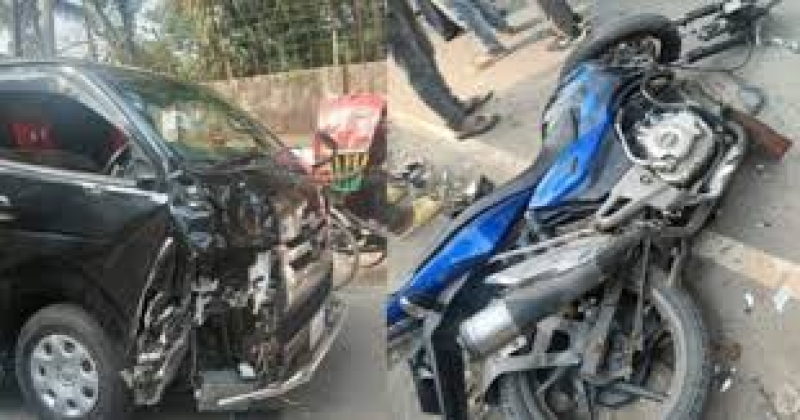
A total of 15,712 people were killed and 14,143 injured in motorbike accidents across Bangladesh in seven and a half years from 2020 to July 2026, according to a report of Road Safety Foundation (RSF).
A large number of the victims were young people, with 58 percent of those aged between 13 and 35, said the report published on Saturday.
Of the total accidents, 6,314, or 39.30 percent, occurred when heavy vehicles hit motorbikes, while 5,497 accidents, or 34.21 percent, happened after motobike riders lost control.
Another 3,548 accidents, or 22.08 percent, involved head-on collisions, while 706 accidents, or 4.39 percent, occurred for other reasons.
According to the report, goods-carrying vehicles such as trucks, covered vans, pickups, tractors, trolleys and lorries were responsible for the highest share of motorbike crashes, accounting for 40.34 percent, or 6,481 incidents.
Motorcycle riders themselves were solely responsible for 36.29 percent, or 5,831 accidents, while bus drivers were blamed for 13.47 percent, or 2,164 incidents.
Three-wheelers were responsible for 4.55 percent, private cars, microbuses, ambulances and jeeps for 2.72 percent, bicycles and rickshaws for 0.76 percent, and pedestrians for 1.84 percent of the accidents, according to the report.
Regional roads see most crashes
Regional roads accounted for the highest number of motorcycle accidents, with 6,689 incidents, or 41.63 percent of the total.
National highways accounted for 4,773 accidents, or 29.71 percent, while 2,646 accidents, or 16.47 percent, occurred on city roads and 1,957, or 12.18 percent, on rural roads.
The report said motorcycles account for around 71 percent of all registered motor vehicles in Bangladesh, with a significant proportion being operated by teenagers and young adults.
It also identified reckless riding, violations of traffic rules, weak enforcement of traffic laws, poor road infrastructure, inadequate awareness campaigns, lack of technological monitoring, insufficient affordable public transport and severe traffic congestion as major factors behind motorcycle crashes.
The report also revealed the advertising strategies of motorcycle manufacturers and marketers sometimes encourage young people to associate high-speed riding with excitement, contributing to reckless driving.
It further said many bus and goods-laden vehicle drivers operate vehicles recklessly, increasing the risk of collisions with motorcycles.
Lack of helmets a major concern
The report identified failure to use quality helmets as one of the major reasons behind the rising number of deaths in motorcycle crashes.
It said motorcycles are around 30 times more vulnerable than four-wheeled vehicles, while the lack of convenient and affordable public transport and severe traffic congestion is encouraging more people to use motorcycles.
According to the report, wearing a quality helmet can reduce the risk of death in a crash by 48 percent.
Accidents rise over the years
The report showed a rising trend in motorcycle crashes, with deaths increasing over the period.
Motorcycle crashes killed 1,463 people in 2020, rising to 2,214 in 2021 and 3,091 in 2022. Deaths stood at 2,487 in 2023, 2,609 in 2024 and 2,671 in 2025.
Up to July in 2026, 1,177 people had died in motorcycle crashes.
It also recommended introducing safety and monitoring technologies on motorcycles, making the use of quality helmets mandatory and ensuring strict enforcement of traffic laws.
It called for road-safety awareness campaigns in educational institutions, safety-focused campaigns on social media through the Bangladesh Telecommunication Regulatory Commission (BTRC), and changes to the language and presentation used in motorcycle advertisements.
It also recommended developing safer road infrastructure and introducing affordable, passenger-friendly public transport to reduce dependence on motorcycles, reports UNB.