

- EC Issues Gazette for 297 Newly Elected MPs |
- 9-year-old boy beaten to death over betel nut theft in M’singh |
- BNP fast-tracks cabinet plans after resounding victory |
- Modi Calls Tarique, Pledges India’s Support |
Trump says regime change in Iran “Would be the best Thing”
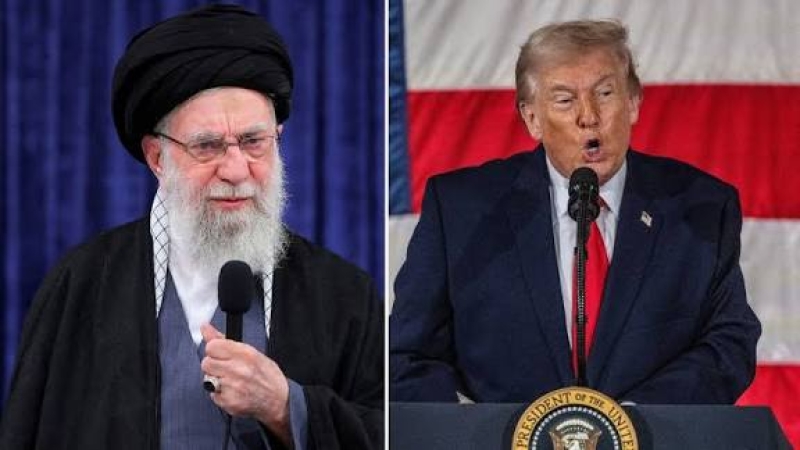
President Donald Trump said Friday that a change in leadership in Iran “would be the best thing that could happen,” as his administration considers possible military action against Tehran.
Trump made the remarks after visiting U.S. troops at Fort Bragg and confirming that he is deploying a second aircraft carrier strike group to the Middle East.
Responding to reporters’ questions about removing Iran’s Islamic clerical leadership, Trump said such a shift in power could be beneficial, noting that the current regime has been in place for decades.
Although Trump has recently emphasized curbing Iran’s nuclear program as his primary objective, he suggested Friday that Washington expects broader concessions from Tehran beyond nuclear limits.
During a visit to Washington this week, Israeli Prime Minister Benjamin Netanyahu urged that any agreement also address Iran’s ballistic missile capabilities and its support for regional proxy groups such as Hamas and Hezbollah.
Trump indicated that dismantling Iran’s nuclear activities — which were significantly damaged in U.S. strikes last year — would represent only part of a wider mission.
Iran maintains that its nuclear program is peaceful. Prior to last year’s conflict, Tehran had enriched uranium to 60% purity, a level close to weapons-grade material.
Trump’s comments about potentially ending the rule of Supreme Leader Ali Khamenei came weeks after Secretary of State Marco Rubio cautioned that political change in Iran would be far more complicated than efforts to unseat Venezuelan President Nicolás Maduro.
Rubio noted in a Senate hearing that Iran’s leadership has been entrenched for decades and would require careful consideration if change were pursued.
Trump also announced that the USS Gerald R. Ford, currently in the Caribbean, will head to the Middle East to join the USS Abraham Lincoln and other U.S. naval assets already in the region.
He said the additional carrier would be needed if diplomatic efforts fail, adding that it would depart soon.
While Trump had indicated new talks with Iran might take place this week, negotiations did not occur. Iranian officials instead traveled to Oman and Qatar to exchange messages through intermediaries.
Gulf Arab states have warned that any military strike could trigger broader regional conflict, particularly as the Middle East remains tense following the Israel-Hamas war in Gaza. Inside Iran, authorities are facing renewed domestic pressure as citizens hold 40-day mourning ceremonies for those killed during recent nationwide protests.
The Ford strike group would add more than 5,000 personnel to U.S. forces in the Middle East, effectively doubling available aircraft and munitions. However, given its current location, it could take weeks before it reaches waters near Iran.
Trump has repeatedly threatened military action if Iran does not agree to stricter limits on its nuclear activities. Indirect talks were held in Oman last week, and he warned that failing to reach a deal would have serious consequences.
The Ford was previously redeployed to the Caribbean as part of the U.S. military buildup ahead of last month’s operation that led to Maduro’s capture.
Extending the carrier’s deployment could place strain on its crew. The ship has been at sea since June 2025, approaching eight months. Navy officials have previously said prolonged deployments disrupt service members’ personal lives and complicate maintenance schedules.
Aircraft carriers are typically deployed for six or seven months. Longer missions can increase wear on ships and delay scheduled repairs, as seen with the USS Dwight D. Eisenhower, which underwent a nine-month Middle East deployment in 2023–24 and remains in maintenance beyond its planned completion date.
Senior Navy leaders have recently expressed a preference for deploying smaller, newer vessels where possible instead of relying heavily on large aircraft carriers, reports UNB.