

- US Ambassador visits Ctg Port to reinforce commercial coop |
- Dhaka’s air remains ‘very unhealthy’, world's 3rd worst Tuesday |
- US, Bangladesh explore expanding collaboration in energy sector |
- Tarique wraps up 2nd phase of campaign with 6 rallies in 14 hrs |
- Tigers return but deer on decline in Sundarbans |
Trump Threatens to Raise Tariffs on South Korean Goods to 25%
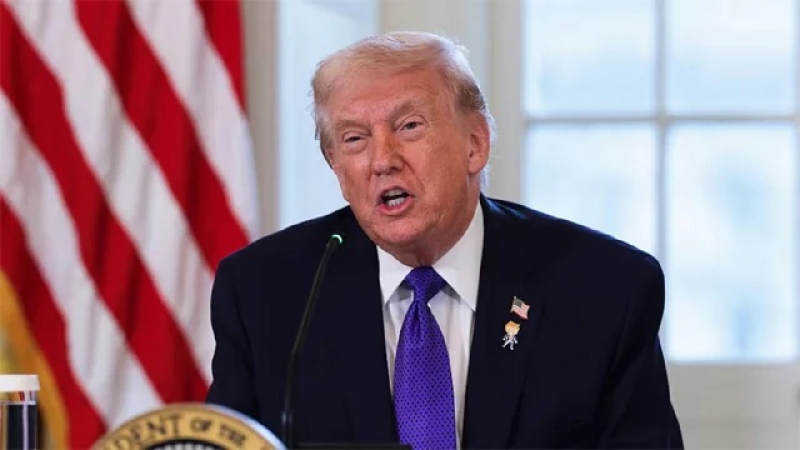
US President Donald Trump
US President Donald Trump said on Monday he plans to raise tariffs on a range of South Korean goods, including automobiles, lumber and pharmaceuticals, accusing Seoul of failing to honour commitments under a previously agreed trade deal with Washington.
If implemented, the move would lift tariff rates from 15 percent to 25 percent.
In a post on his Truth Social platform, Trump claimed South Korea’s legislature was not living up to the agreement. He said the tariff hike was being pursued because the Korean parliament had not enacted what he described as a “historic trade agreement”, adding that while this was Seoul’s prerogative, the United States would respond accordingly.
South Korea’s presidential office said it had not been notified in advance of any tariff hike. It confirmed that Trade Minister Kim Jung-kwan, currently in Canada, would travel to Washington to hold talks with US Commerce Secretary Howard Lutnick on the issue.
Trump’s remarks mark an apparent shift from a deal reached only months ago, after prolonged negotiations between the two allies. The agreement was finalised following an October meeting between Trump and South Korean President Lee Jae Myung, and included investment commitments by South Korea in exchange for reduced US tariffs.
However, the deal has remained in legal uncertainty in Seoul. The presidential office said in November that parliamentary approval was not required, arguing the agreement was a memorandum of understanding rather than a binding treaty. A senior official later said authorities were still reviewing whether the pact had been formally submitted to parliament.
Under the agreement, the United States agreed to cap tariffs at up to 15 percent on South Korean products such as vehicles, auto parts and pharmaceuticals. Most notably, US tariffs on South Korean cars were reduced from 25 percent to 15 percent.
Trump’s latest threat, if carried out, would reverse that reduction.
The potential impact on South Korea could be significant. The auto sector accounts for about 27 percent of South Korea’s exports to the United States, which absorbs nearly half of the country’s total car exports. Higher tariffs could also weaken South Korea’s competitive position compared with Japan and the European Union, both of which have secured US tariff rates of around 15 percent.
So far, the Trump administration has not issued any formal notice to enforce the proposed tariff increase.
The warning to South Korea follows a series of recent trade threats by Trump against key partners. Over the weekend, he cautioned Canada that a trade agreement with China could trigger a 100 percent tariff on Canadian goods entering the United States. Earlier this month, he also threatened tariffs on several European countries, though he later stepped back from those remarks.