

- Bus Fares Rise by 17 Paisa Per Kilometre |
- PM arrives in New York to attend 81st UNGA session |
- Jatri Kalyan Samity urges withdrawal of increased fuel prices |
- Global Diesel Shortage Likely to Persist Into 2027 |
Cholera Spreads in Darfur, 640,000 Children at Risk: UNICEF
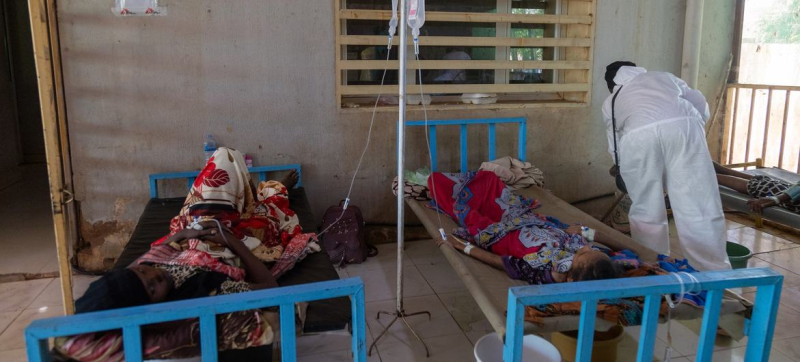
Children and adults suffering from cholera receive treatment at an isolation centre in a hospital in Khartoum, Sudan. The situation is particularly alarming in the North Darfur region, where more than 640,000 children are at risk.
Cholera is spreading rapidly through North Darfur, Sudan, threatening thousands of children already weakened by hunger and displacement, the UN Children’s Fund (UNICEF) warned on Sunday, as aid convoys struggle to reach isolated communities amid escalating conflict.
More than 1,180 cholera cases — including an estimated 300 in children — and at least 20 deaths have been reported in Tawila, a town that has absorbed over half a million people fleeing violence since April.
Across the wider Darfur region, the toll is even more alarming: nearly 2,140 cases and at least 80 deaths as of 30 July.
“Despite being preventable and easily treatable, cholera is ripping through Tawila and elsewhere in Darfur, threatening children’s lives, especially the youngest and most vulnerable,” said Sheldon Yett, UNICEF Representative in Sudan.
With hospitals bombed and many health facilities shuttered, Tawila — located just 70 kilometres from the besieged state capital El Fasher — has become a flashpoint of overlapping crises. Limited access to clean water, poor sanitation, and overcrowded camps have created ideal conditions for the disease to spread.
The cholera outbreak is unfolding against a backdrop of worsening crisis. Since the war between rival militaries erupted in April 2023, critical infrastructure has been decimated, millions displaced, and food systems dismantled.
Famine has already been declared in at least 10 locations, including the vast Zamzam camp, with over a dozen more areas at risk.
Sudan’s extreme vulnerability to climate shocks — from droughts to devastating floods — has further compounded the crisis, leaving families to navigate the deadly intersection of conflict, hunger, disease, and environmental collapse.
More than 640,000 children under five in North Darfur alone are now at risk. Recent assessments show that the number of children suffering from severe acute malnutrition in the region has doubled in the past year.
“Children whose bodies are weakened by hunger are far more likely to contract cholera — and to die from it,” UNICEF warned.“They cannot wait a day longer.”
UNICEF is urgently calling on all parties to ensure sustained, safe, and unimpeded humanitarian access. Bureaucratic delays, looted aid convoys, and active fighting have hampered the delivery of vital supplies, including vaccines, therapeutic food, and medical kits.
The agency is scaling up its emergency response in Tawila and across Darfur, distributing Oral Rehydration Salts (ORS), chlorinated water, and hygiene kits.
Nearly 30,000 people in Tawila now have daily access to safe drinking water, while outreach teams are raising awareness on prevention and early treatment.
To support long-term containment, UNICEF plans to deliver more than 1.4 million doses of oral cholera vaccine and strengthen treatment centres. Additional supplies — including soap, latrine slabs, and plastic sheeting — are being prepared, though access remains the biggest obstacle.
Since the outbreak was officially declared in August 2024, more than 94,000 cholera cases and over 2,370 deaths have been reported across 17 of Sudan’s 18 states. UNICEF says it urgently requires $30.6 million to fund its emergency cholera response.