

- PM Proposes Five Urgent Steps to Resolve Rohingya Crisis |
- Govt Appoints Indonesian Firm to Operate Cox’s Bazar SPM |
- ADB lowers Bangladesh’s growth forecast to 4 % in FY2027 |
- El Niño Tests Global Readiness for a Changing Climate |
- Dhaka's air quality recorded moderate on Wednesday morning |
Trump calls new Iran talks ‘last chance’ to avoid escalation
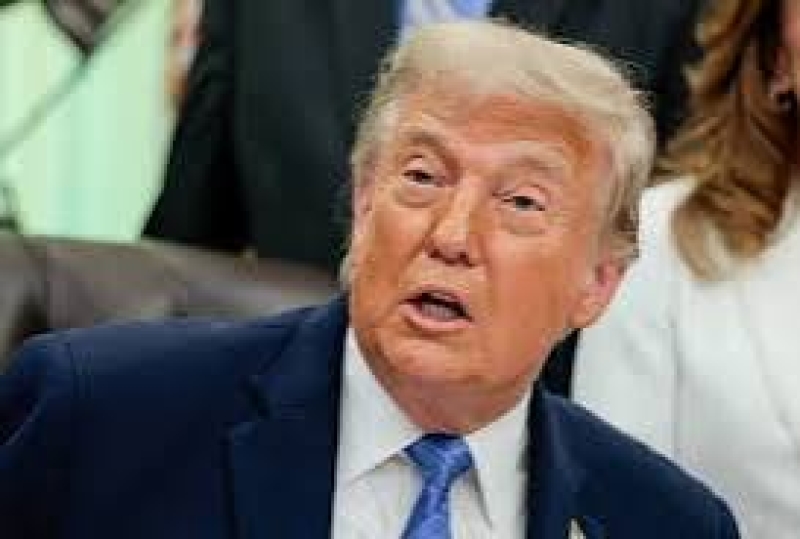
President Donald Trump said Monday that new talks between Washington and Tehran are Iran’s “last chance” to reach a deal and avoid an escalation of US strikes.
Speaking at the Oval Office, Trump said the talks are expected to focus on reopening the Strait of Hormuz and creating a path for Iran to address US concerns over its nuclear programme. He said the status of the negotiations could become clearer “today or tomorrow.”
“The first phase is the opening of the straits. The second phase will be the denuclearization,” Trump said, adding that the second phase would take some time.
Trump said he decided to delay plans for major new strikes on Iran after being urged to do so by Gulf allies Qatar, Saudi Arabia and the United Arab Emirates.
He said US forces had been prepared to carry out “the biggest attack since World War II” on Sunday, but he abandoned the plan to give diplomacy more time after speaking with key Gulf leaders, including Saudi Crown Prince Mohammed bin Salman, and receiving requests from unnamed Iranian officials.
However, Trump again warned that his patience with Iran is running out.
“This is the last chance for them to sign a good document,” he said.
Earlier Monday, Trump criticised Iran on social media, calling it “unbelievably duplicitous” after Tehran said its talks with Oman were focused only on establishing a temporary safe navigation route through the Strait of Hormuz, a key waterway for global oil trade.
Trump said that, whether Iran acknowledges it or not, discussions are taking place on preventing Tehran from developing nuclear weapons.
Since the start of US and Israeli strikes on Iran on Feb 28, Trump has repeatedly threatened to intensify attacks before stepping back from those threats.
Asked why he has repeatedly issued strong warnings against Tehran and then backed away, Trump said he was showing patience because he wanted to avoid further loss of Iranian lives.
“I want to give them every last chance before decapitation,” Trump said. “Hopefully, they’ll come to their senses.”
Trump could still decide that a major escalation is necessary, but critics say his repeated hesitation may reflect an understanding within his administration that military force alone may not be enough to force Iran to back down and end the months-long war.
“I think what we’re seeing here is a president who has an approach that’s just rather erratic,” Sen. Mark Kelly, an Arizona Democrat on the Senate Armed Services Committee, said on CBS News’ “Face the Nation.”
Kelly said Trump appeared to be trying to return to the situation before the conflict began.
Trump has made similar threats and then backed away several times during the conflict.
In early April, the US and Iran agreed to a two-week ceasefire less than two hours before a deadline Trump had set for Tehran to capitulate or face attacks on bridges and power plants.
On May 18, after days of threats, Trump announced that he was postponing a major planned strike because “serious negotiations” were underway, while crediting Gulf allies for encouraging restraint.
In June, Trump threatened to hit Iran “VERY HARD” and seize its energy base on Kharg Island, but later called off the planned strikes after saying peace talks with senior Iranian officials had made progress.
Trump indicated that Saudi Crown Prince Mohammed bin Salman played an important role in his decision to hold back from further escalation.
The US president spoke by phone with the Saudi leader on Saturday, shortly before announcing that he was halting the planned strikes.
According to a person briefed on the call, the crown prince warned that further escalation could have a serious impact on the global economy if Iran responded by attacking US allies in the Gulf.
The person, who was not authorised to speak publicly and requested anonymity, said Saudi officials had told the Trump administration that Saudi Arabia, Qatar and the UAE were capable of defending themselves against potential Iranian attacks.
However, Kuwait could be more vulnerable to attacks by Iran-backed militias in Iraq, the person said.
Trump has denied that November’s midterm elections are influencing his approach to the Iran conflict, which has already caused concern across the global economy.
However, the issue is drawing attention among Republicans.
About two-thirds of US adults say the war with Iran has not been worthwhile, according to an AP-NORC Center for Public Affairs Research poll published last week. The view is shared by most Democrats and independents, as well as about 37% of Republicans.
Sen. John Kennedy, one of Trump’s strongest allies in Congress, said Sunday that the administration should moderate its approach to Iran.
Speaking on NBC’s “Meet the Press,” the Louisiana Republican pointed to the destruction caused by the US military in Iran and warned that further escalation could push energy prices even higher and fuel inflation.
Kennedy said maintaining sanctions and targeting Iran’s nuclear programme, rather than widening the conflict, could be the better approach for now, reports UNB.
“They’re all hellish choices,” Kennedy said. “But for the moment I’d maintain the status quo.”