

- PM Proposes Five Urgent Steps to Resolve Rohingya Crisis |
- Govt Appoints Indonesian Firm to Operate Cox’s Bazar SPM |
- ADB lowers Bangladesh’s growth forecast to 4 % in FY2027 |
- El Niño Tests Global Readiness for a Changing Climate |
- Dhaka's air quality recorded moderate on Wednesday morning |
Rahul, Priyanka Detained Outside Modi Residence
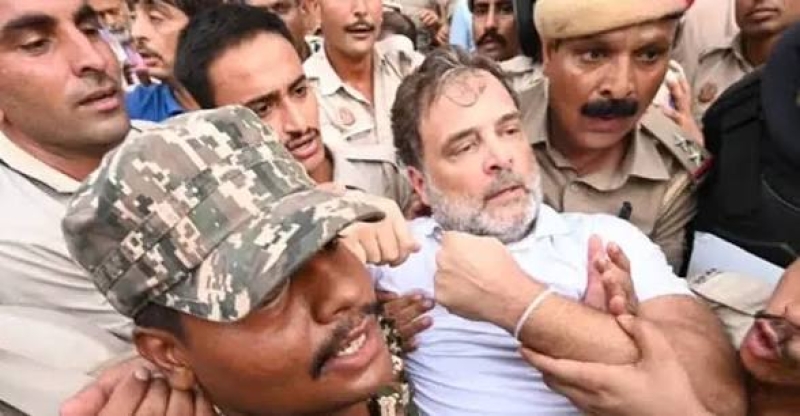
India's main opposition leaders Rahul Gandhi, Priyanka Gandhi Vadra and Samajwadi Party chief Akhilesh Yadav were detained by Delhi Police on Tuesday after staging a sit-in outside Prime Minister Narendra Modi's official residence in support of student protesters demanding the resignation of Education Minister Dharmendra Pradhan.
The detentions marked a sharp escalation in the nationwide agitation over alleged irregularities in competitive entrance examinations, which has grown into one of the largest youth-led protest movements during Modi's tenure.
The Congress leaders, joined by several Members of Parliament and opposition supporters, gathered near the Prime Minister's residence to express solidarity with thousands of students protesting alleged examination paper leaks, evaluation irregularities and what they described as the government's failure to ensure accountability.
Police prevented the opposition leaders from reaching the Prime Minister's residence and detained them after they refused to disperse.
The demonstration came a day after Delhi Police used tear gas and baton charges to disperse thousands of students marching towards Parliament, leaving more than 100 people injured and drawing criticism from opposition parties, civil society groups and student organisations.
Before being taken into custody, Rahul Gandhi accused the government of suppressing democratic dissent instead of addressing students' concerns.
"The youth of India are demanding justice, transparency and accountability. Instead of answering their questions, the government is responding with police action," he said.
Priyanka Gandhi condemned the police crackdown, saying peaceful protesters were being treated like criminals for demanding a fair examination system.
Akhilesh Yadav also criticised the government, accusing it of failing to protect the future of millions of students while attempting to silence dissent through arrests and intimidation.
The opposition leaders called for the immediate resignation of Education Minister Dharmendra Pradhan, an independent judicial inquiry into the examination controversies, compensation for the families of students who reportedly died following the scandals, and the release of activist Sonam Wangchuk, who remains under medical supervision after ending a prolonged hunger strike.
The student movement, led by the Cockroach Janata Party (CJP), has gained momentum following allegations of widespread paper leaks, administrative failures and examination irregularities affecting millions of candidates.
Meanwhile, Delhi Police said the detentions were preventive measures to maintain law and order in the high-security zone surrounding the Prime Minister's residence. Authorities have also filed multiple criminal cases against protesters over allegations of violence, vandalism and unlawful assembly during Monday's demonstrations.
Prime Minister Narendra Modi has not yet publicly commented on the protests or the opposition's allegations.
Political analysts say the detention of three of India's most prominent opposition leaders is likely to intensify political pressure on the government and further energise the student movement, which has evolved into a broader symbol of youth frustration over governance, unemployment and the integrity of the education system.