

- US launches fresh strikes on Iran as conflict escalates |
- 42-Year Rainfall Record Broken as Chattogram Floods |
- Flash Flood Risk Rises as Rivers Swell: FFWC |
- Switzerland Beat Colombia to Reach World Cup Last Eight |
- Argentina beat Egypt 3-2 to reach World Cup quarter-finals |
Hormuz Crisis Exposes Risks to Global Shipping
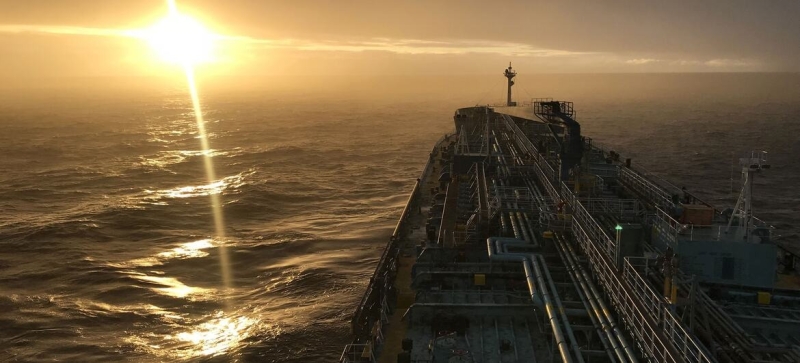
A ship makes its way across an ocean.
The blocking of ships in the Strait of Hormuz amid tensions between the United States and Iran has highlighted how vessels and seafarers are increasingly used as leverage in geopolitical disputes, according to the head of the International Maritime Organization (IMO).
Since the conflict escalated following US-Israeli strikes on Iran in late February, up to 20,000 seafarers have been stranded aboard around 2,000 vessels in the Persian Gulf. The narrow waterway, bordered by Iran to the north, has become increasingly unsafe for passage.
Arsenio Dominguez, Secretary-General of the IMO, spoke ahead of a key maritime security meeting at the UN Security Council.
What is maritime security?
Maritime security involves protecting ships, ports, seafarers, and infrastructure from threats such as piracy, terrorism, and cyberattacks. For coastal states, it also includes tackling illicit activities like arms and drug trafficking, wildlife smuggling, oil theft, human trafficking, and the illegal dumping of toxic waste.
Why is maritime security important?
It underpins global trade, safeguards seafarers, and keeps supply chains functioning. Without it, maritime development stalls, making broader sustainable development goals harder to achieve.
What has the Hormuz crisis revealed?
The situation shows that ships and crews are highly exposed in conflict zones and can easily become bargaining tools. Commercial vessels have been targeted, detained, or attacked, underscoring the fragility of freedom of navigation.
How can seafarers be protected?
Information sharing is critical, as misinformation can disrupt risk-based voyage planning. Ship operators must conduct thorough risk assessments before entering conflict zones. Diplomacy and de-escalation remain essential, while naval escorts are seen as a limited and unsustainable solution.
How have threats evolved?
Maritime security concerns have shifted over decades. From the hijacking of the Achille Lauro in 1985 to the impact of the September 11 attacks, risks have expanded. Piracy surged in Asia in the late 1980s and later off Somalia in the early 2010s, affecting regions like the Gulf of Aden and West Africa’s Gulf of Guinea.
What are the emerging challenges?
New threats include cyberattacks on navigation and port systems, sabotage of undersea infrastructure, drone strikes on vessels, and vulnerabilities linked to autonomous ships. Increasingly sophisticated criminal networks are also targeting supply chains.
Why is protection becoming harder?
International shipping is increasingly caught up in conflicts beyond its control. Vessels of different flags and multinational crews are exposed to attacks, including uncrewed aerial and surface weapons. Civilian ships lack the means to defend themselves, and seafarers should never be treated as combatants.
Which chokepoints are at risk?
Key global routes include the Suez Canal, Bab el-Mandeb, the Strait of Hormuz, the Strait of Malacca, the Panama Canal, and Turkish waterways including the Bosphorus and Dardanelles. Disruptions in any of these could have major global consequences for trade and food security.
What role does the UN play?
The IMO works with partners to strengthen countries’ capacity to prevent and respond to maritime threats. This includes improving legal frameworks, enhancing cooperation, promoting freedom of navigation under international law, and advocating for the safety and protection of seafarers.