

- Army to be deployed in 6 districts ahead of AL’s founding anniversary |
- UK Prime Minister Keir Starmer quits |
- PM Urges Malaysia to Recruit More Bangladeshi Workers |
- GK irrigation pump station being redesigned as Ganges water levels fall |
Interim Government’s water management initiative for Rangamati
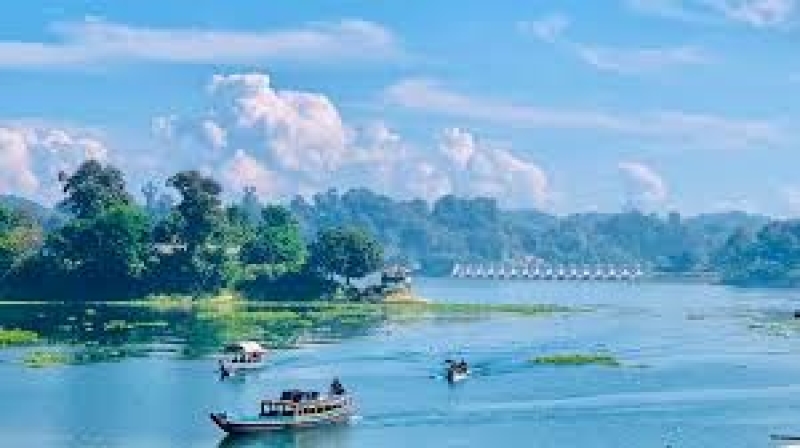
The Rangamati Lake also serves as an important waterway in the hill district. UNB
Dhaka, Jan 10 - The interim government has taken up a water management initiative in the hill district of Rangamati to ensure sustainable water supply, protect riverbanks and improve livelihoods in one of the country’s most environmentally fragile regions.
The project, titled Sustainable Water Management of the Karnaphuli and Associated Rivers in Rangamati Hill District, will be implemented by the Bangladesh Water Development Board (BWDB) under the Ministry of Water Resources at an estimated cost of Tk 687.39 crore, fully funded by the government.
Implementation is scheduled from January 2026 to June 2030 and will cover 10 upazilas of Rangamati district, according to the project document.
Officials said the project is crucial for securing surface water availability in the hill district, where communities largely depend on rivers and streams for drinking water, irrigation, fisheries and transportation.
The Karnaphuli River and its associated rivers—Kachalong, Raikhyang and Shalak—serve as lifelines for the region, particularly during the dry season when water scarcity becomes acute.
According to the project outline, one of the key objectives is to restore and maintain navigability and year-round water flow in the feeder rivers of Kaptai Lake through extensive dredging.
The Kachalong, Raikhyang and Shalak rivers will be dredged to remove accumulated silt, helping to reduce sudden flooding during the monsoon while ensuring adequate water supply during the dry months.
Water resources officials said sustained water flow in these rivers is essential for maintaining water levels in Kaptai Lake, which feeds the country’s only hydroelectric power station.
Improved water availability is also expected to support fisheries, a major source of livelihood for hill communities, and enhance surface irrigation for agriculture in downstream areas.
The project also aims to excavate and re-excavate river-linked canals to improve surface irrigation and address chronic waterlogging in low-lying areas.
Many canals in Rangamati have lost their capacity due to long-term siltation, disrupting water distribution and limiting agricultural production, particularly in the dry season.
In addition to water supply, the project places strong emphasis on riverbank protection. About 13.72 kilometres of riverbank protection works will be carried out to safeguard critical infrastructure, educational institutions and settlements from erosion along the Karnaphuli and its tributaries.
River erosion has emerged as a persistent threat in Rangamati, especially during the monsoon when heavy rainfall and upstream flows cause rivers to swell and change course.
Officials noted that the Karnaphuli is the only riverine communication route between Barkal upazila and Rangamati district headquarters, making bank protection vital for maintaining connectivity and access to essential services.
Special attention will be given to the border-adjacent Thegamukh area along the India-Bangladesh frontier, where aggressive river erosion has endangered public installations, including Border Guard Bangladesh (BGB) facilities, local markets and schools.
Riverbank protection in this area is expected to help prevent further land loss and protect national territory.
Project documents note that changes in the river system date back to the construction of the Kaptai Dam in the 1960s, which altered the natural flow of the Karnaphuli and its tributaries.
Since then, sediment carried during the monsoon has been depositing in riverbeds and Kaptai Lake, gradually reducing water depth and flow capacity.
As a result, navigation becomes extremely difficult during February to April, often isolating remote communities and increasing transport costs for essential goods.
Farmers also suffer due to the absence of water in canals during the dry season, leading to reduced agricultural output.
The proposed interventions are based on recommendations from a feasibility study conducted by the Institute of Water Modelling (IWM) titled Feasibility Study for the Development & Management of Karnafully River Basin (With Halda River).
The study identified erosion-prone zones and highlighted the need for integrated river training, dredging and canal excavation to ensure sustainable water management in Rangamati.
Officials believe that once implemented, the project will significantly improve water security in the hill district, ensuring reliable surface water supply for domestic use, agriculture, fisheries and power generation.
Improved river flow and connectivity are also expected to boost tourism, while construction activities and expanded economic opportunities will contribute to employment generation and overall socio-economic development in the region.
With climate variability increasing pressure on hill ecosystems, authorities view the project as a strategic investment to balance development needs with long-term water sustainability in Rangamati. - UNB