

Thursday, November 26, 2026
News update
- PM seeks to make Bangladesh a reliable brand in global livestock market |
- Türk warns of increased risk of atrocity crimes on Palestinians |
- ADB Approves $150m Loan for Water Services in Eight Towns |
- Oil Prices Rise Amid Houthi Attack Claim, Hormuz Fears |
- At Least 30 Killed in Fuel Tanker Fire on Egypt Highway |
Trump’s Tariff Plans Trigger Global Concerns, US Stocks Fall
GreenWatch Desk:
Trade
2026-11-26, 1:42pm
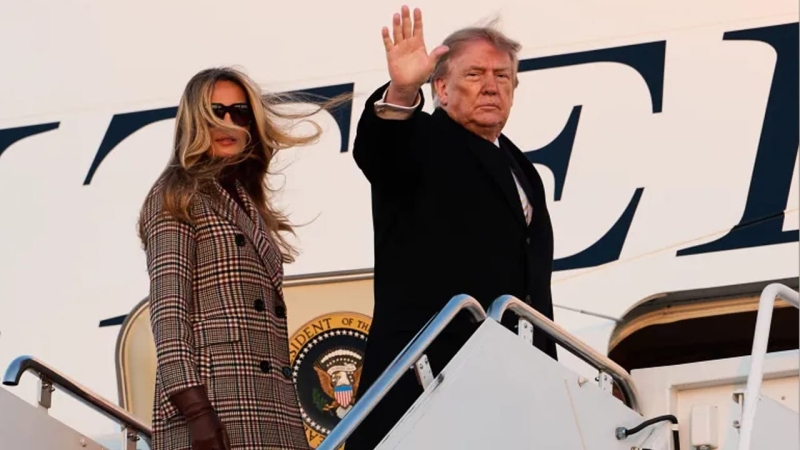
US President Donald Trump announced new tariffs.
US President Donald Trump's latest tariff proposals have created fresh uncertainty in global trade, prompting concern and criticism from several countries. His administration has proposed additional tariffs on goods from 14 major trading partners, including China, the European Union and Bangladesh. US stock markets also recorded declines following the announcement.
According to reports, the proposal announced on Wednesday (November 18) includes additional tariffs of up to 20% on Chinese goods. Existing tariffs of around 25% imposed on Chinese products during Trump's first presidency also remain in place.
China Accused of Overproduction
The United States has accused China of subsidising several industries to manufacture and export goods at lower prices. Washington argues that excess production in sectors such as steel, electric vehicles and solar energy products is creating unfair competition in international markets.
Beijing has rejected the allegations. Chinese Foreign Ministry spokesperson Guo Jiakun said claims of excess production were being used for political purposes. He also called for stable relations between the world's two largest economies.
Around $30 billion worth of Chinese goods could be excluded from the proposed additional tariffs. The possibility of reducing duties on these products is being considered under a bilateral trade arrangement.
Bangladesh Among 14 Trading Partners
Besides China, the proposed tariffs cover Bangladesh, India, Japan, South Korea, Indonesia, Cambodia, Malaysia, Singapore, Switzerland, Taiwan, Thailand, Vietnam and the 27 member states of the European Union.
Mexico and Norway have so far been excluded from the list, as investigations into their trade practices are still ongoing.
European Union and Switzerland Respond
The European Union said it would review the findings of the US investigation but rejected the suggestion that the bloc was a source of excess production.
European Commission spokesperson Olof Gill said Europe was, in fact, among the regions most affected by excess manufacturing capacity.
The Swiss government also rejected the allegations raised in the investigation.
Meanwhile, Norwegian Foreign Minister Espen Barth Eide said companies in his country produced goods in response to market demand.
US Stock Markets Record Mixed Performance
The tariff announcement had a mixed impact on US stock markets. The technology-focused Nasdaq Composite fell 0.6%, while the S&P 500 declined 0.25% at the close of trading.
The Dow Jones Industrial Average, however, recovered from earlier losses to finish the session up 0.3%.
Meanwhile, gold, traditionally considered a safe-haven investment, fell by more than 3%, reaching its lowest level in more than a year. Yields on US and European government bonds also declined.
The report said fresh US inflation data also influenced market sentiment alongside the tariff announcement. A key inflation indicator rose by 0.3%, fuelling concerns about possible interest rate increases.