

- Oil Prices Near $100 as Middle East Tensions Escalate |
- Yamal eyes Ballon d'Or award |
- 5 more Iranian oil tankers destroyed after missile attacks on US warship |
- Tobacco use can undermine fertility, UN health agency warns |
- Dengue Deaths Hit Record High as 9 Die in 24 Hours |
AI Data Centres Pose Growing Threat to Power Grids
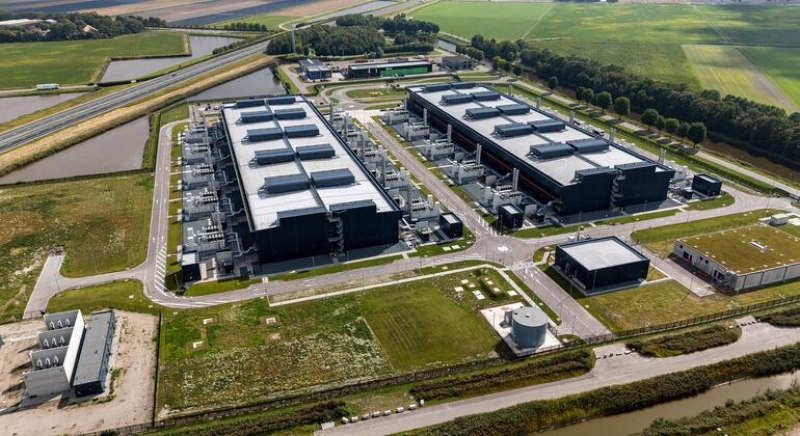
Data centres like this one in the Netherlands require a huge amount of power.
The rapid growth of data-intensive technologies, particularly artificial intelligence (AI) data centres, is outpacing the capacity of electricity infrastructure, raising concerns about the reliability and resilience of power systems worldwide, the UN Economic Commission for Europe (UNECE) has warned.
Global electricity consumption by data centres is expected to nearly double by 2030, rising from 485 terawatt-hours (TWh) in 2025 to 950 TWh, equivalent to around 3 percent of global electricity demand, according to the International Energy Agency (IEA).
Investment in data-centre infrastructure, meanwhile, is projected to roughly double from about $800 billion annually in 2026 to $1.8 trillion by 2050.
UNECE said data centres and other energy-intensive facilities are being built much faster in many regions than the power grids needed to supply them.
A large data centre can often be constructed and connected within two to five years, while expanding transmission lines and other grid infrastructure can take more than a decade because of lengthy planning, approval and construction processes.
Straining electricity systems
Overloading electricity systems could lead to voltage fluctuations, unintended disconnections and cascading failures, UNECE warned.
The problem is particularly challenging for grids that rely heavily on renewable energy. AI data centres can generate volatile electricity demand and unexpected spikes, while renewable-based power systems may have limited ability to adjust supply in real time.
Several countries have already introduced measures to prevent their electricity networks from becoming overloaded.
Ireland, which has one of the world's highest concentrations of data centres, has imposed connection restrictions in Dublin. The Netherlands has also introduced restrictions on where data centres can be built.
Who should pay for upgrades?
Another major unresolved issue is how the cost of upgrading power grids should be shared.
Connecting large data centres can require substantial investment in electricity infrastructure, but there is no consistent framework for determining how these costs should be divided among data-centre developers, power companies and consumers.
Without clear rules, UNECE warned, essential investment could be delayed.
Regulatory gaps
Regulatory gaps also remain over the location of data centres. Energy-intensive facilities continue to cluster in areas with favourable connectivity and regulatory conditions, potentially concentrating demand in locations where local grids lack sufficient capacity.
Environmental regulations are also expanding beyond electricity consumption to address data centres' water use, emissions and pressure on local resources. However, UNECE said such rules remain fragmented.
Regulators also lack adequate real-time information about how large data centres consume electricity, making it harder to anticipate their impact on power grids.
UNECE is calling for stronger regulation and greater coordination to ensure the long-term reliability and resilience of electricity systems as data centres become increasingly important to the global economy.
Source: UN News