

- Govt puts rural Bangladesh at heart of development agenda |
- BNP celebrates its 48th founding anniversary Tuesday |
- Dengue situation worsens in Pirojpur |
- Hundreds feared stuck in hydropower tunnels in Nepal and Tibet |
- Nepal’s Rasuwa flood disaster: Is there a limit to Human Folly? |
Rooftop solar holds $2b market potential by 2030
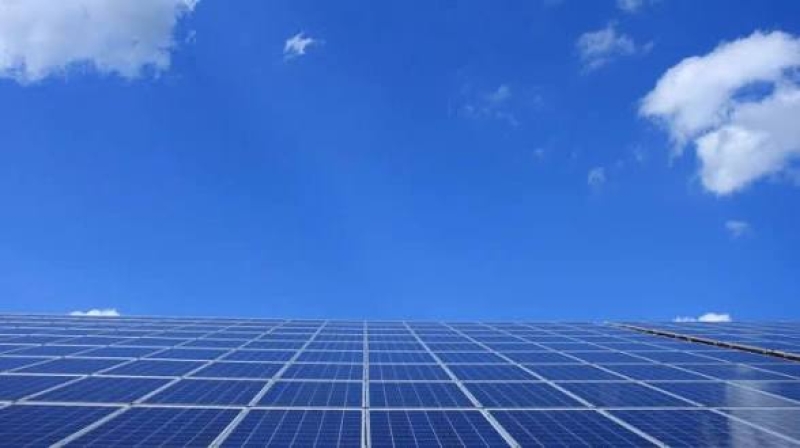
The country’s rooftop solar market holds potential for nearly $2 billion in material demand by 2030, while wider household adoption could add up to 21,300 megawatts of capacity and meet as much as 35 percent of national electricity demand, according to Distributed Renewable Energy Platform (DREP).
The opportunity is being driven by the residential sector, which accounted for 57.2 percent of total national electricity consumption in 2024-25, using 51.94 terawatt-hours (TWh), while 35.6 million, or 88.5 percent, of the country's 40.3 million households live in self-owned homes.
Under a constrained adoption scenario in which 10 percent of households install 1 to 5 kilowatt-peak (kWp) rooftop solar systems, the country could achieve 8,600 megawatt-peak (MWp) of capacity by 2030, generating 13,937 gigawatt-hours (GWh) annually and meeting about 15 percent of current national electricity demand, said the DREP, a platform of five non-government organizations.
Coastal Livelihood and Environmental Action Network (CLEAN) Chief Executive Officer Hasan Mehedi said a moderate adoption trajectory could unlock 21,300 megawatts (MW) of total capacity, generating 34,518 GWh annually to cover 35 percent of national demand.
He said every megawatt of installed rooftop solar could save the national exchequer Tk 3.1 crore annually by curbing reliance on imported furnace oil, while mitigating 8,100 tonnes of carbon dioxide emissions per MW.
A complete residential solar unit currently costs between Tk 80,000 and Tk 250,000 or more.
The broader rooftop solar ecosystem could also support substantial industrial activity, covering market demand for 10 types of hardware accessories, including solar PV panels, inverters and battery storage solutions, and five core professional categories ranging from installers to trainers and entrepreneurs, Hasan Mehedi said.
Meeting the installation targets carries an estimated material market value of US$ 1,973 million, including US$ 628 million for solar panels and US$ 335 million for inverters, he added.
The expansion could also generate substantial employment. Around 1.37 million green jobs were created by December 2021 through the installation of 543 MW of solar systems, with each 1 kW of off-grid solar power creating an average of 2.52 green jobs.
Even at 50 percent job intensity, the expansion of rooftop solar could create around 1.5 million new jobs, according to a World Bank report.
Despite the market potential, current capacity remains at an early stage. CPD Research Associate Md Mehadi Hasan Shamim said Bangladesh presently has 4,551 net-metered installations totalling 213.3 MW, with the Dhaka division accounting for 60.4 percent of all installations.
The government raised its 2030 rooftop solar target to 5,500 MW from 3,000 MW in the Renewable Energy Strategy Paper (RESP) issued in July 2026, he said.
Consumer and industry-level barriers, however, remain significant. While public awareness stands at 87 percent, only 21 percent of citizens believe solar energy is economically beneficial, while 28 percent believe that solar panels lack long-term durability, according to a CLEAN survey.
ActionAid Manager Abul Azad said high upfront equipment costs, irregular family income streams and limited awareness of available credit options were constraining wider uptake.
On the regulatory side, expansion is constrained by complex loan procedures, high Advance Income Tax (AIT) rates on imported components, and operational delays in utility inspections and grid interconnection, he added.
CPD advocated simplifying residential net-metering eligibility and deploying a unified digital application platform across all utilities to accelerate approvals.
It also recommended dedicated lending windows, partial credit guarantees and "pay-as-you-save" financing mechanisms.
CPD, Bangladesh Sustainable and Renewable Energy Association (BSREA) and SOLshare recommended moving essential equipment such as PV panels and Lithium Iron Phosphate (LFP) batteries to a zero-duty category to lower capital barriers for households.
They also recommended launching a National Rehabilitation Programme to identify, assess and restore underperforming rooftop solar systems to improve generation and rebuild consumer confidence.
The recommendations also include providing full duty waivers on imported accessories for small-scale distributed renewable energy projects and repowering legacy Solar Home Systems by integrating them into hybrid, grid-tied installations so that these assets do not remain stranded, reports BSS.