

- Stocks end week sharply lower as DSE, CSE indices tumble |
- 'Not all collections in the road transport sector is extortion': Sk Rabiul |
- Zubaida, Zaima take iftar with orphan students |
- Dhaka ranks second among world’s most polluted cities Friday |
- Dhaka to maintain ties with all countries with dignity |
Lab-Grown Brain Organoids Demonstrate Goal-Oriented Learning
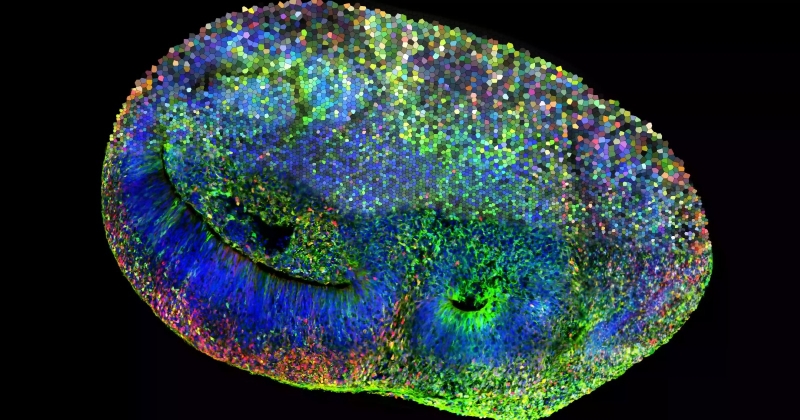
Researchers at the University of California, Santa Cruz have trained lab-grown brain organoids to solve the classic cart-pole problem, marking the first demonstration of goal-directed learning in these mini-brains. The task, often compared to balancing a ruler on one’s palm, tests whether a system can learn, adapt, and respond to changing conditions—a challenge every infant faces while learning to stand and walk.
The study, led by PhD student Ash Robbins with Professors Mircea Teodorescu and David Haussler, used mouse-derived brain organoids placed on specialized chips that record neuronal activity and stimulate selected cells. Electrical signals conveyed the angle of a virtual pole, and the organoid’s responses controlled a virtual cart to balance it.
Adaptive reinforcement learning acted like a coach, delivering feedback only after each attempt. Organoids trained this way achieved a 46% success rate, compared with 4.5% for randomly stimulated organoids. Robbins said this shows short-term learning: the tissue could consistently shift toward desired states, although the effect faded after rest periods.
Brain organoids—tiny, three-dimensional tissues grown from stem cells—mimic early brain development and contain millions of neurons. Their use in learning experiments is new, but the study highlights how neurons transmit information and adapt, with potential implications for understanding neurological conditions such as Alzheimer’s, autism, Parkinson’s, and ADHD.
Independent experts called the findings significant. Keith Hengen of Washington University said even minimal neural circuits can be guided toward solving real control problems when given targeted feedback, demonstrating that learning capacity is intrinsic to cortical tissue.
The team developed an open-source platform, BrainDance, to simplify organoid learning experiments. Future research will explore why the coaching method works, which neurons are most effective to target, and how long-term learning might be achieved. Haussler noted that while the work advances understanding of the brain, ethical considerations remain, especially for potential experiments with human organoids.
This version keeps technical accuracy but streamlines the narrative, emphasizes key findings, and maintains readability for a broader audience.