

- 109 BGB Platoons Deployed in Dhaka, Five Other Districts |
- Bangladesh-Denmark May form Trade and Investment Committee |
- Bangladesh—Pakistan trade crosses $1 b |
- Dhaka Ranks 5th Among World's Most Polluted Cities on Friday |
- PM seeks to make Bangladesh a reliable brand in global livestock market |
What Is Rhenium Powder Used to Increase Gold's Weight?
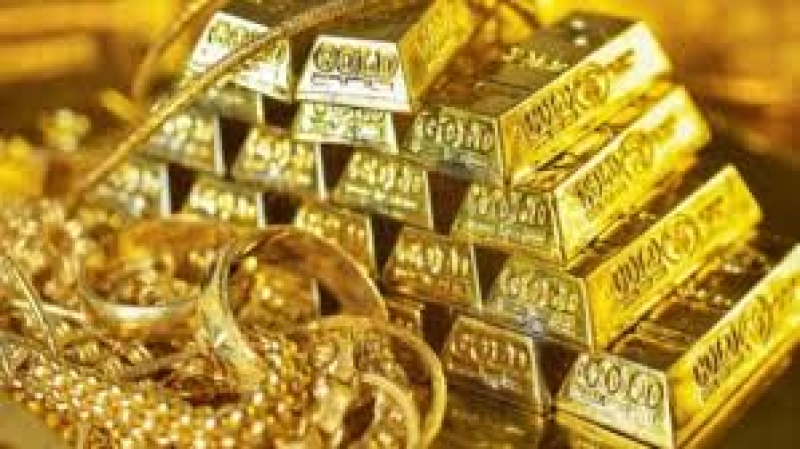
A rare and heavy metal called rhenium is reportedly being used to increase the weight of gold jewellery while reducing the actual amount of gold in it. By mixing rhenium powder with gold, it is possible to increase the overall weight of an ornament without using an equivalent amount of gold. There are also concerns that some conventional testing methods may fail to detect the mixture.
The issue came to light after a case involving a 22-carat hallmarked ornament containing rhenium was reported in Jodhpur, Rajasthan, India, raising concerns about the methods used to verify gold purity.
What is rhenium and where is it used?
Rhenium is a rare, silvery-white metallic element. Its chemical symbol is Re and its atomic number is 75. According to the United States Geological Survey, it is extremely scarce in the Earth's crust.
Because of its ability to withstand high temperatures and its durability, rhenium is used in specialised alloys for jet-engine turbine blades and as a catalyst in the petroleum refining industry.
One of rhenium's distinctive properties is its high density. According to the Royal Society of Chemistry, its density is approximately 20.8 grams per cubic centimetre, compared with about 19.3 grams per cubic centimetre for pure gold.
This means rhenium is heavier than gold by volume. That property can be exploited by mixing it with gold to increase the overall weight of jewellery.
How was the alleged mixing detected in Jodhpur?
According to reports in Indian media, an experiment conducted with the assistance of a local jeweller in Jodhpur involved mixing one gram of rhenium powder with 7.83 grams of 24-carat gold.
The mixture weighed 8.83 grams. Another 0.75 grams of alloy was then added to produce a traditional Rajasthani ornament weighing 9.58 grams.
When the ornament was taken to different testing centres and showrooms, a hallmarking centre certified it as 22-carat gold.
A testing machine at one showroom reportedly showed a gold content of 93.70%, while also detecting the presence of silver and copper. However, it did not identify rhenium.
Calculations based on the actual amount of gold used showed that the ornament contained only around 81.7% gold, equivalent to approximately 20 carats.
Why might conventional tests fail to detect it?
Conventional X-ray fluorescence (XRF) machines analyse the metallic composition of an ornament's surface. Their results can vary depending on the type of instrument, its calibration and the testing procedure.
As a result, metals present beneath the surface may not always be detected. However, this does not mean that all testing machines are incapable of identifying such mixtures.
Advanced laboratory analysis, electron microscopy and fire assay methods can be used to determine the actual gold content more accurately.
What should buyers look out for?
In India, hallmarked gold carries the Bureau of Indian Standards (BIS) logo, a purity mark and a six-character Hallmark Unique Identification (HUID) code. Buyers can verify the code through the BIS Care app.
Consumers are advised to purchase gold from registered sellers, check that the weight and purity are clearly stated on the receipt, and seek testing at an accredited centre when necessary.
However, a single test conducted in Jodhpur should not be taken as evidence that all hallmarked gold is of questionable quality. Rather, the incident highlights potential limitations in conventional testing methods and the need for greater scrutiny of the certification process.