

- UNHCR, partners ask world not to forget Rohingya refugees in BD |
- WMO Warns El Niño to Drive Global Extreme Weather |
- SEC to be restructured with new leadership team: Finance Minister |
- ‘May no other parent lose a child this way’, says Ramisa’s father |
- 5 killed as car crashes into truck on Faridpur expressway |
UN Warns Aid Cuts Threaten Rohingya Support
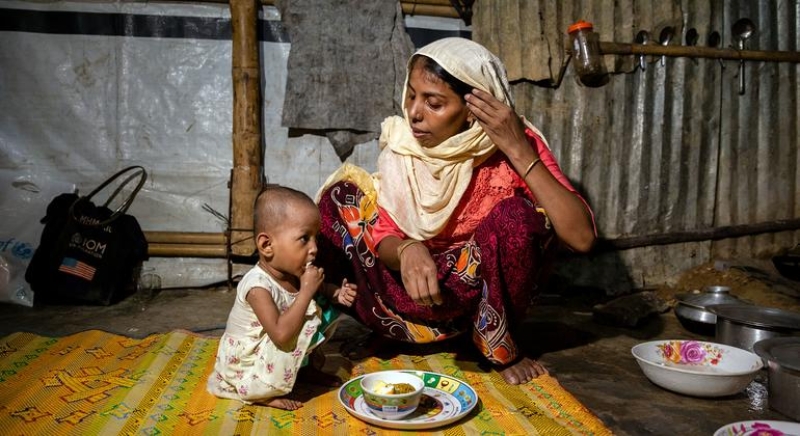
A two-year-old girl suffering from malnutrition is fed by her mother at their shelter in Cox’s Bazar, Bangladesh.
As the world approaches nine years since the mass displacement of Rohingya refugees from Myanmar to Bangladesh, the UN refugee agency (UNHCR) has appealed to the international community not to abandon the 1.2 million refugees living in the country, most of whom are staying in camps in Cox’s Bazar.
Speaking in Geneva on Tuesday, UNHCR spokesperson Babar Baloch warned that sharp reductions in humanitarian and development funding are putting essential services at risk for one of the world’s largest refugee populations.
“The generous support from Bangladesh and the international community has been critical in meeting their basic needs and providing protection,” he told journalists.
The largest influx of Rohingya refugees occurred in August 2017, when around 750,000 people fled violence in Myanmar’s Rakhine State and crossed into Bangladesh. UNHCR noted that support from Bangladesh and international donors has remained vital in providing protection and meeting basic needs ever since.
Funding Pressures Mount
The agency’s appeal comes amid growing global instability and competing humanitarian crises that have strained aid budgets worldwide.
Last month, the United Nations and its partners, working alongside the Government of Bangladesh, launched an appeal for $710.5 million to meet the most urgent needs of Rohingya refugees and host communities in 2026.
Despite growing needs, the appeal is 26% lower than last year’s funding request, reflecting what aid agencies describe as a “hyper-prioritised” response focused on the most urgent requirements.
Since 2017, humanitarian funding has supported food assistance, healthcare, education, and protection services. However, UNHCR warned that significant needs remain and conditions could deteriorate without continued support.
Rohingya refugees remain largely dependent on aid, with limited opportunities to earn an income. Vulnerable groups—including women and girls, older people, and persons with disabilities—are particularly affected by funding shortfalls.
The situation has become more challenging for around 150,000 new arrivals who have fled renewed violence in Rakhine State since early 2024.
Blocked humanitarian access and funding shortages are leaving many communities without adequate food, clean water, and healthcare.
Fading Hopes of Return
UNHCR said ongoing conflict, persecution, and insecurity in Myanmar continue to prevent the safe return of refugees.
As prospects for repatriation diminish, more Rohingya are undertaking dangerous sea journeys in search of opportunities elsewhere in the region.
According to the agency, 2025 has become the deadliest year on record for such crossings, with nearly 900 Rohingya refugees reported dead or missing in the Andaman Sea and Bay of Bengal.
UNHCR warned that maintaining only minimal levels of humanitarian assistance could result in more severe and costly consequences in the future.
“Until the conflict and violence stop, the international community must continue to stand in solidarity with refugees from Myanmar, including Rohingya refugees, and their host communities,” Mr Baloch said, renewing the agency’s call for sustained humanitarian support and efforts to ensure the voluntary, safe, and dignified return of refugees when conditions permit.