

- Dhaka’s air quality moderate on Sunday morning |
- Special prayer held at DU on 45th death anniv of Ziaur Rahman |
- 55-year-old dies in Chuadanga as fibrous mango bit blocks throat |
- Dhaka's air quality ‘moderate’ during Eid holiday |
- Thousands of tourists flock to Kuakata during Eid festival |
Rohingya Response at Risk Amid Funding Cuts: UNHCR
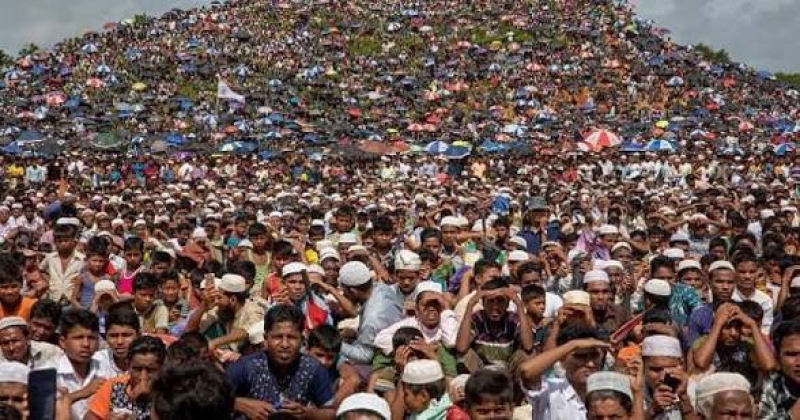
UNHCR, the UN Refugee Agency, on Sunday said the Rohingya response enters a fragile phase, marked by declining funding and worsening camp conditions.
Sustained international engagement and funding remain critical to bolster Bangladesh’s response, to ensure that the Rohingyas and their host communities are not abandoned, and for Rohingyas to live in safety and dignity until their voluntary, safe, dignified, and sustainable return to Myanmar, UNHCR said.
UN and its humanitarian partners called for renewed international support, as they presented the 2026 update of the Joint Response Plan (JRP) recently for the Rohingya humanitarian crisis.
The hyper-prioritised plan appeals for USD 710.5 million, to reach up to 1.56 million people, including refugees and Bangladeshi host communities.
The appeal - a 26% reduction from the 2025 JRP - covers only the minimum required to sustain lifesaving assistance.
Mid-way through the year, generous support from the international community has led the appeal to be already 60% funded.
“As the Rohingya response enters a fragile phase — marked by declining funding, worsening camp conditions, rising protection risks, and continued instability in Myanmar — Finland’s stepped up commitment shows great generosity,” said Ivo Freijsen, UNHCR Representative in Bangladesh.
“It reaffirms our collective responsibility to protect Rohingya families and help them thrive, until conditions in Myanmar allow for voluntary, dignified and safe return to their homeland.”
Finland stands in solidarity with Bangladesh and with the Rohingya people and almost a decade into displacement, the Rohingya people still await a chance to rebuild their lives, said Mari Ahmed, Chargée d’Affaires a.i. of the Embassy of Finland in New Delhi.
“In addition to basic assistance, we must invest in a better future for the Rohingya -- including support for skills and resilience-building, inclusion of those most vulnerable, and ensuring that their plight does not fade from global attention.”
UNHCR announced a EUR 2 million contribution from the Government of Finland to sustain life-saving assistance and protection for Rohingya refugees in Bangladesh.
With this increased contribution, Finland enables UNHCR to fill critical gaps, including in underfunded areas such as skills development and resilience programming.
Nearly a decade after fleeing targeted violence and persecution in Myanmar, 1.3 million stateless Rohingya continue to reside in Bangladesh.
With limited livelihood opportunities, Rohingya in Bangladesh remain largely dependent on aid: In 2025, only 23% of refugee households earned income through cash-for-work, the only formal livelihood activity permitted.
42% had access to temporary and unstable income sources, while 35% had no income source at all and relied fully on assistance.
As funding falls, the most vulnerable bear the brunt: women and girls, persons with disabilities, older people, and some 150,000 new arrivals since early 2024, who are still without shelters due to lack of space in the already very congested camps.
Finland’s contribution comes as the Finland has been a longstanding supporter of humanitarian action and multilateral efforts to protect forcibly displaced people worldwide.
Finland also supports UNHCR in 2026 with EUR 7 million in flexible core funding. Unearmarked core funding allows UNHCR to respond immediately to sudden emergencies and sustain operations in neglected conflicts, reports UNB.