

- Bangladesh Bank Buys $115 Million to Support Forex Market |
- Tarique Rahman, Daughter Zaima Added to Voter List |
- NCP and LDP Join Jamaat-Led Eight-Party Alliance |
- Tarique Rahman’s gratitude to people for welcoming him on his return |
- Attorney General Md Asaduzzaman resigns to contest election |
Russia Launches 4 GWh Annual Capacity Lithium-Ion Battery Plant
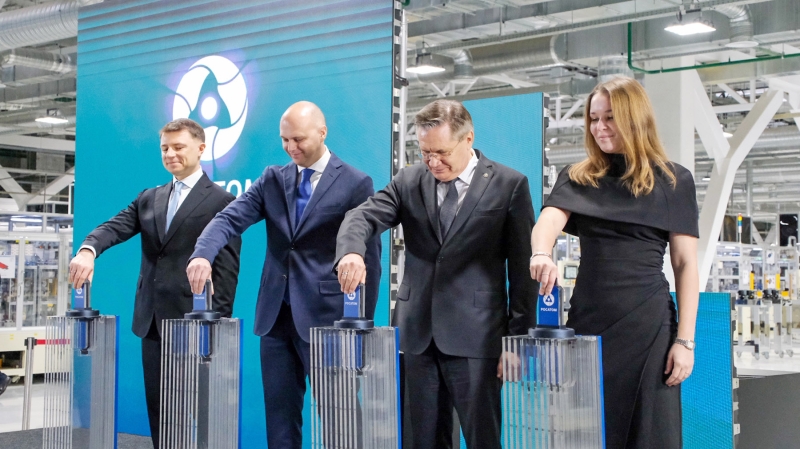
Russia Launches 4 GWh Annual Capacity Lithium-Ion Battery Plant. Rosatom- PR- Photo- 28.12.2025.
Rosatom’s Fuel Division, managed by TVEL, has launched pilot production at Russia’s first lithium-ion energy storage factory, “gigafactory” in the Kaliningrad Region. The facility marks a major step toward ensuring Russia’s technological independence in advanced energy storage technologies.
With an annual production capacity of 4 gigawatt-hours, the gigafactory is the country’s only large-scale facility producing lithium-ion batteries. It covers the full production cycle, from cell chemistry to finished modules and complete battery systems. At full capacity, the plant can produce approximately 1.5 million charging modules or 50,000 traction batteries annually for electric vehicles.
Energy storage systems are a rapidly growing sector, used in electric cars, buses, trucks, industrial equipment, logistics, mining, and power infrastructure. They also support uninterrupted power supply, load balancing, and electricity cost optimization. The Russian energy storage market is expected to reach 20–30 GWh by 2030.
Rosatom Director General Alexey Likhachev described the project as an industrial breakthrough, highlighting its role in building complete production chains, from lithium extraction to battery recycling, and supporting the development of electromobility in Russia.
The high-tech facility spans 23 hectares, includes over 20 buildings, and operates more than 3,000 pieces of equipment. Approximately 90% of production is automated, enabling a rate of one battery cell per second. – Press release