

- Govt Declares 3-Day Mourning, Wednesday Holiday for Khaleda Zia |
- Khaleda Zia: Icon of Bangladesh’s Democracy and Leadership |
- Over 1 Million Voters Register for Postal Ballots in Bangladesh |
- Begum Khaleda Zia, Uncompromising Leader of Bangladesh, Dies |
- 2,582 candidates submit nomination papers for Bangladesh polls |
Khaleda Zia was a pioneer of women's empowerment in BD
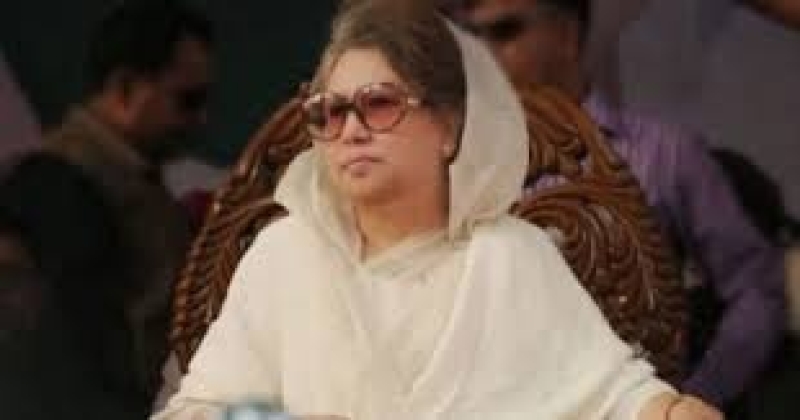
Begum Khaleda Zia emerged as a beacon of hope during the democratic movements of the 1980s and eventually played a key role in leading Bangladesh's transition to parliamentary democracy from the presidential system.
After enduring myriad pains and obstacles for long, she became the first woman Prime Minister of Bangladesh and the second elected woman head of government in the Muslim world.
Her contributions to women's education and empowerment earned her a place on the prestigious Forbes list of the world's most powerful women in 2005, ranked 29th.
She is Begum Khaleda Zia who proved in the 1990s that women's leadership at the highest level of the nation was not only possible, but transformative in a society long dominated by men.
But her journey was never defined merely by achievements. Begum Khaleda Zia's political career spans four decades-marked by struggle, mass movements, electoral victory, political repression, and her decisive role in democratic transitions.
Her rise began in the early 1980s. When Bangladesh was gasping for breath under the military rule of Hussain Muhammad Ershad, she stepped into politics in a deeply conservative environment.
After the assassination of President Ziaur Rahman, powerful forces - within both the military and the BNP - tried to prevent her leadership. According to Moudud Ahmed's book "Choloman Itihas: Jiboner Kichu Samay Kichu Kotha" the greatest fear within the ruling circles was Khaleda Zia, because she was seen as the strongest potential successor to her husband.
Yet she herself had no intention of entering politics. But BNP's senior leaders insisted that without her, the party would break apart. Gradually, she agreed-primarily to save and unite the BNP.
In January 1982, she quietly received primary membership. In November that year, she delivered her first political speech at her husband's mausoleum. From that moment, her rise became steady and unstoppable. Within a year, she became Senior Vice-Chairperson, then Acting Chairperson of BNP.
On 10 May 1984, she was elected Chairperson of the BNP-marking the true beginning of her political life.
Throughout the anti-Ershad movement in the 1980s, Khaleda Zia evolved from a soft-spoken widow into one of the strongest voices of democratic resistance. She was detained multiple times but never stepped back. And in 1991-just ten years after entering politics-she became Bangladesh's first woman Prime Minister.
I will take a pause here.
Just imagine that moment: the 1980s, a military dictatorship is tightening its grip, and in the middle of it, a woman is stepping forward and laying the foundations of parliamentary democracy.
When she for the first time became the Prime Minister of Bangladesh in 1992 many said that she is not capable enough to rule the country but she did, the 1992 parliament was not only the first woman Prime Minister led parliament but one of the most successful ones in Bangladesh's history. She successfully balanced her tenure with Islamist and progressive groups. She went on to serve three terms as Prime Minister, shaping some of the most defining years in Bangladesh's political history. In 1993, she became the first woman to chair South Asian Association for Regional Cooperation SAARC, placing Bangladesh at the heart of regional diplomacy.
Begum Zia: The Uncompromising Leader
Begum Khaleda Zia's political journey is defined not only by her rise, but by her extraordinary refusal to compromise when the stakes were highest. In 1986, when General Ershad offered political parties the chance to participate in an election without restoring democracy, major parties like Awami League and Jamaat-e-Islami accepted the offer.
Khaleda Zia alone held her ground. She rejected the proposal outright, insisting that no election could be legitimate without the full restoration of democratic rights. Two decades later, during the 1/11 period, when the caretaker government attempted the "minus-two formula" to exile both her and Sheikh Hasina from politics, Khaleda Zia again refused.
She declined all pressure to leave the country, even as Sheikh Hasina initially signaled willingness to comply. Throughout this turbulent period, she remained firm that her political mandate came from the people, not from any external condition. Again in 2008, when she had the opportunity to remain abroad for medical care in London, she still chose to return home despite clear warnings that she would face imprisonment.
Her decision was unwavering: Bangladesh was not a place to escape from - she belonged to her people, and her people belonged to her. Her political life consistently demonstrated one defining quality: an uncompromising commitment to her principles, her party, and her country.
Begum Khaleda Zia was a First Lady, a politician, a national leader - but above all, she was a mother of two, and she suffered deeply in that role. She was not allowed to be with her son Arafat Rahman "Koko" during his terminal illness and could only see him after his death. Her other son, Tarique Rahman, lived in enforced exile in London, separated from her for years. At any moment, she could have left the country to escape these unbearable pains-but she chose to stay, holding firmly to her uncompromising principles and her commitment to Bangladesh.
Nothing could stop her from working for her nation. She was not just a woman leader - she ensured that women across Bangladesh could lead as well.
Women's empowerment was built on a foundation first laid by President Ziaur Rahman. He established the Ministry of Women's Affairs, introduced a reserved quota for women in government jobs and education, and opened the police and local government structures to women. These steps brought women into the mainstream of national development.
Begum Khaleda Zia expanded this foundation into a nationwide transformation. As Prime Minister, she introduced some of the most far-reaching initiatives in women's education, health, legal rights, and political representation.
Her groundbreaking Female Secondary School Assistance Program (1994) made secondary education free for rural girls - leading to increased enrollment, reduced child marriage, lowered fertility rates, and opened up door of new economic participation for millions of girls. She strengthened primary education through the Food-for-Education program and later the Primary Education Stipend
Program.
In her second term, she launched the Health, Nutrition and Population Sector Program, significantly expanding maternal and child healthcare and sharply reducing mortality rates. She introduced the Begum Rokeya Padak in 1995 - one of Bangladesh's highest honors for women - and increased reserved seats for women in Parliament from 30 to 50, creating greater representation in national decision-making. Women's roles in civil service, local government, and national politics expanded at unprecedented levels.
Her government enacted strict laws against rape, acid violence, and dowry-with penalties ranging from long-term imprisonment to capital punishment in severe cases. Special Tribunals for Violence Against Women and Children were set up to ensure time-bound investigations for faster justice.
She established the Ministry of Primary and Mass Education and introduced quotas for female primary school teachers, dramatically increasing girls' enrollment. She strengthened women's rights through the National Forum for Women and revived women's inclusion in the police force - a policy first initiated by President Ziaur Rahman.
For financial empowerment, she introduced microloan programs and special funds for low-income women. She played a key role in establishing the Asian University for Women in Chittagong, arranging funding and allocating 100 acres of land. Through her support, organizations like Westar expanded training in computer literacy and vocational skills, creating jobs for thousands of women.
Under her leadership, Bangladesh maintained democratic continuity and steady economic progress despite intense political hostility. She upheld political civility, refraining from personal attacks even in the harshest moments. Her ability to unite diverse groups earned her the reputation, at times, of being the "leader of all parties."
On the international front, she raised the issue of Ganges water distribution at the United Nations. In 1992, at the White House, she brought global attention to the Rohingyas crisis-leading to Myanmar's agreement to repatriate refugees who had arrived in the early 1990s.
Despite attempts to diminish the contributions of President Ziaur Rahman and Khaleda Zia, their reforms live on-in classrooms filled with girls, in women-led workplaces, in local government, in the police force, in Parliament, and in every sphere where Bangladeshi women now rise with confidence and holding their head high.
History cannot erase what has already transformed millions of lives. President Ziaur Rahman founded the Bangladesh Nationalist Party, but it was Begum Khaleda Zia who carried it into the hearts of the people.
Today, even in 2025, when some still debate whether women should lead in politics or whether it aligns with religion, we only need to remember what Khaleda Zia proved in 1991: that a woman can not only become Prime Minister, but can also be the torchbearer of democracy.
From a stay-at-home spouse to the elected leader of the nation, Begum Khaleda Zia is not just a name - her political career is a defining chapter of Bangladesh's modern history, reports BSS.