

- Argentina beat Egypt 3-2 to reach World Cup quarter-finals |
- Bangladesh Leads South Asia in FDI Growth: UNCTAD |
- 3 flights diverted to Dhaka as rain disrupts operations at Ctg airport |
- Malaysia Reopens Labour Market for Bangladeshis |
- PM Assures Job to July Martyr's Mother During Meeting |
Hasnat Calls for Free Speech, Right to Criticise PM
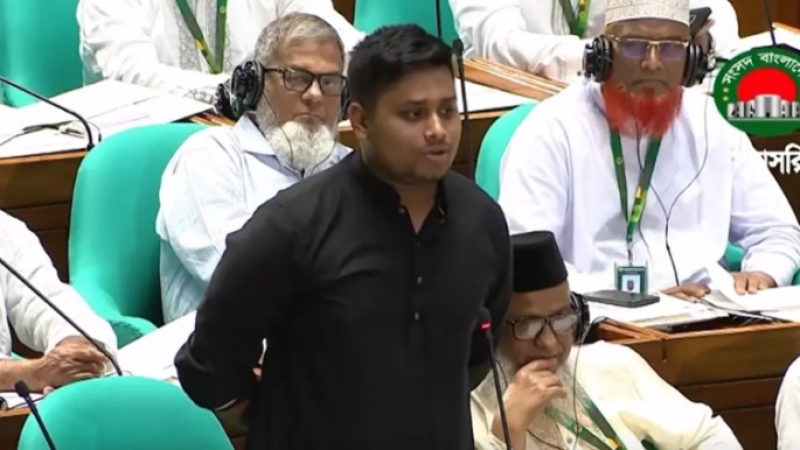
Cumilla-4 MP and NCP leader Hasnat Abdullah speaks at a parliament session recently
NCP leader and Member of Parliament Hasnat Abdullah has urged the government to ensure full freedom of expression, including the right to openly criticise the Prime Minister while speaking in parliament.
Speaking during the discussion on the motion of thanks on the presidential address in parliament on Sunday (April 26), he said citizens must be allowed to express disagreement freely rather than only offering support.
“Freedom of expression previously existed, but it was largely limited to agreement. Now we want space to express disagreement, even to criticise the prime minister from the parliamentary floor,” he said, adding that arrests over public remarks remain a serious concern.
Hasnat claimed that at least nine incidents of arrests have taken place in recent months over comments made in the name of opinion-sharing, including remarks about a state minister. He said such actions contradict the government’s stated commitment to free speech.
He also criticised what he described as a gap between political messaging and ground reality, saying that while the Prime Minister has occasionally promoted free expression through satire or public posts, such openness is not reflected in practice.
Referring to the education sector, he said a compulsory political culture is being imposed in universities, while children of political leaders often study abroad. He argued that academic institutions should focus on learning and research rather than political mobilisation.
“Universities are not factories for producing political leaders,” he said, calling for structural reforms in campus politics.
Hasnat also raised questions over delays in placing ordinances related to the Human Rights Commission and the Police Commission before parliament.
He urged the government to better understand the aspirations of the younger generation, warning that continued divisive politics would not benefit any party and could create space for “anti-state forces” to emerge.