

- Iran dismisses Trump’s threats, vows swift response to any US attack |
- Student-led shrimp farming sparks rural aquaculture boom in Naogaon |
- Bangladesh Sets Path for Sustainable Farming by 2050 |
- Child rescued from deep tube-well hole in Ctg dies |
- Days ahead will be very challenging for journalists' - ABM Mosharraf |
How the Global South Pushes Back Against US Pressure
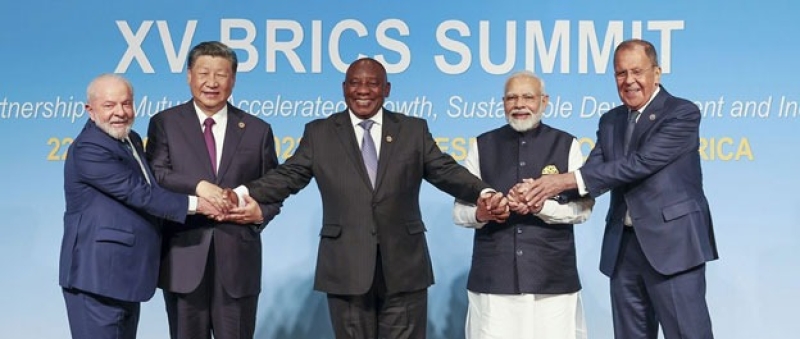
Photo caption:
Together against the shifting power balance, countries of the Global South form strategic alliances.
The United States’ attack on Venezuela marks a key watershed in the global order. We still cannot predict how this violation of another state’s sovereignty will ultimately play out.
However, it has already called into question an international system founded on sovereign equality. Experts speak of “imperialist imitation dynamics” and a return to spheres of influence — a world in which major powers call the shots and smaller states have little choice but to toe the line.
One dynamic fuelled by the US intervention in Venezuela cannot be ignored: countries of the Global South, especially middle powers, have begun to stand up for their interests more assertively, strategically and in a more coordinated manner. This is not through open confrontation, but through a combination of flexibility, adaptation, diversification and tactical pushback.
Not all countries in the Global South have openly condemned the American attack on Venezuela, but most have at least expressed concern about developments in South America. These events have highlighted how quickly military force can now be used to enforce a country’s interests, with little regard for the fundamental principles of the international order — and how limited their own options, particularly military ones, actually are.
Containment and political autonomy
This is precisely why Latin America’s strategy has focused on diplomatic containment, with efforts aimed at reaching pragmatic arrangements with the United States. Last year, Donald Trump and Colombian President Gustavo Petro engaged in a fierce war of words. Tensions worsened following the US attack on Venezuela, with Trump threatening Colombia with military action.
Once the two leaders spoke by phone, the situation began to cool. Petro is now preparing to meet Trump face to face in the United States. This shift from public confrontation to direct dialogue reflects a deliberate strategy of containment in the face of an imbalanced power relationship: pressure is channelled into managed, personal diplomacy to prevent escalation.
Alongside Colombia, Cuba and Mexico have also found themselves in Washington’s firing line, with the US adopting a noticeably harsher tone towards both countries. Cuba responded with a carefully calibrated strategy, signalling willingness to engage in dialogue and improve bilateral relations, while emphasising the need for mutual respect on an equal footing.
Political concessions were explicitly ruled out. This approach can be seen as a sensible two-pronged strategy — easing tensions while firmly defending sovereignty.
Mexico’s president took a more pragmatic course under pressure from Washington. Claudia Sheinbaum made targeted concessions, particularly on key security and trade issues, such as tougher action against smuggling networks and higher tariffs on Chinese imports, in order to avoid escalation.
However, she held firm on judicial reforms criticised by the United States and on increasing energy subsidies for Cuba. With its government openly condemning the US intervention in Venezuela, Mexico is pursuing a steady, measured diplomatic path: limited concessions combined with political autonomy. Whether this strategy will succeed in the long term remains to be seen, particularly given Trump’s unpredictable and erratic nature.
Diversifying foreign relations has become the Global South’s core strategy for reducing dependency and strengthening political autonomy amid global uncertainty.
There is little reason to believe that China or Russia — the other major powers — could serve as reliable military counterweights in the Western Hemisphere. Neither maintains military bases there, nor are they bound by explicit mutual defence obligations involving military intervention.
Russia’s cooperation with Venezuela has largely been limited to political support and the supply of weapons and air-defence systems. This has left Latin American states with few options other than de-escalation and dialogue with the United States, combined with asserting their right to make independent decisions.
A similar pattern can be seen in India. New Delhi responded to the US attack on Venezuela with a notably restrained statement, expressing “deep concern”. This drew sharp domestic criticism, with opposition figures warning that such precedents could apply to any country, including India itself.
The Global South has long been known for diplomatic flexibility and for deliberately diversifying its foreign and economic relations. This approach resembles the multi-vector strategies pursued by Central Asian states under the influence of Russia and China for decades.
India is a prime example, maintaining strategic relations with the United States while remaining closely tied to Russia in defence matters. New Delhi is also nearing the conclusion of a free trade agreement with the European Union and is expanding security and defence cooperation with European partners.
Similar trends are visible in Latin America. The EU–Mercosur agreement, signed recently after more than 20 years of negotiations, comes at a time when both Europe and South America face pressure from US trade and tariff policies. In the same vein, Colombia joined China’s Belt and Road Initiative in 2025.
Colombia’s president recently visited Saudi Arabia, Qatar and Egypt, articulating a clear strategic logic: Latin America’s path lies not in joining a power bloc, but in building its own autonomous growth pole. Diversifying foreign relations has thus become central to the Global South’s efforts to reduce dependency and preserve autonomy.
A notably independent stance
The clearest pushback so far has come from Africa. Several states responded to the US attack not with open confrontation, but through symbolic and politically meaningful actions. South Africa’s ruling party condemned the aggression against Venezuela, while its representative at the United Nations criticised the breach of core UN Charter principles, emphasising sovereignty, non-interference and diplomacy.
This message was reinforced through joint naval exercises held almost simultaneously off South Africa’s coast with several BRICS countries, including Russia, China and Iran. At the opening ceremony, the commander of the South African joint task force said the drills were more than a military exercise — they were a political statement of intent to cooperate more closely in an increasingly complex maritime environment.
BRICS may adopt a firmer stance on security policy in the future — not as a military alliance, but as an expression of strategic autonomy in response to Western dominance.
Ghana, traditionally close to the United States, also adopted a notably independent position. Accra voiced reservations about the unilateral military action and warned that it could set a dangerous precedent, particularly for smaller states.
The African Union echoed these concerns and remains the only regional organisation to have agreed on a common position. This is unsurprising, given that many African countries have been broadening their security and economic partnerships for years.
China has become a key economic player across the continent, while Russia has expanded its military presence and security cooperation. Moscow is preparing to host this year’s third Russia–Africa summit, a format previously reserved for its Central Asian neighbours.
Although US behaviour may evoke memories of 19th-century gunboat diplomacy, today’s world is fundamentally different. The traditional concept of spheres of influence assumes passivity among weaker states — an assumption the Global South is increasingly disproving.
These countries are flexible and adaptive in their diplomacy, consciously hedging their strategic bets and cooperating with multiple major powers simultaneously, without aligning too closely with any single one.
The spheres-of-influence narrative also underestimates the growing role of regional organisations such as ASEAN, Mercosur, the African Union and the Shanghai Cooperation Organisation, as well as transregional groupings like BRICS. These bodies increasingly act as buffers against external pressure, enhance bargaining power for smaller states and complicate attempts by great powers to assert dominance.
The Global South is neither a homogeneous bloc nor merely a stage for geopolitical rivalry. Many countries are exploiting a fragmented and chaotic world order to pursue their interests more assertively. While the American operation may yield short-term gains, in the long run it could accelerate the emergence of a more pluralistic and less hierarchical global order.
Dr Alexandra Sitenko is an independent political consultant and researcher specialising in global peace and security, Eurasian geopolitics, and relations between Russia and the Global South.