

- Bidisha Siddique Arrested in Fraud Case |
- As wars spread, the global food system unravels |
- Holy Eid-e-Miladunnabi Wednesday |
- EU sees Bangladesh as partner of growing strategic importance: Miller |
- Journalism’s main task is to question power: Swapon |
Global Survey Shows Strong Support for Citizen-Elected World Parliament
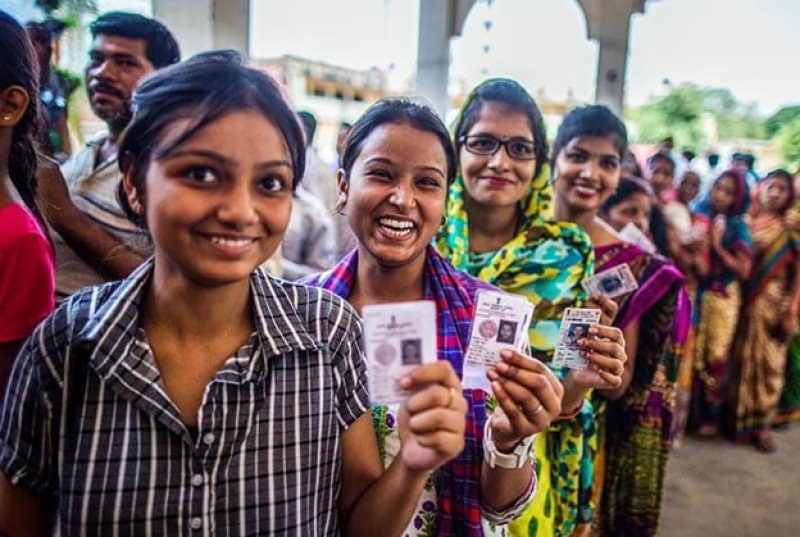
A global survey across 101 countries finds global majority support for a citizen-elected world parliament to handle global issues, reflecting widespread concern over an outdated and undemocratic international order.
As democracy faces pressure worldwide and confidence in international law declines, a new global survey reveals that citizens in a majority of countries support creating a citizen-elected world parliament to address global issues.
Commissioned by Democracy Without Borders and conducted across 101 countries representing 90% of the world’s population, the survey found that 40% of respondents support the proposal, while only 27% oppose it. It is the largest poll ever carried out on this subject.
Support is strongest in the Global South, particularly Sub-Saharan Africa, and among groups often underrepresented in national politics—young people, ethnic minorities, and those with lower income or education levels. In 85 out of 101 countries surveyed, more respondents supported the idea than opposed it.
“The message is clear: people around the world are ready to expand democratic representation to the global scale,” said Andreas Bummel, Executive Director of Democracy Without Borders. “This survey shows there is a growing global constituency that wants a voice in decisions affecting humanity as a whole.”
The findings come at a time when the international system is strained by climate change, war, geopolitical conflicts, authoritarian resurgence, and stalled global cooperation. Many citizens—especially in less powerful countries—see a world parliament as a path to fairer and more effective global governance.
In countries with limited political freedoms, support for a world parliament is particularly high, indicating that global democratic institutions could help advance democracy at home. About 33% of respondents globally expressed a neutral stance, suggesting unfamiliarity with the concept. Analysts say that with greater visibility, support could increase substantially.
“The international system created last century to prevent war and mass violence is built on the United Nations. Yet many UN member states represent authoritarian elites rather than their people. A citizen-elected world parliament could be a vital step toward a more democratic global order,” said Oleksandra Matviichuk, head of the Centre for Civil Liberties in Ukraine and Nobel Peace Prize laureate.
Net opposition is most concentrated in high-income democracies. “This is not a rejection of democracy. It shows that privilege may breed complacency, and those benefiting from existing arrangements may underestimate how urgently renewal is needed,” commented George Papandreou, Greek MP and former Prime Minister.
Democracy Without Borders advocates establishing a United Nations Parliamentary Assembly as a step toward a democratic world parliament. The survey results reinforce the urgency for governments to consider this longstanding proposal.