

- Special prayer held at DU on 45th death anniv of Ziaur Rahman |
- 55-year-old dies in Chuadanga as fibrous mango bit blocks throat |
- Dhaka's air quality ‘moderate’ during Eid holiday |
- Thousands of tourists flock to Kuakata during Eid festival |
- 45th anniversary Ziaur Rahman's death Saturday |
Next Decade Crucial to Unlock LLDCs’ Untapped Potential
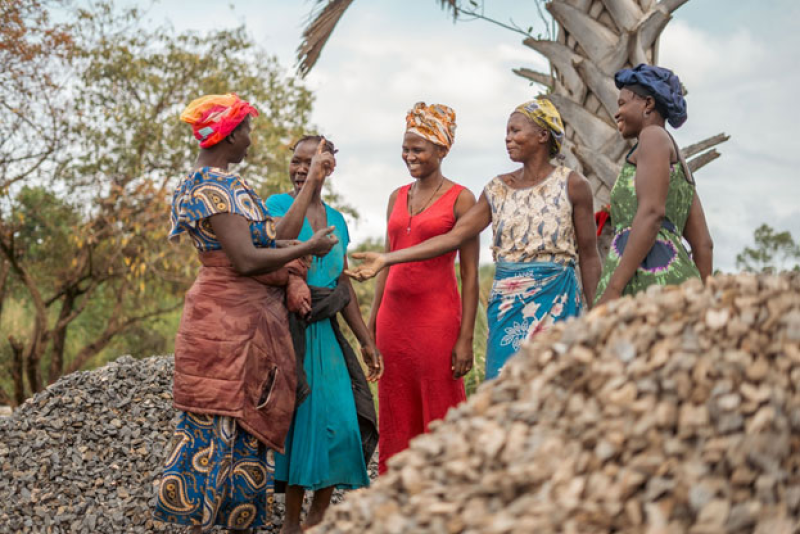
The prevalence of development minerals in Uganda is high, and the industry generates an estimated US$350 million annually, directly supporting 390,000 Ugandans, 44 percent of whom are women.
As some of the world’s youngest and fastest-growing nations, Landlocked Developing Countries (LLDCs) possess immense untapped potential yet remain cut off from the flows of international commerce and opportunity. Imagine being surrounded by possibilities but separated from them by mountains, borders, and vast distances from the nearest port — this is the daily reality for LLDCs.
These 32 nations, on average 1,370 kilometres from the nearest seacoast, face formidable challenges: high transport costs, complex logistics, and economic vulnerabilities. They account for only 1.3% of global exports — 82% of which are unprocessed primary commodities — and face trade costs 1.4 times higher than coastal states.
Dependence on unprocessed goods undermines resilience to crises, from demand shocks to trade disruptions, and limits access to higher-value global supply chains. Rising tariffs have heightened these vulnerabilities, risking further marginalisation from global trade and hindering economic growth and poverty reduction.
Many LLDCs depend heavily on a small number of trade partners, with China being the primary market for several. This concentration increases vulnerability to shifts in global trade policies. Compounded by economic instability, debt distress, climate shocks, and technological disruptions, LLDCs face an urgent need for more agile and systemic responses. Nearly half are classified as Least Developed Countries, and almost 40% of their urban populations live in slums.
With their combined population projected to exceed one billion by 2050, transformative action is imperative. Four key areas can unlock local potential:
Harnessing Extractives for Sustainable Development – For mineral-rich LLDCs, sustainable mining practices and strong regulations are vital. Initiatives in Uganda, supported by OACPS and the EU, have integrated artisanal mining into laws and policies.
Trade Facilitation and Regional Cooperation – Regional integration efforts, such as the African Continental Free Trade Area, are helping LLDCs improve infrastructure, coordination, and economic resilience.
Strengthening National Institutions – Effective governance is crucial to structural transformation. Efforts in Nepal, Moldova, Lao PDR, and Mali have reinforced institutions during crises.
Supporting Local Entrepreneurship and Innovation – Small businesses and women-led cooperatives are benefiting from access to finance, digital tools, and export opportunities.
Over the past decade, under the Vienna Programme of Action (2014–2024), UNDP has invested more than USD 12.5 billion in governance, climate resilience, economic transformation, and development financing across all 32 LLDCs.
Although progress has been made, it remains uneven. The next decade must focus on fully integrating LLDCs into the global economy through trade reforms, innovation, diversification, and stronger South-South cooperation.
This week, global leaders will gather in Turkmenistan for the Third UN Conference on LLDCs, guided by the Awaza Programme of Action — a blueprint to ensure LLDCs are empowered and included in global development.