

- PM Vows to Build Trillion-Dollar Green Economy |
- PM visits Bangladesh's Jute Pavilion at COP31 |
- Tarique Outlines Five Actions for Climate-Vulnerable Nations |
- Dhaka Ranks 6th Among World's Most Polluted Cities on Thursday |
- World Leaders See Tarique as Transformative Leader: Adviser |
PM Vows to Build Trillion-Dollar Green Economy
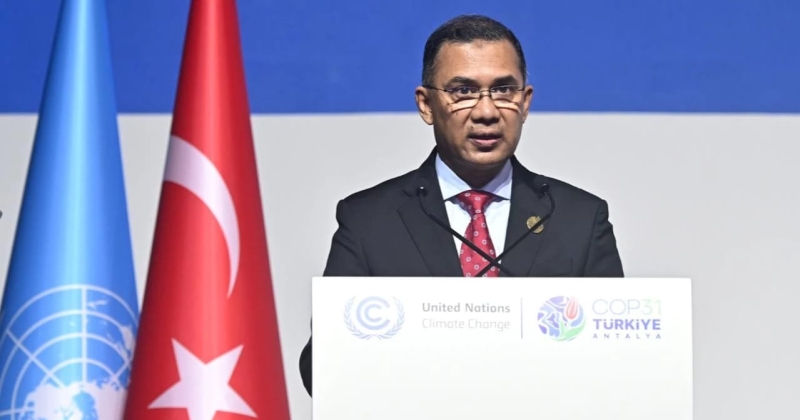
Prime Minister Tarique Rahman on Thursday pledged to transform Bangladesh into a trillion-dollar, climate-resilient and sustainable economy, stressing that economic growth and environmental protection must go hand in hand.
“Bangladesh is on the frontline of climate change. Yet, our contribution to global greenhouse gas emissions is less than 0.5%. Despite these challenges, we remain committed to building a trillion-dollar, climate-resilient and sustainable economy,” he said while addressing the High-Level Segment of the 31st UN Climate Change Conference (COP31) in Antalya, Türkiye.
The Prime Minister stressed that industrialisation and development must protect nature and maintain ecological balance.
He said Bangladesh had set a target of meeting 20 percent of its electricity needs from renewable sources by 2030 and was working to develop 4,000 megawatts of solar power with special tax incentives.
The government was also promoting waste-to-energy initiatives, green industries, environment-friendly transport, including electric vehicles, and products such as jute bags, Tarique said.
He added that Bangladesh was developing a national framework for carbon trading as part of its efforts to build a sustainable economy.
Highlighting the government's environmental initiatives, the Prime Minister said the country planned to plant 250 million trees over the next five years.
He also mentioned plans to excavate 20,000 kilometres of rivers and canals, alongside the Padma Barrage and Teesta Barrage Master Plan, to retain water, reduce flood risks, restore wetlands and recharge groundwater.
Bangladesh was also restoring mangroves on reclaimed coastal land to protect communities and strengthen climate resilience, Tarique added.
He stressed the need to ensure the participation of women and young people in climate action, create decent green jobs and reduce global emissions to keep the 1.5-degree Celsius goal within reach.
At the event, the Prime Minister also outlined five urgent actions to address the needs of climate-vulnerable countries, including allocating at least 50 percent of international climate finance to adaptation and introducing debt-relief measures.
He expressed hope that COP31 would deliver meaningful, balanced and ambitious outcomes, particularly for countries most vulnerable to climate change.