

- Stocks end week sharply lower as DSE, CSE indices tumble |
- 'Not all collections in the road transport sector is extortion': Sk Rabiul |
- Zubaida, Zaima take iftar with orphan students |
- Dhaka ranks second among world’s most polluted cities Friday |
- Dhaka to maintain ties with all countries with dignity |
Ramadan in Gaza Marked by Displacement, Hunger, Hardship
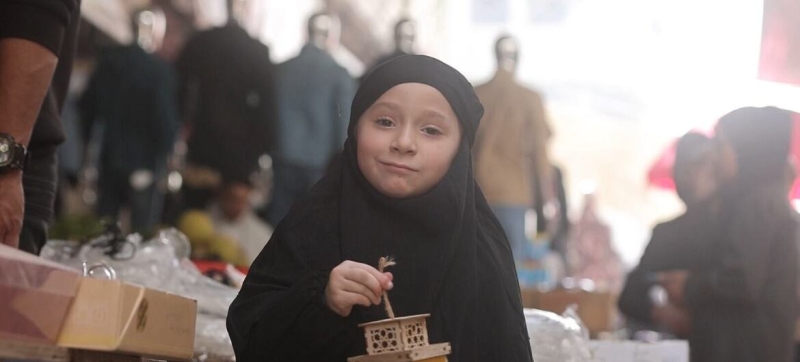
Children in Gaza delight in carrying and lighting Ramadan lanterns throughout the month of fasting.
Palestinian Walid Al-Assi was playing with his young granddaughter this week, promising to take her to the market in Gaza City for the arrival of the holy month of Ramadan, as his family had done before the Israel–Hamas war. Now, however, circumstances have changed.
Mr Al-Assi lives with his family in a tent made of cloth and plastic sheeting beside the rubble of their former home in the Al-Zarqa neighbourhood in central Gaza City, where they once lived “happily” and enjoyed special Ramadan foods such as qatayef.
“Everything has changed now,” he told UN News, describing the grim landscape left after two years of Israeli attacks.
“We have been deprived of all these things. Today, I see goods in stores and turn my face away because I do not have the money to buy them. I suffer from high blood pressure and diabetes and cannot walk. Those in the tents must be helped.”
‘We are living in a tragedy’
In another tent, Amal Al-Samri and her husband are trying to create at least a symbolic Ramadan atmosphere. They have been arranging their shelter and preparing for the holy month, while a faint smile never leaves Ms Al-Samri’s tired face. Their three children wear clothes that appear new in celebration.
Before the war, she said, “our life was beautiful.”
She would visit relatives, see her parents and brothers, shop for household needs and decorate the home with lights and ornaments for Ramadan.
“Today, there is nothing,” she said.
“We are living in a tragedy. There is no electricity or water. We were displaced from our homes from one place to another. In one location, seawater flooded our tents and swept them away.”
High prices and shortages
Despite the devastation, shortages and continuing hardship across the enclave, signs of Ramadan have returned to the historic Zawiya market in Gaza City.
Shops and street vendors display lanterns of various sizes, along with signs welcoming the holy month.
Some families have managed to buy lanterns for their children despite soaring prices.
Prices double for Ramadan lanterns
Many others pass through the market without purchasing anything due to high prices and scarce supplies, said Luay Al-Jamasi, a shop owner selling Ramadan decorations.
“Many people have been deprived of decorations because they do not have electricity,” he said. “Prices have risen sharply because no new supplies have entered the territory in recent months.”
Holding a lantern, he added, “This used to cost 30 shekels. Now it costs 60. Prices have doubled because of the shortage of goods entering the area.”
‘We’ve been through difficult times’
Some residents remain determined to mark the season and show solidarity, including Maher Tarzi, a Christian Palestinian strolling through the Zawiya market.
In a soft voice, he sang a traditional Ramadan song celebrating the arrival of the holy month.
“People want to be happy,” Mr Tarzi said. “We’ve been through very difficult times, and it is good that we are still alive.”
‘How did we survive?’
“People look around and ask how we survived all this,” he continued. “Then they try to resume their lives and return to the markets. But purchasing power is not what it once was.”
At night, parts of Gaza City glow with lanterns and lamps marking Ramadan’s arrival, despite the harsh conditions facing residents, most of whom remain displaced.
The UN Office for the Coordination of Humanitarian Affairs estimates that at least two-thirds of the population — about 1.4 million out of 2.1 million people — are living across roughly 1,000 displacement sites, often in overcrowded tents that offer little privacy or protection.