

- Bangladesh Plans Padma Barrage, First Phase at Tk34,608cr |
- US Expands Trump’s Gaza Peace Board, Invites More States |
- Spain Train Collision Kills 21, Leaves Dozens Injured |
- NCP Announces 27 Candidates, Aims for Seats After Exit |
- Govt Defends Prof Yunus’ Backing of ‘Yes’ Vote |
US Expands Trump’s Gaza Peace Board, Invites More States
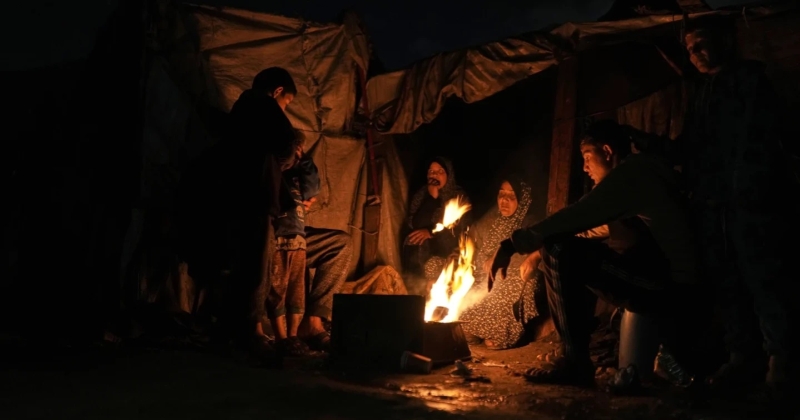
Displaced Palestinians warm themselves around a fire at a tent camp in Gaza City, Sunday, Jan. 18, 2026.
The United States has invited at least eight additional countries to join President Donald Trump’s newly formed Board of Peace, an international body intended to oversee the next phase of developments in Gaza and broaden global involvement in the process.
Officials confirmed that Hungary and Vietnam have accepted the invitation. Under a draft charter, permanent membership reportedly requires a contribution of $1 billion, while three-year appointments do not carry a financial obligation. The funds would be directed towards rebuilding Gaza, according to a US official familiar with the proposal.
Hungarian Prime Minister Viktor Orban has agreed to take part, while Vietnam’s Communist Party chief To Lam has also confirmed participation. India has received an invitation, a senior government official said, and Australia acknowledged it had been invited and is consulting with Washington to clarify the proposal.
Jordan, Greece, Cyprus and Pakistan said they were invited on Sunday. Several other countries, including Canada, Turkey, Egypt, Paraguay, Argentina and Albania, have also confirmed receiving invitations. The total number of invited states has not yet been disclosed.
US officials are expected to announce the final list of board members in the coming days, potentially on the sidelines of the World Economic Forum in Davos.
The Board of Peace is tasked with overseeing key steps in Gaza as the ceasefire that began on October 10 moves into its second phase. Its mandate includes helping form a new Palestinian administrative committee, supporting the deployment of an international security force, overseeing the disarmament of Hamas and coordinating reconstruction efforts.
In letters sent to world leaders, President Trump said the board would pursue a new approach to resolving global conflicts. Some invitees have shared the letters publicly.
The White House has also unveiled an executive committee to implement the board’s plans. However, Israel has raised objections, saying the initiative was not coordinated and conflicts with its policy positions.
The executive committee includes senior US officials and international figures, alongside representatives from countries involved in monitoring the Gaza ceasefire.