

- RMG Unrest Costs 317 Factories $428m in 18 Days: BGMEA |
- Bangladesh Urges India to Begin Ganges Treaty Talks |
- COP31: A Failure of Climate Leadership in a Warming World |
- UN Climate Talks collapse over fossil fuel phaseout, warming limit deadlock |
- Bangladesh Plans Major Changes to Bank Board Rules |
Israeli Protesters Demand Netanyahu Resignation, End to Strikes
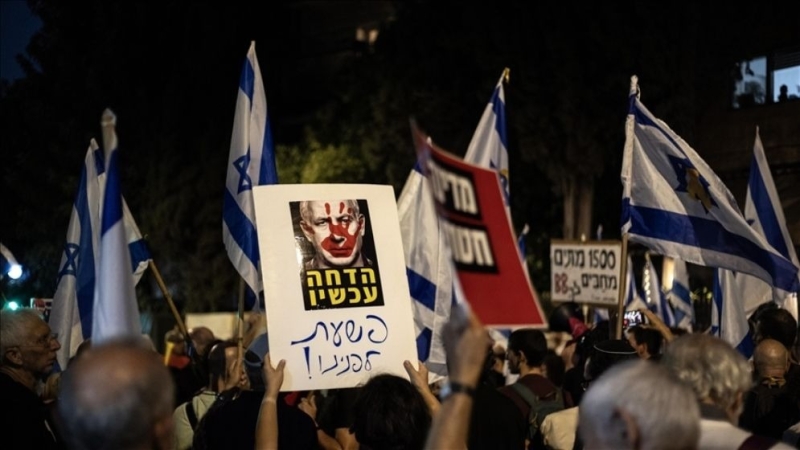
Hundreds of protesters took to the streets of Tel Aviv overnight, demanding the resignation of Prime Minister Benjamin Netanyahu and an immediate halt to ongoing Israeli military operations in southern Lebanon.
The demonstration, which continued late into Saturday night, reflected growing public anger over the government’s war policies and deepening internal divisions. With general elections expected later this year, Israel’s domestic political landscape is already under strain amid escalating tensions involving Iran and Lebanon, as well as disputes over exemptions from military service for ultra-Orthodox Jewish communities.
Speaking to international media during the protest, 83-year-old retiree David Alkan described the current government as a “disaster,” accusing it of misleading the public with false and distorted information.
He said Israel’s internal divisions pose a greater threat than external enemies such as Iran, and strongly criticised the refusal of ultra-Orthodox groups to participate in military service, calling it a major source of inequality and social tension.
Videos circulating on social media showed protesters carrying placards condemning the government’s policies, with slogans such as “Stop the genocide” and “Never forget October 7.”
Some demonstrators also mocked Netanyahu by combining his nickname “Bibi” with the name of Colombian drug lord Pablo Escobar, referring to him as “Bibi Escobar” in protest.
Political analysts say Israel’s widening military engagements with Lebanon and Iran, combined with rising domestic anger over conscription exemptions, have created a serious political challenge for Netanyahu’s government.
They warn that continued external conflict and internal dissatisfaction could significantly impact the ruling coalition ahead of the upcoming elections.