

- Multilateralism Needs a New Deal, Can Anyone Deliver it? |
- Measles deaths hit low; US, Mexico, Bolivia lose free status |
- Leather Foundation launched: Fund sought to revive tanneries |
- ‘BARTA’ for local LC messaging, to save $7m a year, launched |
- Temperature drops to 13°C in Panchagarh |
Leather Foundation launched: Fund sought to revive tanneries
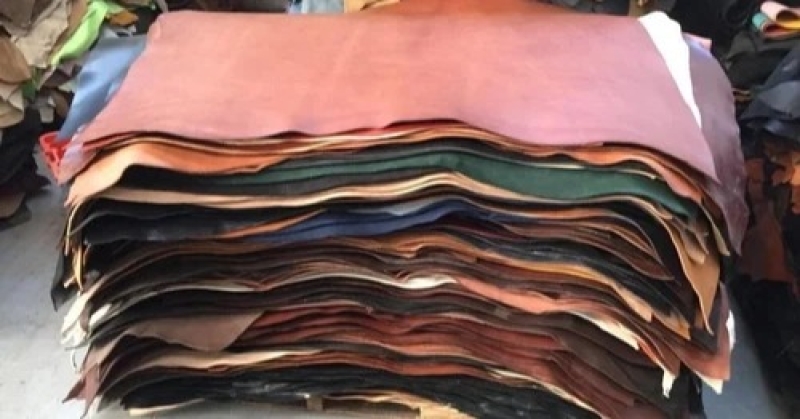
Leather is stacked at a factory.
Dhaka, Nov 28 — Leather Foundation of Bangladesh (LFB) was launched on Saturday with a 13-point proposal including a demand for a Tk 5,000 crore special fund to revive closed factories in the country's leather sector.
The non-profit national industrial development organisation aims to promote sustainable growth in the leather industry, develop skilled manpower, attract foreign investment and strengthen coordination among different stakeholders.
The foundation unveiled its vision, action plan and 13-point proposal at a programme held at the Jatiya Press Club.
Speaking at the event, LFB President Sadat Hossain Salim said a Central Effluent Treatment Plant (CETP) is essential for ensuring environmental compliance but cannot alone resolve all the challenges facing the industry.
Citing the example of Khulna's Super Ex Leather, he said the factory would not have fallen into crisis if an effluent treatment plant alone could ensure the industry's sustainability.
He called for effective government support in chemical supplies, import-export operations and other business activities, taking into account the practical experiences of entrepreneurs and traders working in the sector.
LFB Secretary General and Founder M Mufazzal Ibne Mahfuz said coordination among all segments of the leather industry, trade associations, entrepreneurs and technical institutions is one of the foundation's key objectives.
Presenting the keynote paper, Joint Secretary General Engineer A Fattah Al Monjur Asif said Bangladesh has abundant domestic raw materials and a hardworking workforce, but shortages of skilled mid-level personnel, gaps in modern technology and difficulties in obtaining Leather Working Group (LWG) certification are preventing the country from securing its desired share of the global market.
He said the foundation would operate through six permanent programme wings.
Its first-year plan includes providing skill development training to 1,000 workers, developing 30 factories into model green factories and introducing educational scholarships for workers' children.
The foundation also plans to work with foreign agencies to attract overseas investment and expand Bangladesh's access to international markets, he added.
Among the major demands in its 13-point proposal are modernising the Savar CETP and building two new CETPs, establishing one to two specialised leather goods and footwear industrial parks and four to five new leather industrial estates.
The proposal also includes establishing a full-fledged leather and footwear university, constructing 10 to 15 government rawhide storage hubs and cold storage facilities across the country, and making the use of locally produced leather and jute mandatory in footwear and related equipment procured for government forces.
Senior Vice President Advocate Shafiqur Rahman stressed the need for easier access to loans on flexible terms and business-friendly policies for leather traders.
Vice President Maulana Mahbubul Haq called for technical training in hide preservation and primary processing beyond traditional salting methods, with support from the ministries of industries and commerce and the Islamic Foundation.
Leaders of the organisation, representatives of leather goods manufacturers' associations and the Bangladesh Hide and Skin Merchants Association, as well as leather entrepreneurs and traders, attended the programme. - UNB