

- A New Arms Race is Threatening to Take-off—Now in Outer Space |
- Equality ‘ends at doors of Security Council’, Kenya’s Ruto at UNGA |
- কলাপাড়ায় প্রাথমিক শিক্ষায় হ-য-ব-র-ল |
- BDRCS and IFRC scale up dengue response to reach 300,000 people |
- World leaders approve new declaration to tackle rising sea levels |
El Niño May Push 49 Million More Into Acute Hunger
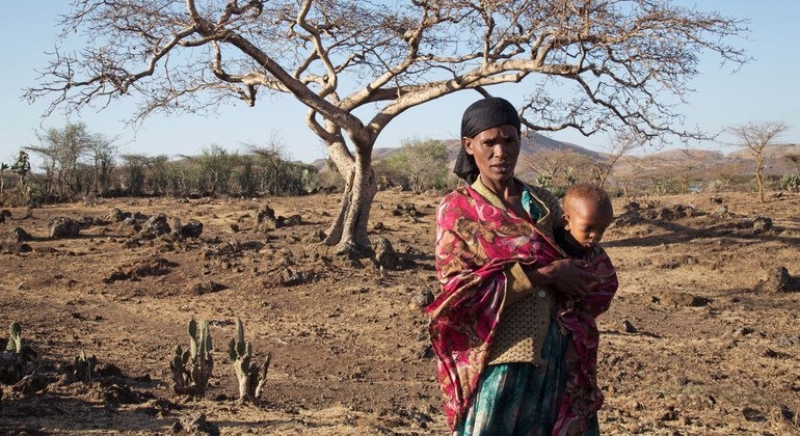
In 2016, the El Niño-induced drought in Ziway Dugda, Oromia region of Ethiopia, caused widespread hunger.
A strengthening El Niño weather pattern could push nearly 49 million more people into acute hunger worldwide, the UN World Food Programme (WFP) warned on Wednesday, as it steps up efforts to help vulnerable communities prepare for worsening climate shocks.
The agency said the 2026-27 El Niño is expected to significantly worsen food insecurity in countries already struggling with poverty, conflict, unemployment and repeated climate-related disasters.
WFP estimates that the number of acutely food-insecure people across 45 vulnerable countries could rise from 225 million to 274 million by the end of next year—an increase of about 22 per cent.
"El Niño is a massive threat to the food security of millions who are already vulnerable," said Carl Skau, WFP's Acting Executive Director.
"The sooner we help families prepare for these climate shocks, the greater our ability to save lives and protect livelihoods," he added.
The agency warned that Central America and southern Africa are expected to be among the hardest-hit regions, although eastern Africa, South Asia and Southeast Asia are also likely to face severe impacts.
According to WFP, Latin America and the Caribbean could see more than 16 million additional people facing acute food insecurity, while Central America is projected to record the largest proportional increase at more than 83 per cent.
More than 18 million people in eastern and southern Africa could experience worsening food insecurity, particularly in countries that rely heavily on rain-fed agriculture. In Asia and the Pacific, an estimated 8.2 million more people may face acute hunger, while nearly six million additional people in West and Central Africa are also at risk.
WFP noted that El Niño's impacts vary by region, bringing drought, flooding, extreme heat and disrupted rainfall patterns that threaten crop production and livelihoods.
The agency recalled that the 2015-16 El Niño affected the food security of between 60 million and 100 million people, warning that the current event could have similarly devastating consequences.
El Niño is expected to peak between September and December this year, although its effects are likely to continue throughout 2027 as harvests are disrupted.
In response, WFP, the Food and Agriculture Organization (FAO), the UN Office for the Coordination of Humanitarian Affairs (OCHA) and other partners are expanding anticipatory action programmes in more than 50 countries.
Since May, WFP has activated early response plans in South Sudan, Chad, Mauritania, Uganda, Guatemala and El Salvador, providing more than $14 million in assistance to support around half a million people.
The agency said investing in early action is highly cost-effective, with every $1 spent on preparedness capable of saving between $3 and $7 in future losses and emergency response costs.