

- Tarique Rahman Pays Tribute at Shaheed Osman Hadi’s Grave |
- Tarique visits National Martyrs’ Memorial, pays homage to martyrs |
- Muslim League leads new electoral alliance, Jatiya Muslim Jote |
- Tk 500cr Drive to Turn Haor Fallow Land Into Farmland |
- Tarique Rahman returns home amid rapturous reception |
Over a Million in Sri Lanka Still Need Aid After Cyclone
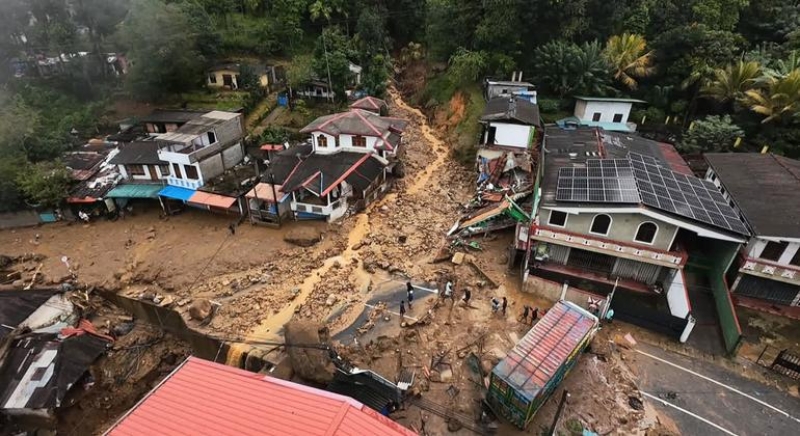
Cyclone Ditwah made landfall in eastern Sri Lanka on 28 November 2025, severely damaging homes and infrastructure and leaving tens of thousands of families in need of support.
Nearly a month after Cyclone Ditwah swept across Sri Lanka, more than a million people—including over half a million children—remain in urgent need of humanitarian assistance, as floods, landslides, and renewed rainfall continue to worsen one of the country’s worst disasters in decades.
The cyclone made landfall on the island’s eastern coast on 28 November, triggering widespread flooding and deadly landslides across all 25 districts.
While some displaced families have begun returning home, recent heavy rains caused fresh flooding, landslides, and road closures, particularly in the central districts of Kandy, Nuwara Eliya, and Polonnaruwa.
According to UN assessments, nearly 1.8 million people—about 8 per cent of the island nation’s population—remain affected. Among them, more than 1.2 million require humanitarian support, including nearly 527,000 children.
A joint rapid needs assessment led by national authorities and humanitarian partners confirmed extensive damage across all nine provinces, with severe disruption to essential services and heightened risks for women, children, and persons with disabilities.
Hunger and food insecurity are rising, with reports that nearly one in three households is food insecure, forcing many families to adopt “coping strategies” such as reducing meals.
Children at heightened risk
The UN Children’s Fund (UNICEF) reports critical gaps in child protection, education, nutrition, and water, sanitation, and hygiene (WASH) services. Many children remain displaced in overcrowded centres or with host families, where inadequate lighting, privacy, and sanitation increase protection risks, including gender-based violence.
Education has been severely affected. More than 1,300 schools and six universities sustained damage, while around 500 schools continue to serve as temporary shelters. Authorities have begun relocating students from damaged schools to nearby functioning ones, but humanitarians warn that temporary learning spaces are needed to prevent prolonged disruptions to education.
Displacement and destruction
The International Organization for Migration (IOM) estimates that over 272,000 people remain displaced, most staying with host communities, while others shelter in schools, religious buildings, and community centres.
As of mid-December, authorities reported 643 deaths and 183 people still missing. More than 107,000 homes were damaged or destroyed, making shelter one of the most urgent needs.
Economic toll and food insecurity
The cyclone has dealt a heavy blow to livelihoods. A rapid post-disaster assessment by the World Bank estimated damage at $4.1 billion—equivalent to 4 per cent of the country’s GDP. Agricultural losses exceed $800 million, with more than 58,000 hectares of paddy land flooded in eastern districts, threatening food production and incomes for smallholder farmers.
Funding gap threatens recovery
At the government’s request, UN agencies and humanitarian partners launched a Humanitarian Priorities Plan this month, seeking $35.3 million to support the most vulnerable. UNICEF alone requires $7.8 million to sustain its emergency response for children, but as of 23 December, less than half that amount had been received or pledged.
Humanitarian agencies warn that without sustained funding and continued support, recovery will be slow—particularly for children, whose education, safety, and well-being remain at risk as Sri Lanka faces a long and difficult recovery.