

- US Ambassador visits Ctg Port to reinforce commercial coop |
- Dhaka’s air remains ‘very unhealthy’, world's 3rd worst Tuesday |
- US, Bangladesh explore expanding collaboration in energy sector |
- Tarique wraps up 2nd phase of campaign with 6 rallies in 14 hrs |
- Tigers return but deer on decline in Sundarbans |
UN Rights Chief Urges Daily Stand for Shared Humanity
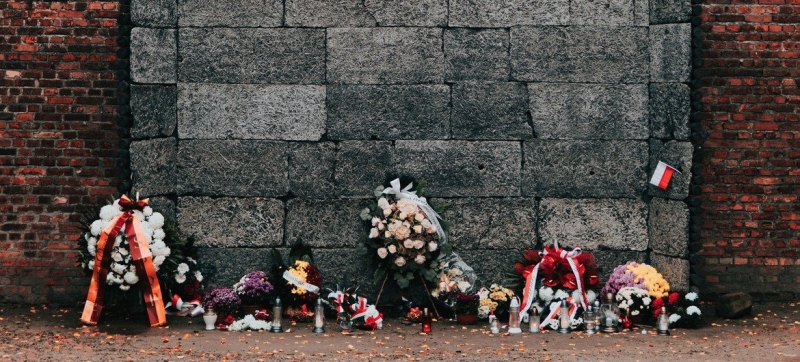
A memorial at the former Auschwitz-Birkenau concentration camp in Poland.
On the eve of International Holocaust Remembrance Day, UN High Commissioner for Human Rights Volker Türk called on the global community “not only to look at our past, but to reflect on our present and safeguard our future.”
Tuesday’s solemn commemoration marks 81 years since the Auschwitz-Birkenau concentration and extermination camp—where more than a million people were murdered—was liberated by Allied forces toward the end of World War Two.
Warning of a disturbing rise in antisemitism in recent years, including what he described as “heinous attacks” targeting Jewish communities in Sydney and Manchester, Mr Türk said “hatred and dehumanisation are creeping into our daily lives.”
He urged people to remember the lessons of the Holocaust, during which six million Jews were killed by the Nazis and their collaborators.
“The genocide did not begin with concentration camps and gas chambers; it started with apathy and silence in the face of injustice, and with the corrosive dehumanisation of the other,” he said.
The need for remembrance
The central theme of this year’s commemoration is Holocaust Remembrance for Dignity and Human Rights.
Reflecting on this theme and addressing today’s challenges, the High Commissioner emphasised the need for “laws that prohibit discrimination, and politicians who do not polarise by calling out differences, but unite by calling out injustice.”
To prevent humanity from repeating its darkest chapters, Mr Türk said education about the Holocaust, human rights education for all ages and robust, inclusive systems to moderate digital content are essential, allowing people to express concerns without fear.
Reasons for hope
Calling on the world to use available tools such as international human rights law, unprecedented access to verifiable information and “the memory of how exclusion can turn into annihilation”, Mr Türk urged decisive action to counter what he described as the “plague” of racism, antisemitism and dehumanisation.
“Together, we must challenge exceptionalism, supremacy and bigotry wherever we encounter them—at the dinner table, in our workplaces and on social media,” he said.
“Each of us can be an architect of a world free from discrimination and intolerance.”
Echoing the words of Anne Frank and remembering her step-sister Eva Schloss, who died a few weeks ago, Mr Türk said “nobody needs to wait a single moment before starting to improve the world.”